A Factory’s Revival Signals a Broader Shift in Bosnia’s Defense Industry
A central Bosnian defense manufacturer has posted a record financial year, pointing to a broader revival of the country’s military industry as rising global demand fuels new production and investment.

NOVI TRAVNIK, Bosnia and Herzegovina — In a town long shaped by heavy industry and postwar uncertainty, a defense manufacturer has delivered a result few here would have predicted a decade ago.
BNT – Tvornica mašina i hidraulike Novi Travnik, a state-linked producer of complex weapons systems, reported its strongest financial performance in 30 years in 2025, underscoring a wider resurgence of Bosnia and Herzegovina’s defense industry amid rising global demand.
Company revenues exceeded €21 million in 2025, up from roughly €17.8 million the previous year, while net profit surpassed €2 million — a level not seen since the mid-1990s. The figures were confirmed by the company’s director, Besim Belegic, who described the year as a turning point rather than an outlier.
“This result shows that we are no longer talking about recovery,” Mr. Belegic said. “We are talking about sustainable growth.”
Growth That Reaches Beyond the Balance Sheet
Unlike many industrial revivals driven by short-term contracts or speculative capital, BNT’s expansion has had immediate effects on the local economy. The company paid more than €7.5 million in salaries in 2025, and its overall operations injected over €21 million into the surrounding community — a significant sum for a town of fewer than 25,000 people.
For Novi Travnik, once emblematic of Bosnia’s industrial decline, the factory’s revival has become a rare source of economic stability and skilled employment.
Investors Take Notice
Financial markets have responded sharply. In December, BNT’s shares surged nearly 50 percent in a single trading session, following a 26 percent rise earlier in the month. The rally pushed the company’s market capitalization to approximately €25 million, nearly double its valuation just weeks earlier.
That places BNT within striking distance of the country’s largest defense manufacturer by market value, a remarkable shift in a sector long dominated by a small number of legacy firms.
A Portfolio Built for Modern Warfare
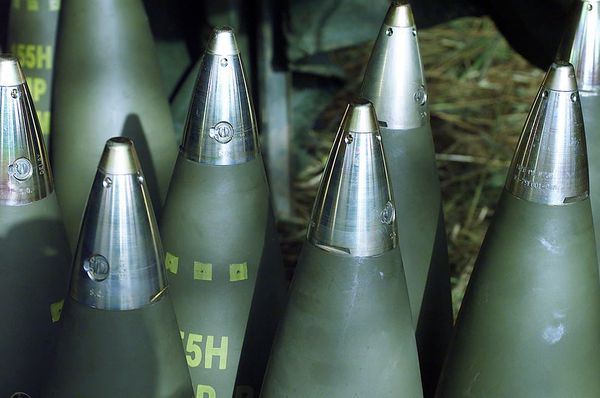
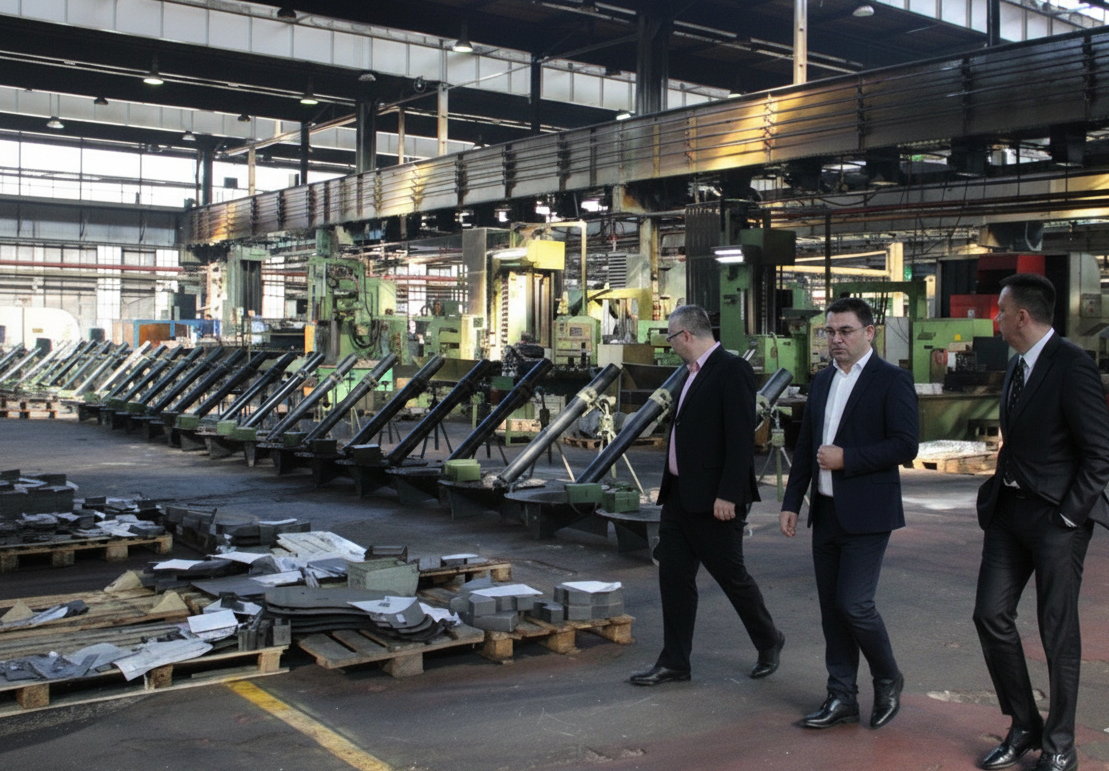
BNT’s relevance lies not only in its financials but in the complexity of its production. The company manufactures mortars, howitzers, recoilless weapons, tank and aircraft cannons, and other advanced combat systems — products that require deep engineering expertise and strict quality control.
In 2025, the company took a symbolic step forward by producing its first unmanned aerial system, entering a field that has become central to modern conflict and defense planning.
The move signals a broader strategic shift: away from reliance on a narrow range of traditional weapons and toward diversified, technology-driven capabilities.
Labor, Technology, and the Next Phase
Management says investment in technology has been matched by efforts to retain skilled workers through financial incentives and improved working conditions — a critical issue in a country facing persistent emigration of technical talent.
Plans for 2026 include new hiring and expanded production capacity, suggesting confidence that current demand will endure.
For Bosnia and Herzegovina, BNT’s performance offers a broader lesson. Long seen as a peripheral player in the global defense market, the country is quietly rebuilding industrial capacity — not through headline-grabbing megaprojects, but through steady execution, export-oriented production, and reinvestment at home.
In Novi Travnik, at least, the clang of machinery once again signals not the past, but a recalibrated future.