Babcock and Frankenburg Technologies Explore Containerized Maritime Counter-Drone System
British defense firm Babcock has partnered with Latvia-based Frankenburg Technologies to explore a new, low-cost maritime counter-drone capability. The effort focuses on countering one-way attack drones using a containerized launcher and affordable interceptors designed for scalable production.

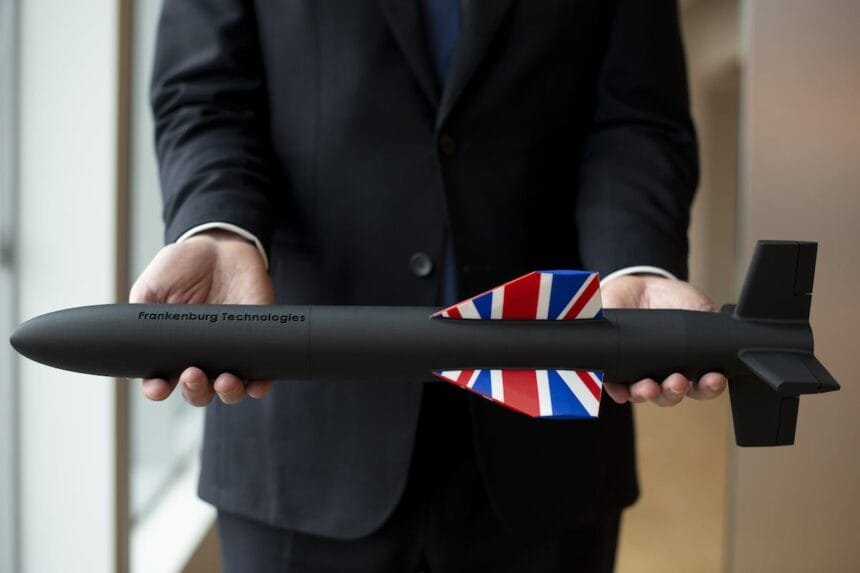
Babcock and Frankenburg Technologies have announced a collaboration to examine the development of an affordable maritime counter-drone system aimed at addressing the growing threat posed by one-way attack unmanned aerial systems.
According to the companies, the concept centers on a containerized platform capable of launching Frankenburg’s low-cost missile interceptors. The approach is intended to support rapid manufacturing at scale, reflecting operational lessons from recent conflicts, including the extensive use of one-way attack drones observed in Ukraine.
Maritime counter-drone systems are designed to protect naval vessels, ports, and offshore infrastructure by combining sensors for detection and tracking with effectors that can disrupt or destroy hostile drones. These may include electronic attack and spoofing measures as well as kinetic solutions such as missiles, guns, or directed-energy systems.
Babcock indicated that the partnership aligns with its focus on working with smaller technology firms to address emerging air defense challenges in the maritime domain. Frankenburg Technologies brings experience in low-cost interceptor development, while Babcock contributes naval integration and industrial capabilities.
Development work for the proposed system is expected to take place in the United Kingdom, which the companies said could support skilled employment and create opportunities for international exports, although no timeline or customer commitments have been disclosed.
Frankenburg Technologies recently demonstrated its Mark 1 guided rocket interceptor against a fast-moving, Shahed-class target. The company stated that the interceptor was developed in just over a year using commercially available components, with an engagement range of at least two kilometers. The missile can reportedly operate in both fire-and-forget and lock-on-after-launch modes, allowing engagement in degraded weather conditions.
The companies have not released technical details on sensor integration, launcher configuration, or naval platform compatibility. The collaboration currently remains at the exploratory stage, with further information expected as development progresses.