How Bosnia and Herzegovina’s Defense Industry Went From Record Growth to a Moment of Reckoning
Bosnia and Herzegovina’s once rapidly expanding defense industry is entering a period of correction marked by falling exports, governance failures, structural mismanagement, and eroding trust from international buyers.

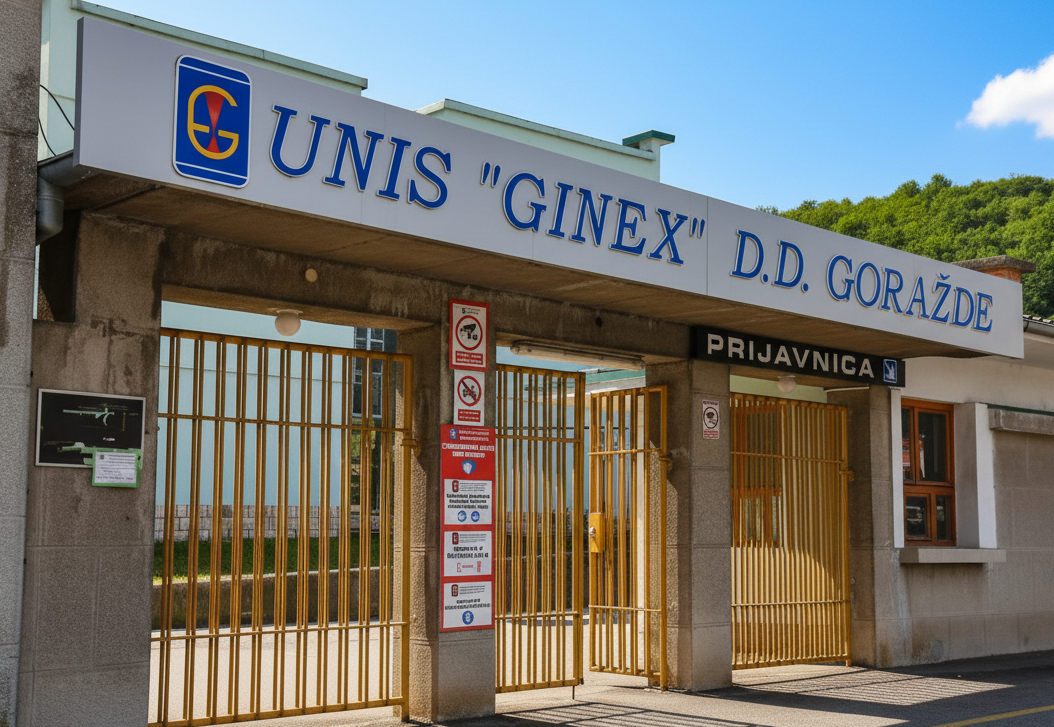
For years, Bosnia and Herzegovina’s defense-production sector was held up as a rare domestic success story: an industrial engine that exported globally, expanded capacities, and appeared resistant to regional economic stagnation. But recent months have produced a different narrative — one of slowing demand, operational vulnerability, and structural weaknesses that had long remained obscured by rising export numbers.
The first half of the year still showed momentum, with exports increasing by more than one-third year-on-year. Yet, from July onward, the trajectory shifted. In the July–October period, exports fell by roughly 40 million KM compared with the same four-month window in 2024. If this trend persists through December, 2025 could mark the first year in a decade in which total annual exports decline.
U.S. Tariffs and a Rebalancing of the Market
The single largest external shock came from Washington. In August, the United States imposed a 30% tariff on imports of weapons and ammunition from Bosnia and Herzegovina. The effect was not merely financial — it altered the market’s psychology. Before the tariffs, U.S. buyers actively sought Bosnian products; afterward, they began exploring alternative suppliers.
Orders slowed, margins evaporated, and a sector that had grown comfortable relying on the U.S. market suddenly found itself needing a new export strategy.
Operational Fragility: Igman as a Warning Signal
Igman Konjic, long the main export anchor of the sector, experienced a dramatic production halt in September due to shortages of gunpowder. Production resumed only after emergency resupply from Serbia.
Financial filings reveal a sharp drop in revenue and substantial operating losses, underscoring a deeper structural vulnerability: a system with no contingency suppliers, no diversification of critical materials, and no disciplined risk-management planning.
Pretis: A Decline in Confidence
Pretis, which in previous years positioned itself as a case study of post-war industrial revival, now finds itself grappling with falling stock value, weakened liquidity, and diminished transparency. The absence of a semi-annual report and its transfer to the high-risk trading segment of the Sarajevo Stock Exchange reinforce growing investor uncertainty.
The Structural Core: Leadership Driven by Interests, Not Expertise
Within the industry, there is a growing belief that current difficulties are not temporary — and not primarily caused by external conditions. Leadership positions in many factories are filled by individuals linked to political or personal networks rather than professional qualifications, while experts with decades of technical and commercial experience are sidelined.
This mode of governance generates concrete, lasting consequences:
- unstable procurement planning,
- unpredictable delivery timelines,
- loss of long-standing clients,
- and weakened market reputation.
The Case of Jake Bryans: How to Lose a Client
Jake Bryans, a U.S. buyer of primers, recounted his experience with UNIS Ginex. He stated that even before tariffs, despite a valid contract and outstanding deliveries owed by Ginex, he was never able to receive the full agreed-upon quantities. After multiple attempts to resolve the issue, the company unilaterally increased prices, citing a “supervisory board decision,” without further explanation.
Bryans says he spoke to other U.S. and European buyers and found similar experiences: inconsistent deliveries, difficult communication, and sudden price changes with no negotiation. Ultimately, he switched to a supplier in South America, which offered more reliable quality and more competitive pricing.
According to him, Ginex acted “as if it was hunting short-term profit during the global primer shortage,” rather than building long-term relationships. That approach, he warns, will continue to “hit them in the head.”
Corruption and Non-Transparent Governance
These experiences point to a broader issue embedded within the system: corruption risks, informal decision-making networks, and selective advantage. Industry observers note that in procurement, contracting, and pricing, privileged circles often enjoy inside access, while others are disadvantaged or excluded.
Former and current employees describe how individuals with proximity to management or political structures received access to better purchasing conditions, faster delivery privileges, or preferential treatment — eroding any notion of competitive integrity.
For a sector that seeks to operate within NATO-aligned supply chains, governance must resemble Western corporate standards: compliance procedures, conflict-of-interest controls, and repeatable audit processes. Bosnia and Herzegovina is still far from that level — and until it gets there, the sector remains vulnerable to reputational erosion.
Geopolitical Horizon: What If the Ukraine War Pauses?
The war in Ukraine produced a historic demand spike for ammunition, opening opportunities for suppliers across Europe, including Bosnia and Herzegovina. But if a ceasefire or negotiated settlement materializes, the market will shift. Orders will slow, stockpiles will increase, and defense contractors will face surplus rather than shortage.
That will test suppliers’ ability to:
- diversify markets,
- innovate products,
- and maintain international clients.
Investment Timing Will Be Crucial
Planned modernization programs for state-owned producers — including UNIS Ginex, BNT-TMiH, Pretis, and others — could create a more resilient industry. But timing is decisive. If modernization arrives only after demand declines, Bosnia and Herzegovina risks investing into overcapacity.
An Industry at a Crossroads
The defense-production sector of the Federation of Bosnia and Herzegovina now faces an unavoidable question: will it transform into a mature, professionally governed industrial system — or will it remain trapped in a cycle of ad hoc management, interest-driven decision-making, and lost international partnerships?
The next two years — more than any previous period — will determine whether Bosnia’s defense industry becomes a stable and trusted global supplier, or fades into a cautionary tale of unrealized potential.