How Western Balkans Countries Can Access the EU's €150 Billion SAFE Defence Fund

Europe is rearming at a pace not seen since the Cold War. At the centre of this transformation is the Security Action for Europe (SAFE) instrument — a €150 billion EU defence financing mechanism that entered into force in May 2025. While SAFE loans are reserved exclusively for EU member states, the rules explicitly open the door to Western Balkans countries in ways that few policymakers or defence industry players in the region fully understand.
This guide breaks down exactly what SAFE is, which Western Balkans countries can participate, under what conditions, and where the real opportunities lie for regional defence industries.
What Is SAFE?
SAFE is the first pillar of the EU's broader ReArm Europe / Readiness 2030 plan, which aims to channel over €800 billion into European defence by the end of the decade. The instrument works by issuing EU bonds — backed by the EU's AAA credit rating — and offering the proceeds as long-maturity loans (up to 45 years, with a 10-year grace period) to member states for urgent defence procurement.
Key numbers:
- €150 billion total loan facility
- 16 EU member states received Council approval for funding in February 2026
- Poland leads with €43.7 billion; Romania follows with €16.7 billion
- First disbursements began in early 2026 as pre-financing of up to 15% of each country's allocation
- Purchases financed under SAFE are exempt from VAT
SAFE finances two categories of defence products: (1) conventional capabilities including ground combat systems, ammunition, air defence and naval systems; and (2) next-generation capabilities including drones, electronic warfare, cybersecurity, AI systems, and space assets.
The Critical Rule: 65/35 and What It Means for the Balkans
Every procurement project financed by SAFE must meet a "Buy European" threshold: at least 65% of component costs must originate from EU member states, Ukraine, or EEA/EFTA countries (Norway, Iceland, Liechtenstein, Switzerland). The remaining 35% may come from third countries — including Western Balkans nations.
This is the primary entry point for the region's defence industry. Ammunition producers in Serbia and Bosnia and Herzegovina, component manufacturers in North Macedonia, or logistics infrastructure providers across the region can theoretically supply into SAFE-funded procurement chains — so long as their share of any given contract does not exceed 35% of total component value.
Analysts at the EU Institute for Security Studies (EUISS) have specifically highlighted that Western Balkans countries offer legacy defence production capabilities — particularly in ammunition production, propellants, and maintenance — that Europe currently lacks at scale. With modest investment, these capabilities could be positioned as a genuine asset within the broader European Defence Technological and Industrial Base (EDTIB).
Who Can Participate in SAFE — and How
SAFE distinguishes between receiving loans (only EU member states) and participating in common procurement (a broader group). For Western Balkans countries, the relevant pathway is the second.
The regulation explicitly lists the following categories of eligible participants in common procurement:
1. EU Candidate and Potential Candidate Countries All Western Balkans countries with formal EU candidate or potential candidate status are eligible to join common procurement projects. This includes:
- Albania
- Bosnia and Herzegovina
- Kosovo
- Montenegro
- North Macedonia
- Serbia
Important caveat: Participation does not mean receiving loans. These countries can join procurement consortia led by EU member states, but the financing flows to the EU side. The Western Balkans partner effectively gains access to collaborative procurement frameworks, interoperability standards, and potentially supply chain integration.
2. Countries with EU Security and Defence Partnerships (SDPs)
A second pathway exists through bilateral Security and Defence Partnerships. Countries that have concluded SDPs with the EU gain enhanced participation rights — and can potentially supply up to 65% of component value, rather than being capped at 35%.
Among Western Balkans countries, Albania and North Macedonia have already signed SDPs with the EU. This places them in the same category as Norway, Canada, Japan, South Korea, Moldova, and the United Kingdom — countries with privileged SAFE participation rights.
Serbia and Bosnia and Herzegovina, by contrast, have not signed SDPs with the EU. Their ongoing political constraints — Belgrade's dual-track foreign policy and Sarajevo's internal dysfunction — mean they currently cannot access the enhanced participation tier, even though their industrial legacy makes them potentially the most valuable contributors in the region.
The Bosnia and Herzegovina Problem
BiH presents a paradox. It holds candidate status since December 2022, meaning it technically qualifies for common procurement participation. At the same time, the country's defence industry — centred around companies like Pretis d.d., Igman d.d. and Binas d.d. in the Federation — represents some of the most significant remaining ammunition production capacity in the Western Balkans.
Yet Sarajevo's inability to align with EU Common Foreign and Security Policy (CFSP), compounded by political obstruction from Republika Srpska leadership, severely limits its ability to formalise defence cooperation arrangements. Without an SDP, BiH defence companies can only supply as third-country subcontractors within the 35% cap — and even then, EU prime contractors will face pressure to demonstrate supply chain governance that complex BiH political dynamics make harder to guarantee.
This is a missed opportunity of considerable proportions — and a subject deserving dedicated policy attention from Brussels.
Where the Real Opportunity Lies: Supply Chain Integration
For Western Balkans defence companies, the most practical near-term opportunity is supply chain positioning — not direct procurement participation, but becoming a qualified subcontractor or component supplier to EU prime contractors who are building SAFE-compliant supply chains.
The logic is straightforward: EU prime contractors need to source at least 65% of component value from within the EDTIB. As demand surges — SAFE alone represents the largest EU defence financing instrument ever created — the pressure to expand and qualify new European-adjacent suppliers will grow. Western Balkans manufacturers who proactively align with NATO/EU standards, pursue quality certifications, and establish relationships with EU primes will be positioned ahead of competitors.
Priority sectors for Balkans suppliers to focus on:
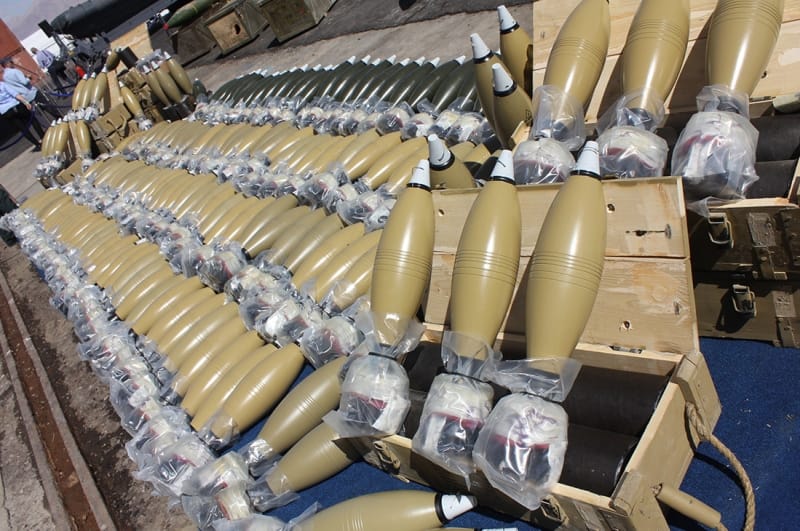
- Ammunition and propellants (BiH, Serbia) — most immediate demand, acute European shortage
- Military vehicle components and maintenance (Serbia, Croatia)
- Dual-use electronics and communications (Slovenia, North Macedonia)
- Military mobility infrastructure (the corridor between the Adriatic and Black Sea runs directly through the region)
What Western Balkans Governments Should Do Now
The window to shape how SAFE's implementation affects the region is open — but not indefinitely. Several concrete steps governments should be taking:
- Pursue or accelerate Security and Defence Partnership negotiations — Albania and North Macedonia have secured SDPs; Montenegro and Serbia should treat this as an urgent foreign policy priority, political constraints notwithstanding.
- Submit to EU defence capability mapping exercises — The European Defence Agency (EDA) and European Commission are actively identifying supply chain gaps. Countries that provide credible industrial capacity data will be included in future procurement frameworks.
- Align defence export control regimes with EU standards — A prerequisite for meaningful industrial cooperation with EU primes.
- Leverage the Military Mobility agenda — The Western Balkans sit on the fastest east-west corridor for moving forces from Western Europe to Romania and Bulgaria. Infrastructure investment in this corridor can attract EU co-financing under SAFE-adjacent instruments.
SAFE is not designed for the Western Balkans — but the Western Balkans are not excluded from it. The region sits in a peculiar position: candidate countries by political status, third-country suppliers by industrial logic, and potential strategic partners by geographic necessity.
The countries that move fastest to formalise their relationship with EU defence structures — through SDPs, industrial certifications, and proactive engagement with European prime contractors — will capture a disproportionate share of the opportunity that €150 billion in procurement is about to create.
The countries that wait will watch others fill those supply chain slots instead.
AdriaDefense.com covers defence and security developments across Central and Eastern Europe and the Western Balkans. Subscribe to our newsletter for weekly analysis.