IMF Warns Defense Spending Surges Risk Inflation and Fiscal Strain
Recent increases in defense spending may provide limited long-term economic benefits while raising inflation and fiscal pressures, according to IMF assessments. The trend is linked to geopolitical tensions and rearmament across advanced economies.


Rising defense expenditures across advanced economies are unlikely to generate sustained economic growth and may instead contribute to inflationary pressure and fiscal imbalances, according to recent analysis by the International Monetary Fund.
The assessment comes as European and NATO-aligned states accelerate military spending programs in response to ongoing security challenges, including the war in Ukraine and broader instability along NATO’s eastern flank. Governments across the alliance have committed to increasing defense budgets, with several moving toward or exceeding the 2 percent of GDP benchmark.
However, the IMF indicates that historical patterns suggest limited long-term economic gains from such spending cycles. While short-term demand effects can stimulate industrial activity, particularly in defense manufacturing, these gains are often offset by higher public debt levels and inflationary dynamics.
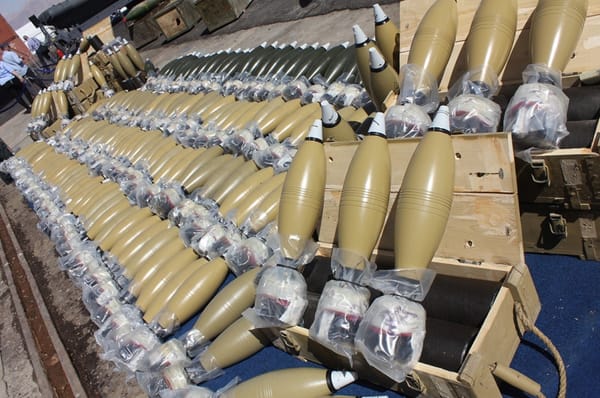
From an industrial perspective, the current spending wave is driving expansion across the defense-industrial base, including munitions production, land systems, and air defense capabilities. European manufacturers are scaling output to address supply shortfalls exposed by the Ukraine conflict, while governments are placing multi-year procurement orders to rebuild stockpiles.
Despite these developments, the IMF’s analysis suggests that defense-driven growth does not replicate the broader productivity gains typically associated with investment in civilian infrastructure or technology sectors. The report indicates that increased military expenditure can crowd out other forms of public investment, particularly in economies with limited fiscal space.
For Central and Eastern European states, the implications are particularly relevant. Many countries in the region are simultaneously expanding defense budgets and managing fiscal constraints linked to energy costs, inflation, and post-pandemic recovery. This creates a complex policy environment where defense modernization must be balanced against macroeconomic stability.
At the NATO level, the findings may influence ongoing debates about burden-sharing and the structure of long-term defense investment. While capability development remains a priority, especially in areas such as integrated air and missile defense, armored platforms, and ammunition production, fiscal sustainability is emerging as a parallel concern.
The IMF’s position does not challenge the strategic rationale for increased defense spending but highlights the economic trade-offs associated with sustained military buildup. As European governments continue to rearm, the interaction between defense policy and macroeconomic stability is likely to remain a central issue for policymakers and industry stakeholders.