Poland Turns to France to Rebuild Its Ammunition Backbone
Poland is accelerating efforts to rebuild its ammunition production capacity through a strategic partnership with France’s Eurenco. By replicating proven propellant manufacturing capabilities in Pionki, PGZ aims to secure domestic supply chains and scale 155mm ammunition output.

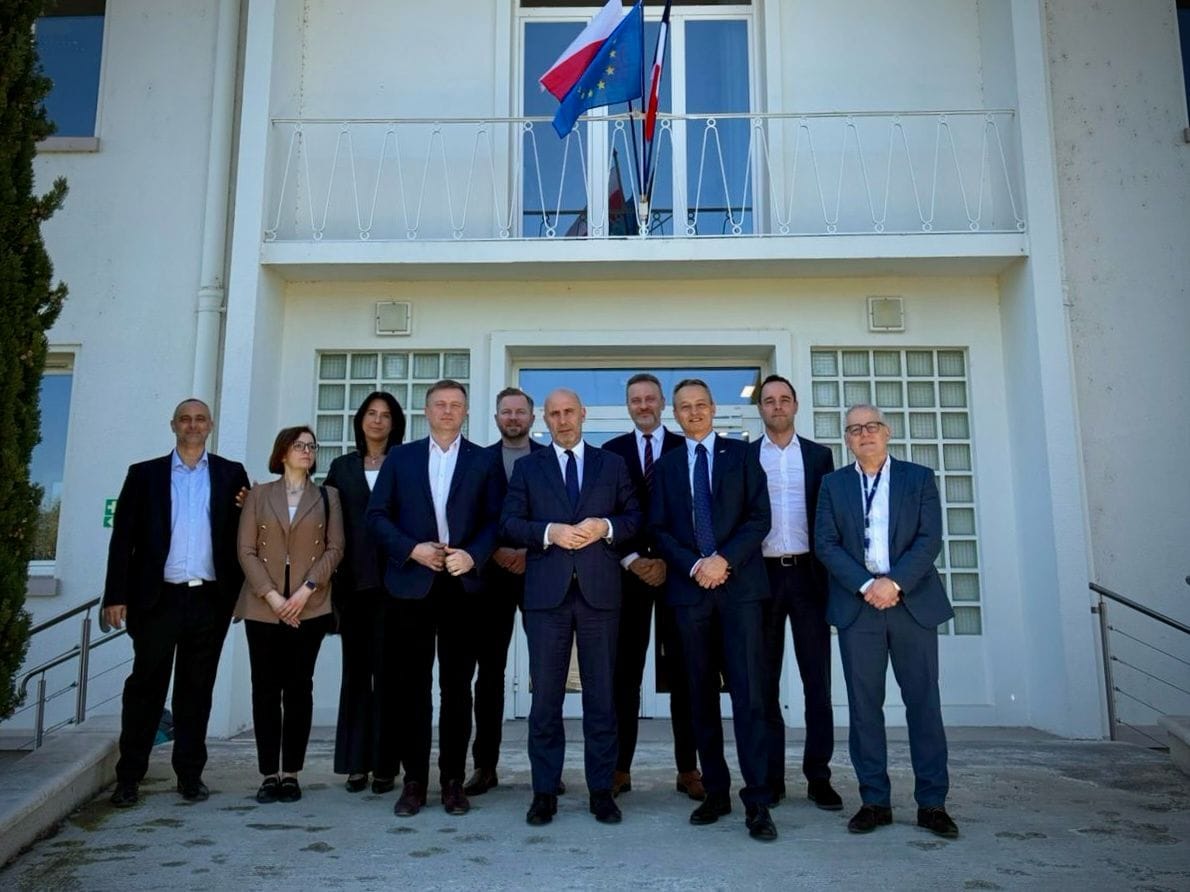
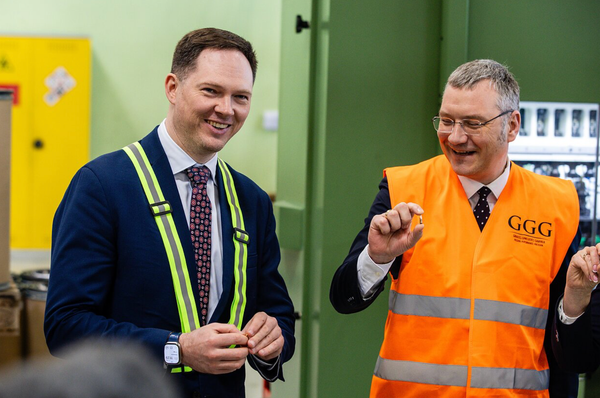
BERGERAC, France — Inside a sprawling industrial complex in southwestern France, Polish defense executives walked through production lines that may soon define the future of their country’s military readiness.
The visit by senior leaders of Polska Grupa Zbrojeniowa (PGZ) to the facilities of French propellant manufacturer Eurenco was more than symbolic. It marked a critical step in Poland’s effort to rebuild a capability that, until recently, much of Europe had allowed to atrophy: the large-scale production of propellants and charges for artillery ammunition.
At the center of the plan is Pionki, a town in central Poland where PGZ intends to establish a new industrial base for producing multi-base propellants and modular charges, key components for NATO-standard 155mm artillery shells.
“The goal is to launch production as quickly as possible,” said PGZ’s chief executive, Adam Leszkiewicz, emphasizing the urgency behind the initiative.
A Factory Reimagined — and Replicated
For Poland, the strategy is not to invent from scratch, but to replicate what already works.
The Bergerac facility operated by Eurenco serves as a “twin model” for what PGZ plans to build in Pionki. Under an agreement signed in October 2025, the French company will provide not only technology transfer, but also continued access to critical raw materials — a detail that underscores the fragility of Europe’s current ammunition supply chains.
This approach reflects a broader shift across the continent. Faced with rising geopolitical tensions and sustained demand for artillery ammunition, European governments are increasingly prioritizing speed and reliability over independence alone.
The Return of Industrial Warfare
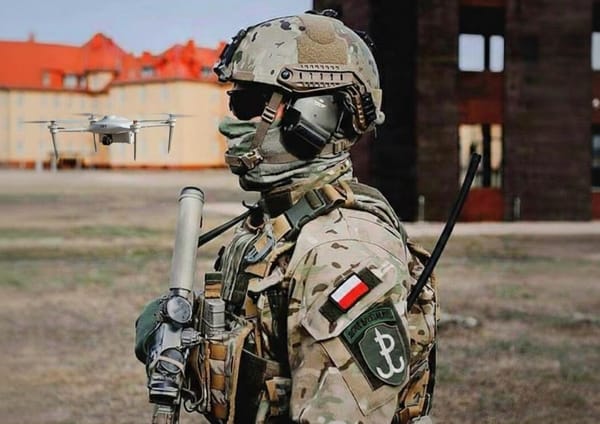
The war in Ukraine has reshaped military planning across Europe, exposing a stark reality: modern conflicts consume ammunition at a pace that peacetime production systems were never designed to sustain.
For Poland — one of NATO’s most forward-positioned members — the implications are immediate.
By securing Eurenco’s technology and supply chain integration, PGZ is attempting to close a critical gap: the ability to produce propellants domestically, at scale, and without disruption.
The planned joint venture between PGZ and Eurenco, focused on propellant charges for 155mm ammunition, is expected to anchor this effort. It also signals a deeper industrial alignment between Poland and France, at a time when Europe is rethinking the balance between national capabilities and cross-border cooperation.
Pionki and the New Geography of Defense
If completed on schedule, the facility in Pionki could be operational by 2028, transforming the town into a key node in Europe’s defense industrial network.
The project aims to combine:
- High-efficiency production technologies
- Strict safety standards
- Scalable output aligned with NATO demand
But timelines in defense manufacturing are rarely straightforward. The success of the project will depend not only on construction and technology transfer, but also on workforce development, regulatory alignment, and the stability of raw material supply.
Between Dependence and Autonomy
There is a paradox at the heart of the partnership.
While Poland is investing heavily in industrial sovereignty, it is doing so through deep reliance on foreign expertise and inputs — at least in the early stages.
This is not a contradiction so much as a reflection of the current European reality: true autonomy, in critical sectors like ammunition production, may only be achievable through shared industrial ecosystems.
For PGZ, the calculation is pragmatic. Replicating Eurenco’s proven model reduces risk, accelerates timelines, and ensures that Poland can meet both national defense needs and allied commitments.
A Race Against Time
The urgency behind the project is difficult to overstate.
Across Europe, governments are racing to expand ammunition output, but progress has been uneven. Bottlenecks in propellant production — often overlooked compared to final assembly — have emerged as one of the most significant constraints.
Poland’s move to address this gap directly places it among a small group of countries attempting to rebuild the full spectrum of ammunition production capabilities.
Whether Pionki becomes a cornerstone of that effort will depend on execution. But the direction is clear.
In Bergerac, the future was not being imagined.
It was already running on the factory floor.