SEB backs Latvian defense startup Natrix with €250,000 working capital loan
SEB Bank has provided €250,000 in working capital financing to Latvian defence startup Natrix, supporting production and contract execution of its modular unmanned ground vehicle designed for military logistics and evacuation missions.

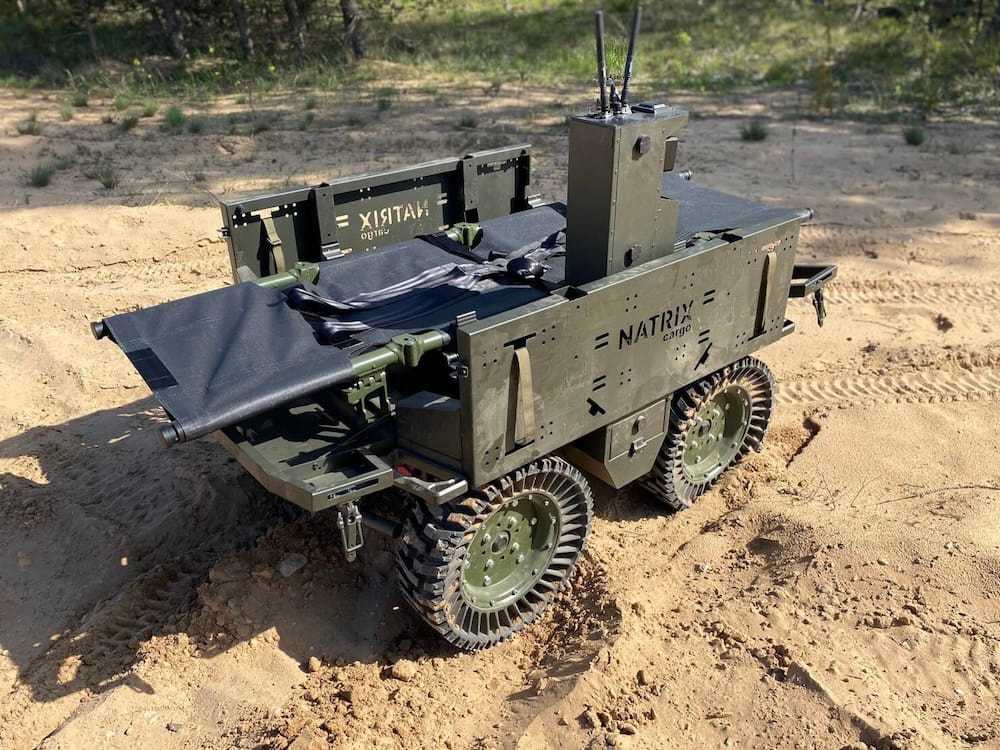
Latvia’s emerging defense-tech sector has received a boost after SEB Bank granted €250,000 in funding to Natrix, a young defense industry startup developing modular unmanned ground vehicles (UGVs).
The loan is intended to finance working capital, enabling the Riga-based company to fulfil signed contracts and accelerate production of its unmanned ground platform in Latvia. Natrix, founded last year, focuses on dual-use ground drones designed for both commercial applications and military logistics, supply, and support missions.
According to Kristaps Puķe, the funding marks a critical step in the company’s growth. He said the SEB facility will allow Natrix to meet delivery timelines while advancing further product development and export plans, adding that the cooperation provides a solid operational and financial foundation at an early stage of the company’s lifecycle.
SEB said that, given the startup’s short operating history, the bank conducted a detailed assessment of product readiness and customer credit risk before approving the loan. The financing structure was designed around specific supplier contracts to ensure predictable cash flow and timely settlement for delivered systems.
“The financial profile of startups does not always align with traditional banking criteria, but in this case we structured a solution acceptable to both sides,” said Ģirts Priede, Head of Small and Medium Enterprise Financing at SEB Bank. He added that the bank is keen to support locally owned dual-use manufacturers with mature and in-demand technologies.
Natrix’s unmanned ground platform is designed as a universal modular system that can be reconfigured for different missions. Current operational roles include frontline delivery of ammunition and food, as well as evacuation of wounded and fallen soldiers, significantly reducing the risk to personnel previously tasked with these missions under fire.
The platform is engineered for combat environments, including forested terrain, mud, and dense urban areas. In urban operations, it can work in tandem with an aerial drone that extends radio communications, scouts routes, and identifies safer paths through built-up areas. The company emphasises that ground, aerial, and maritime drones are most effective when deployed as an integrated system rather than standalone assets.
“Our vehicles are three to four times more powerful than standard drones of comparable size,” said Gatis Vectirāns, noting their higher payload capacity and off-road mobility. With a range of roughly 20 kilometres on a single charge, the platform is tailored to typical mission profiles of 8–12 kilometres, while its secure communications are designed to be significantly harder to intercept or jam.