SWARM Biotactics Advances Bio-Robotic Insect Swarms for NATO Users After €13M Funding Round
SWARM Biotactics has moved its bio-robotic insect swarm technology into early operational engagement with NATO users. The step follows a €13 million funding round aimed at transitioning the system from laboratory development to field reconnaissance pilots.

SWARM Biotactics GmbH, led by CEO Stefan Wilhelm, has progressed its bio-robotic swarm platform toward operational use with NATO-aligned customers, according to recent disclosures reported in German defense media. The development follows a €13 million seed and pre-seed financing effort intended to move the technology from laboratory validation into structured field programs.
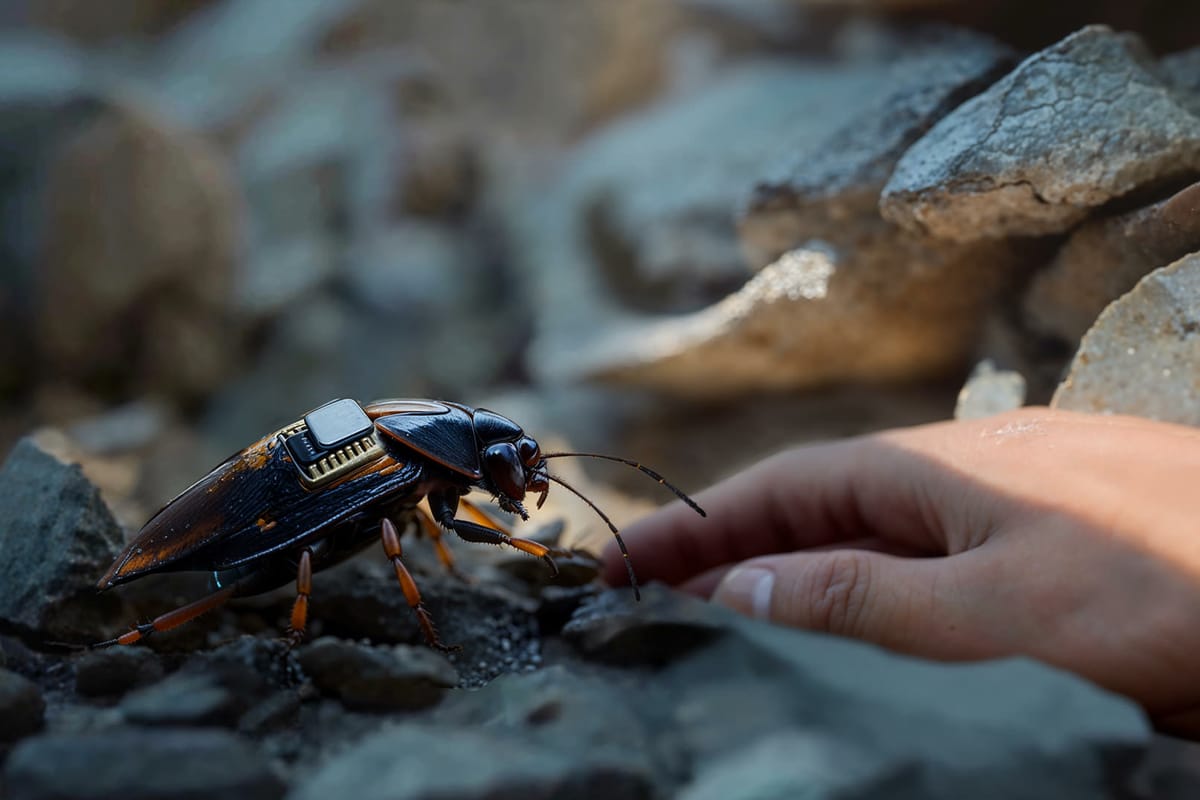
The Kassel-based company is developing controllable insect-based platforms equipped with miniature electronic modules, neural stimulation interfaces, onboard sensors, and encrypted communications links. The approach integrates biological mobility with embedded computing and swarm coordination software to enable access to confined or structurally complex environments where conventional uncrewed systems face limitations.
Earlier this year, the company announced completion of a €10 million seed round, adding to €3 million in pre-seed capital. The funding was aimed at scaling engineering capacity, expanding production of proprietary control modules, and initiating pilot deployments with defense and security stakeholders in Europe and North America.
Recent reporting indicates that initial operational engagement has taken place with users linked to NATO structures, including Germany’s armed forces. While technical specifications and deployment parameters have not been publicly detailed, the systems are positioned primarily for reconnaissance and situational awareness tasks in denied or high-risk environments.
The platform centers on live insects fitted with lightweight electronic modules that enable remote directional control and data transmission. According to the company, swarm algorithms allow multiple units to coordinate movement and sensing functions, potentially creating distributed intelligence-gathering networks at very small scale.
From an industrial perspective, the transition from proof-of-concept to field pilots marks a significant step in validating bio-hybrid systems as part of the broader European defense innovation ecosystem. The company maintains operations in Germany and the United States, positioning itself within transatlantic defense technology networks.
If further adopted, such systems could complement existing micro-UAS and ground robotics portfolios by providing low-signature access to confined urban interiors, rubble environments, or structurally dense infrastructure. However, the technology remains at an early stage of operational maturity, and large-scale procurement pathways have not been announced.
For NATO and EU defense planners, the emergence of bio-integrated robotics reflects continued diversification of ISR capabilities, particularly as European forces explore distributed sensing concepts under contested conditions.