Brazil and Poland move toward KC-390 production footprint in Europe
Brazil’s Embraer and Poland’s PGZ have signed five cooperation agreements to advance industrial participation in the KC-390 Millennium, positioning Poland as a potential European hub for production and lifecycle support of the next-generation transport aircraft.

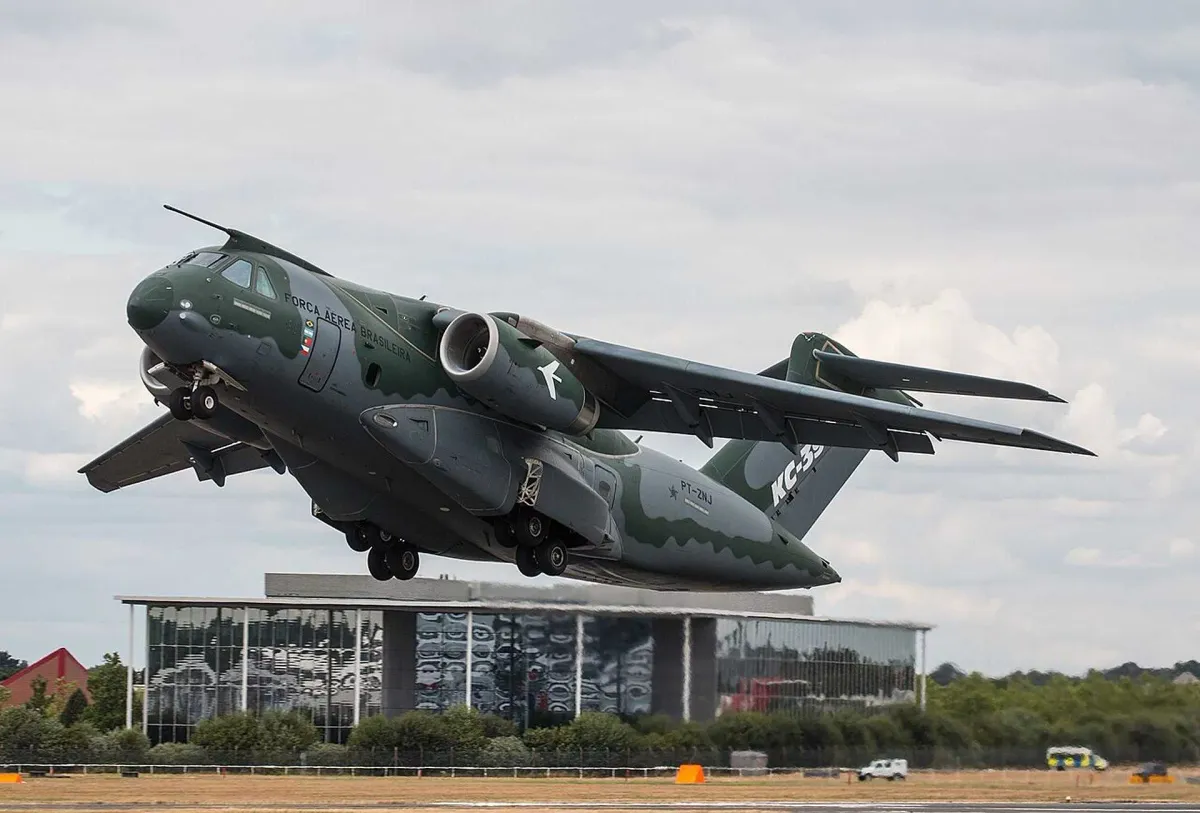
Brazil’s Embraer and Poland’s PGZ have taken a strategic step that goes far beyond symbolic cooperation—this is a concrete move toward establishing KC-390 Millennium production, sustainment, and industrial capability inside Poland, and ultimately inside the broader European defense market.
On December 2, 2025, in Warsaw, Embraer announced the signing of five Memoranda of Understanding with PGZ and key subsidiaries. The documents outline pathways for joint participation in manufacturing, MRO, avionics integration, structural components, and lifecycle support of the KC-390—effectively turning Poland into a European anchor for the program.
Executives were clear: the MoUs create the industrial groundwork for future procurement decisions by Warsaw and potential regional operators. Poland is already moving rapidly through its modernization cycle, having previously invested heavily in US, UK, and Korean systems. Bringing aerospace manufacturing into the equation gives Poland not just capability—but economic and technological sovereignty.
For Brazil, this is strategic: Embraer wants to position the KC-390 as the next-generation replacement for aging European C-130 Hercules fleets. The aircraft itself has a solid technical proposition:
- 26-ton payload capacity
- 470-knot cruise speed (faster than C-130)
- Operations from semi-prepared and unpaved runways
- NATO-standard avionics and interoperability
- Multi-mission configuration: troop lift, armored vehicles, humanitarian, MEDEVAC, airborne assault, aerial refueling
The key advantage of the KC-390 is its modular design and mission-readiness reliability. European air forces have been quietly acknowledging that maintaining legacy Hercules fleets is getting expensive and risky. The KC-390 offers a modern, efficient alternative—with lower lifecycle cost.
If these MoUs mature into a full industrial partnership, Poland could become Embraer’s European hub for KC-390 assembly, component manufacturing, and long-term support—similar to Airbus’ distributed industrial model.
This cooperation is more than procurement; it is political alignment.
Brazil gets deeper access to NATO defense markets.
Poland gets high-value aerospace industry development and greater autonomy in strategic airlift.
We’ll follow this closely—because if even two or three European states join Poland in KC-390 procurement, this could reshape the continent’s military transport ecosystem for the next 30 years.