Challenger 3 Marks Major Development Milestone with First Crewed Live Firing Trials
The British Army’s Challenger 3 main battle tank has completed its first live firing trials with a crew aboard, advancing the programme toward operational capability.

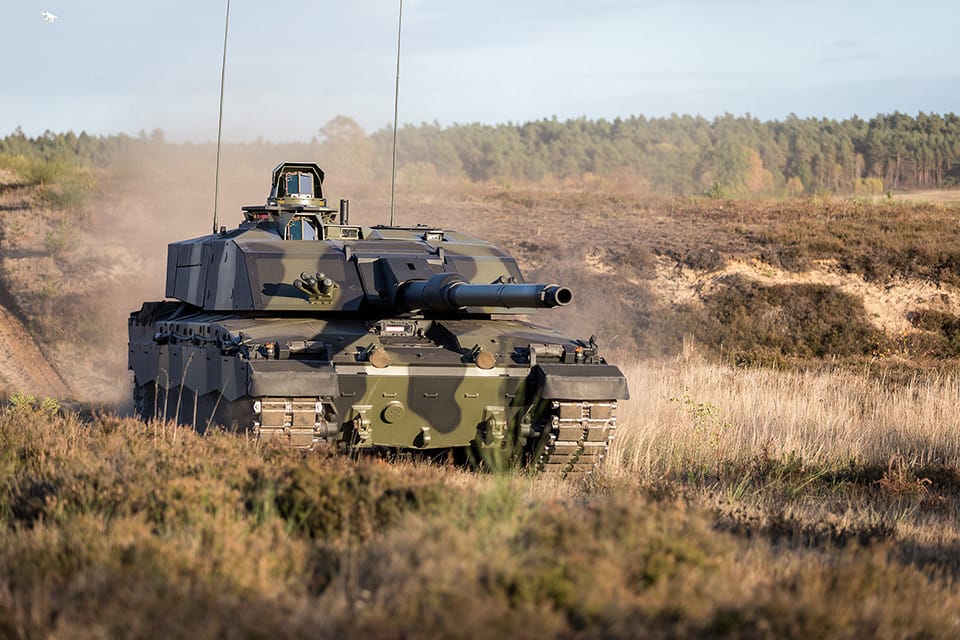
The Challenger 3 main battle tank, developed by Rheinmetall BAE Systems Land (RBSL) for the British Army, has successfully conducted its first manned live firing trials, the company announced on 20 January 2026. The milestone represents a key step in the tank’s ongoing development and assessment programme prior to service entry.
Held at a Ministry of Defence training area, the trials involved firing the tank’s primary armament — a Rheinmetall-manufactured 120 mm L55A1 smoothbore cannon — with personnel on board. This exercise followed earlier phases in which firing was conducted remotely, allowing engineers and military testers to evaluate weapon performance and safety under controlled conditions before progressing to crewed operations.
Challenger 3 is the British Army’s next-generation main battle tank, being modernised from existing Challenger 2 platforms under a contract valued at more than £800 million. The upgrade incorporates enhanced lethality, survivability, and digital systems. A total of 148 vehicles are scheduled for delivery, with production and integration work centred at RBSL’s Telford facility in the United Kingdom.
The press release highlighted the collaboration between the UK Ministry of Defence and industry partners, noting the contribution of a UK-based and wider European supply chain to the programme. Employment and investment gains associated with the contract include approximately 300 jobs at RBSL and a further 450 across the supplier network, alongside £40 million in inward investment at the Telford site.
While this first crewed live firing is a significant step, Challenger 3 will continue through a series of tests before reaching initial operational capability. These will cover further weapons integration, platform reliability, crew safety systems, and broader battlefield performance ahead of planned induction into British Army units later in the decade.