Conscription Returns to the Western Balkans: Serbia and Croatia Act, Slovenia Debates, Bosnia Lags
Western Balkan states are revisiting compulsory military service as security pressures rise. Slovenia is debating a limited return, Serbia is moving fast, and Croatia has already begun enforcement—while Bosnia and Herzegovina remains held back by political deadlock and underfunding.

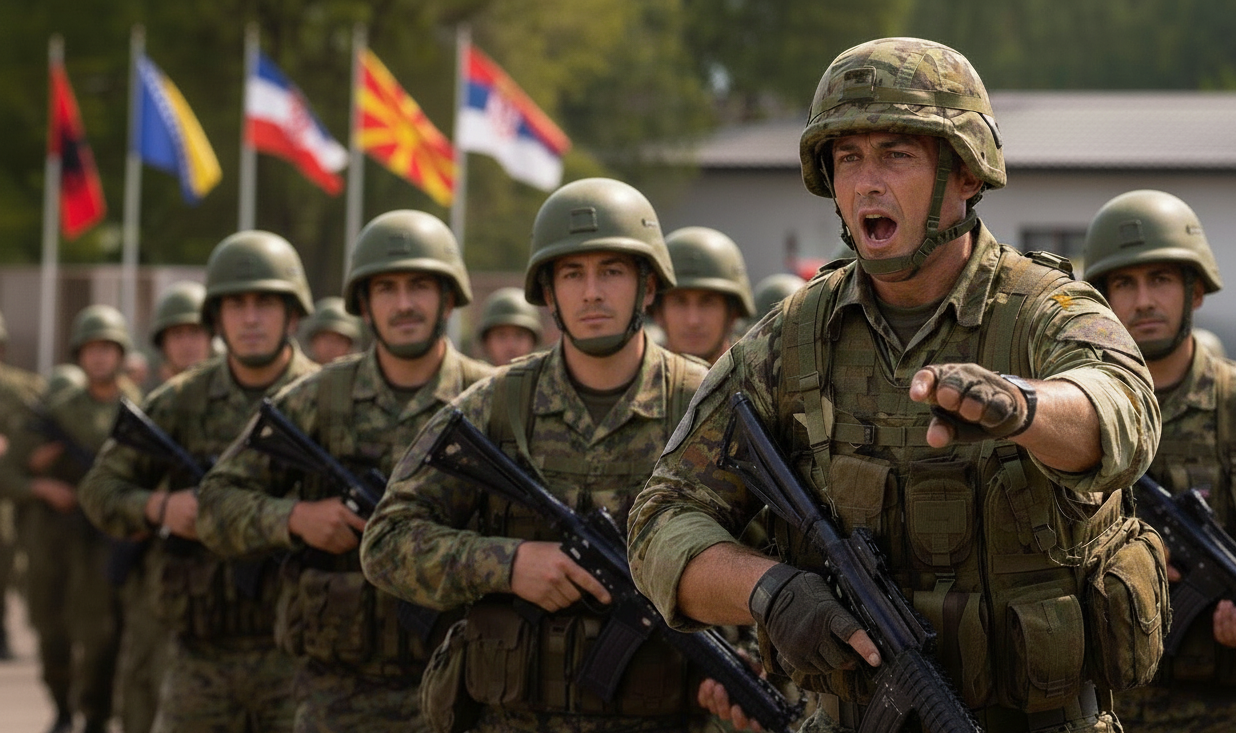
Across the Western Balkans, mandatory military service is returning to the strategic agenda. Driven by the war in Ukraine, worsening global security conditions, and renewed concern over force readiness and societal resilience, governments are reassessing whether professional armies alone are sufficient. While the pace differs, the direction is unmistakable.
Slovenia: Cautious Debate, No Political Urgency
In Slovenia, the issue has resurfaced through public initiatives proposing a short, two-month compulsory service. The concept is intentionally modern: fewer classic military elements and greater focus on civil protection, disaster response, physical preparedness, discipline, and teamwork.
The Ministry of Defence remains unconvinced. Its position is direct: social values cannot be fixed by military service alone. Legally, conscription has been frozen since 2003—not abolished—leaving parliament the option to reactivate it in the event of a serious security crisis. Politically, however, there is no momentum. Voluntary service, youth military camps, and scholarship programs continue to deliver stable results, reducing pressure for change.
Serbia: Political Decision Already Taken
In Serbia, hesitation is minimal. Political leadership has announced that mandatory military service will return in 2026, with a 75-day training period. Parliamentary approval is widely expected to formalize an already-signaled decision.
The Armed Forces and Ministry of Defence claim full readiness, supported by extensive investments in barracks, command facilities, and unit infrastructure. Initial call-ups are expected to include men over 19, including students and employed youth. Serbia’s approach is clear and centralized: decide, implement, adjust.
Croatia: From Policy to Enforcement
Croatia has already moved from debate to execution. Medical call-ups have been sent to approximately 1,200 nineteen-year-olds, marking the operational return of military training.
The system includes:
- Two months of service
- Weapons handling, first aid, tactics, topography, and basic drone operations
- €1,100 monthly compensation
- Employment advantages after completion
- Civilian service for conscientious objectors
- Fines of up to €5,000 for non-compliance
Daily life is structured and demanding, with early mornings, physical training, classroom instruction, and field exercises. Mobile phones are restricted outside rest periods. The message is explicit: short service, real discipline, real consequences.
Bosnia and Herzegovina: Outside the Regional Momentum
In Bosnia and Herzegovina, mandatory military service was abolished in 2006 during defense reforms that also envisioned a reserve component of the Armed Forces. That reserve was never meaningfully established, largely due to long-term funding shortages.
Today, Bosnia and Herzegovina has no compulsory service, no structured voluntary system, and no functional reserve force. Military and security analysts broadly agree that reintroducing some form of service would strengthen overall defense readiness. Politically, however, this remains blocked. Resistance to higher defense spending—particularly from representatives of Republika Srpska at the state level—makes acceptance of additional recruitment and training costs highly unlikely.