DOK-ING and Dynamit Nobel Defence Integrate Unmanned Mine-Scattering Capability
DOK-ING and Dynamit Nobel Defence have presented a combined unmanned solution for rapid deployment of anti-tank minefields. The system integrates the MV-8 KOMODO platform with the SKORPION2 scatterable mine system.

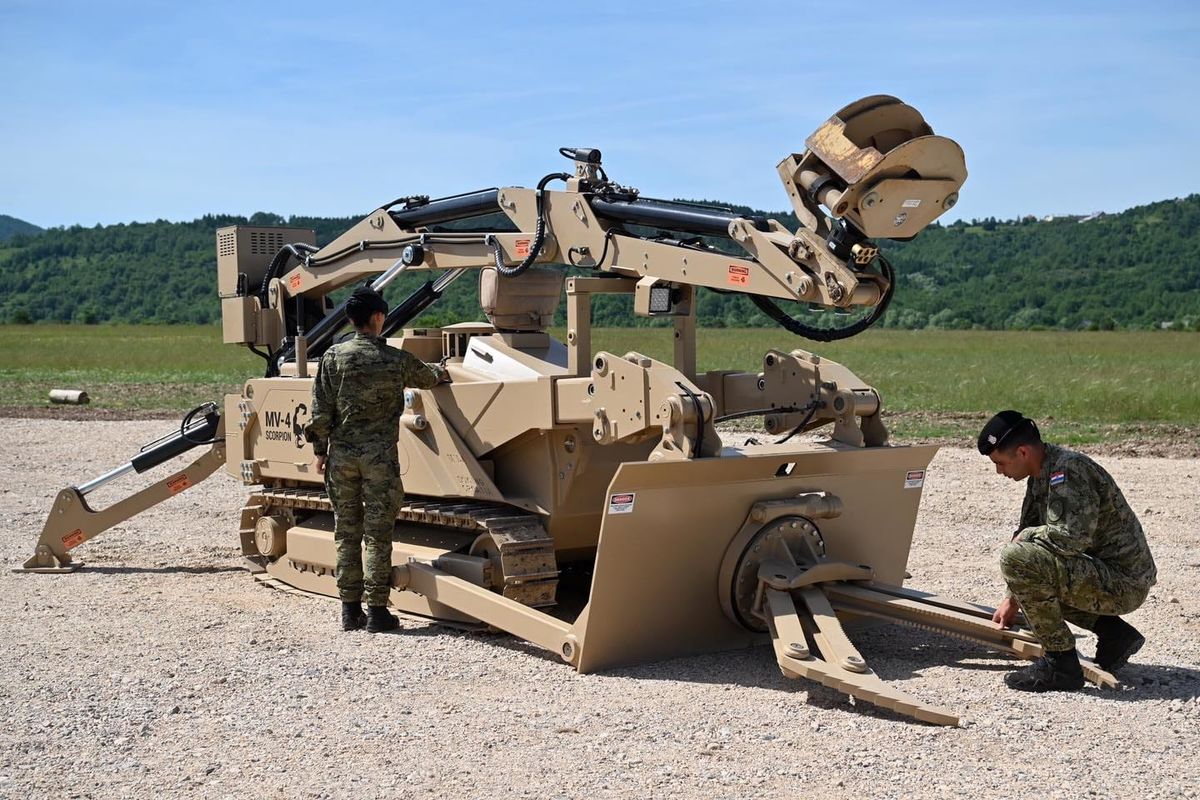
Croatia-based DOK-ING and Germany’s Dynamit Nobel Defence GmbH have unveiled a joint unmanned capability designed to support rapid counter-mobility operations on the battlefield.
The system combines DOK-ING’s MV-8 KOMODO unmanned hybrid ground platform with Dynamit Nobel Defence’s SKORPION2 scatterable anti-tank mine system. The integrated solution enables remote deployment of structured anti-tank obstacles within a short timeframe, without exposing operators to direct threat environments.
According to the companies, the concept focuses on increasing operational speed and flexibility in contested areas while maintaining personnel safety. The unmanned configuration allows forces to establish defensive barriers or deny maneuver corridors with minimal physical presence on the ground.
The MV-8 KOMODO platform is designed for multi-role unmanned operations, including engineering and hazardous environment missions. Its hybrid propulsion and remote-control capability provide adaptability across different terrain types. When paired with the SKORPION2 system, the platform can deploy scatterable anti-tank mines in a controlled pattern, supporting tactical area denial.
The development reflects a broader shift toward unmanned and remote-operated systems in land warfare, particularly in engineering and mobility denial roles. Armed forces across NATO and partner nations are increasingly prioritizing such capabilities to reduce casualties and improve responsiveness in high-intensity conflict scenarios.
The companies indicated that the integration aims to set a new operational standard for unmanned counter-mobility solutions, aligning with evolving battlefield requirements and the growing emphasis on automation in defense operations.