EU-India Defense Partnership: What It Could Mean for Industry on Both Sides

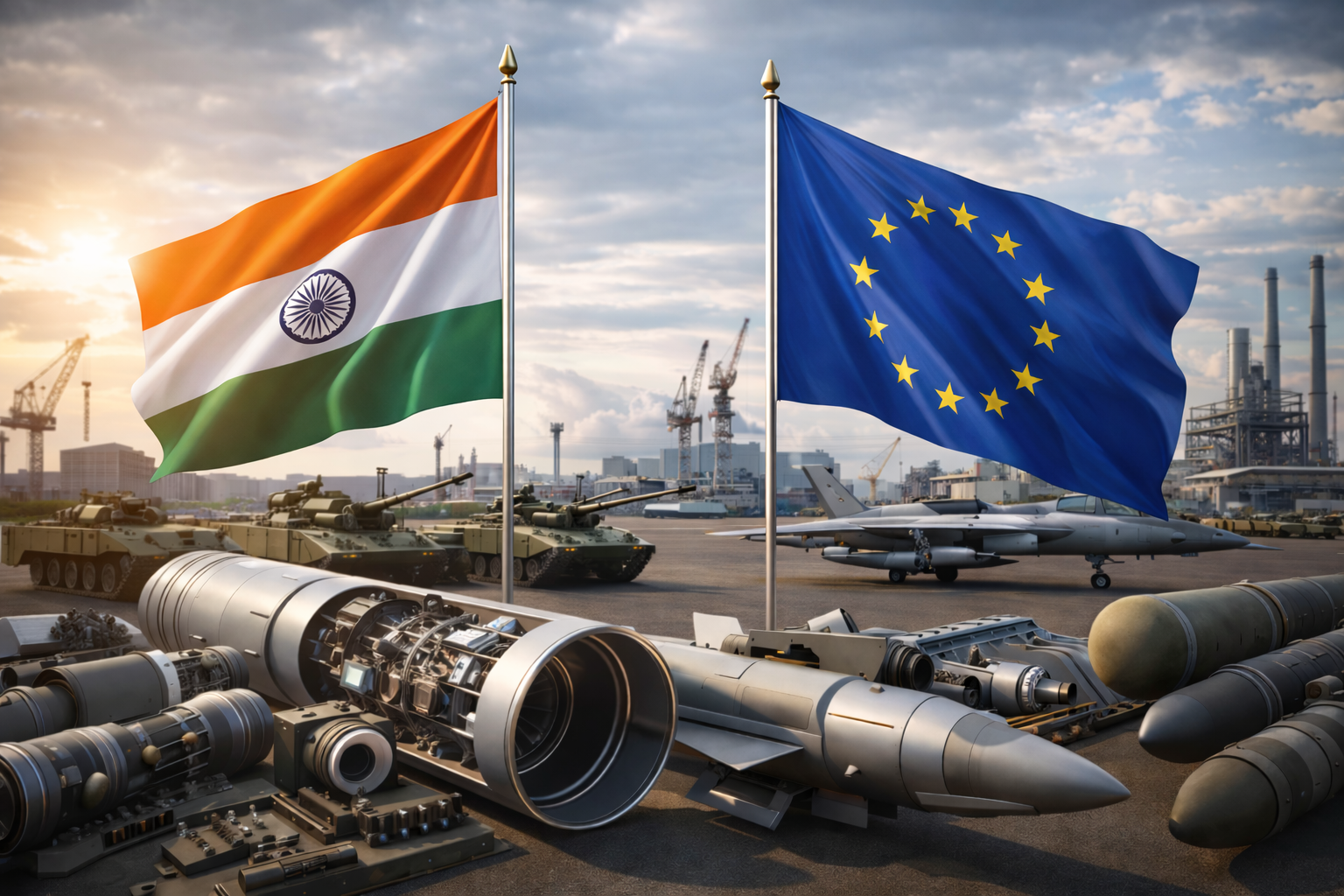
The European Union decision to proceed with a Security and Defense Partnership with India adds an industrial dimension to a relationship that has so far been driven largely by bilateral ties between India and individual European states. EU foreign policy chief Kaja Kallas said the partnership is intended to deepen cooperation in maritime security, cybersecurity, and counterterrorism.
For the EU defense industry, the most immediate significance is political signaling that India is being treated as a priority partner at a time when Brussels is trying to strengthen European manufacturing capacity and supply chain resilience. EU initiatives such as the European Defence Industrial Programme are designed to accelerate production capacity and encourage cooperative procurement inside the Union, creating strong incentives to lock in dependable supply chains and industrial partners.
The industrial upside for European primes and tier suppliers is access to a large market with ongoing recapitalization needs, plus opportunities to expand licensed production, local assembly, and component sourcing where permitted. Reuters recently highlighted the Airbus Tata C 295 program in India as an example of European industry already scaling manufacturing links in the country, and broader trade talks could further shape the operating environment for cross border industrial cooperation.
However, the partnership is unlikely to create a single EU wide fast track for defense exports on its own. European defense trade remains governed by national licensing and end use controls, while EU level funding instruments increasingly emphasize European and close partner content requirements. That means some categories of cooperation may be easier than others, particularly sustainment, repair and overhaul, training ecosystems, software intensive capabilities, and selected subsystem supply chains rather than sensitive full system transfers.
For India, the partnership offers a route to diversify cooperation beyond traditional suppliers and to expand access to European technology and industrial practices in areas aligned with current priorities, including maritime domain awareness, cyber resilience, and counter hybrid threats. An EU external action service policy document published in 2025 explicitly linked the planned partnership to deeper strategic consultations and said it could facilitate defense industrial cooperation, while also noting work toward a Security of Information Agreement to support exchange of classified information.
If implemented with practical industrial workstreams, the agreement could support co development and co production models that complement Indias domestic manufacturing objectives, especially where European firms already have footprints and Indian industry can offer cost effective production capacity and engineering talent. In parallel, closer operational coordination at sea can create demand for interoperability related upgrades, communications, sensors, and sustainment packages that typically translate into multi year industrial activity.
What the partnership ultimately means for both sides will depend on the final text, follow on implementing arrangements, and how quickly both parties can translate political intent into repeatable industrial mechanisms. Early indicators suggest an emphasis on enabling frameworks, information security, and select capability areas, rather than a single procurement vehicle.