Europe’s Overlooked Defense Frontier: Greece and Bulgaria Quietly Reemerge as Strategic Hubs
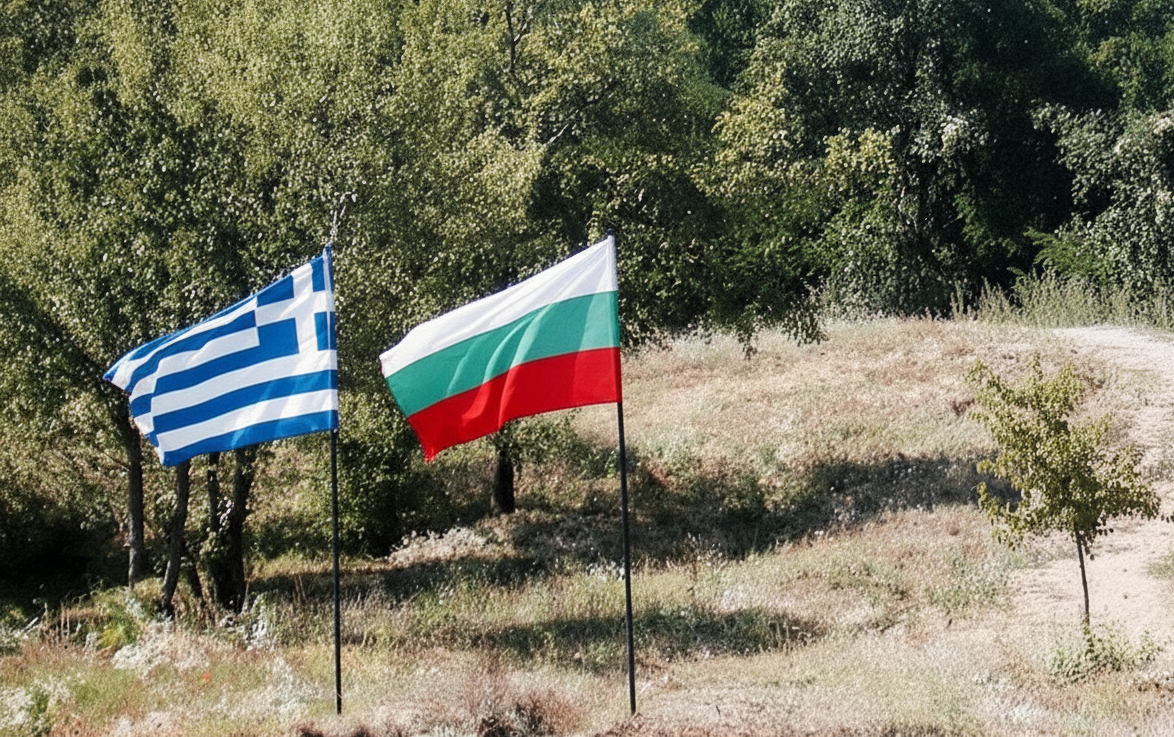
As Europe races to rebuild its defense capacity, two Southeastern nations are stepping into roles few expected. Greece and Bulgaria—long considered peripheral players—are rapidly transforming into key industrial and strategic hubs.

For much of the past decade, Europe’s defense build-up has been framed as a story centered on its northern and central powers—Germany’s spending surge, Poland’s rapid militarization, France’s industry, and the Nordic countries’ race to harden their borders.
Yet far from the spotlight, two Southeastern European nations are undergoing a quieter but consequential transformation, one that could reshape the continent’s industrial landscape.
Greece and Bulgaria, often viewed as peripheral actors, are increasingly positioned to become significant contributors to Europe’s defense capacity. Their ascent is not happening by accident. It is the product of geography, modernization pressures, and a long-overdue recalibration of Europe’s defense supply chains.
Greece Reenters the Strategic Conversation
After years of economic turmoil, Greece is restoring and expanding its defense capabilities with a scale and seriousness that many outside the region have overlooked.
What began as a response to persistent tensions in the Eastern Mediterranean has evolved into a broader industrial revival.
Athens has committed billions to its armed forces, acquiring Rafale fighter jets, upgrading MEKO-class frigates, expanding its missile-defense network, and moving forward with plans to purchase the F-35.
These programs are more than line items. They are reshaping Greece’s industrial ecosystem.
A Naval Base Reawakens
Greek shipyards—long characterized by financial instability—are reemerging as strategic assets. Facilities such as Elefsisand Hellenic Shipyards are now undergoing restructuring and modernization, supported by foreign partnerships and renewed government attention.
For Europe, this matters. Naval shipbuilding capacity is tight across the continent. Greece represents one of the few places where capacity can still expand without starting from zero.
A New Strategic Corridor With Israel
In recent years, Greece has strengthened its defense cooperation with Israel, developing a partnership that reaches deep into intelligence, training, UAV technology, and electronic warfare. The cooperation has effectively created a new Mediterranean defense corridor—one that blends European industrial needs with Israeli technological experience.
A Skilled Workforce Seeking Direction
Despite high emigration during the debt crisis, Greece retains a technically skilled labour pool—particularly in aerospace, electronics, and software engineering. As defense spending grows, the country is beginning to reclaim talent and attract new investment.
Bulgaria’s Revival: An Industrial Asset Hiding in Plain Sight
If Greece offers naval and aerospace capability, Bulgaria brings something Europe is acutely short of: ammunition, explosives production, and legacy manufacturing capacity that can be upgraded quickly.
Ammunition Production With Global Reach
For decades, Bulgaria’s defense sector was regarded as a relic of the Cold War—competent but outdated, producing for global markets far from the EU. But as demand for ammunition and explosive materials has surged across Europe, Bulgaria’s factories have taken on a newfound strategic importance.
Companies such as VMZ Sopot, Arsenal, and Arcus now play a critical role in supplying ammunition at a time when Europe faces widespread shortages.
Unlike other parts of Europe, Bulgaria still possesses functioning infrastructure for energetic materials, a capability that cannot be rebuilt overnight and which the EU badly needs.
An Infusion of European Funding
EU programs aimed at strengthening industrial resilience and military mobility have sent new investments into Bulgaria’s infrastructure and defense manufacturing base. Rail links, logistics hubs, and industrial zones are being upgraded—often for the first time in decades.
A Shift in Political Orientation
Despite political turbulence, Bulgaria is now more firmly aligned with EU and NATO policies than at any point in recent memory. This shift has opened the door for more transparent partnerships, foreign investment, and long-term planning—conditions that investors had long considered uncertain.
A Growing U.S. Footprint
American involvement is increasing as well. U.S. military and industrial teams have stepped up collaboration with Bulgarian facilities, conducting audits, supporting modernization efforts, and strengthening NATO’s Black Sea posture.
Two Markets, Complementary Strengths
Although different in character, Greece and Bulgaria offer complementary capabilities at a time when Europe is searching for new industrial depth.
Greece:
- Naval shipbuilding and modernization
- Electronic warfare and radar integration
- UAV production and Mediterranean air-surveillance technology
- MRO centers for F-35 and Rafale
- Advanced maritime domain awareness systems
Bulgaria:
- Ammunition (from small-caliber to artillery)
- Propellants and explosives
- TNT and energetic materials
- Armored vehicle upgrades
- Optics and fire-control systems
- Counter-drone equipment
- Manufacturing parks and supply-chain logistics
Both countries benefit from a combination of lower labour costs, existing infrastructure, and strategic geography.
Why the Next Five Years Matter
Several structural factors suggest that Greece and Bulgaria may play an outsized role in Europe’s defense landscape through 2030:
- Europe’s traditional suppliers are overstretched.
With Western European manufacturers struggling to meet demand, secondary regions are gaining importance. - NATO’s eastern and southern flanks are receiving renewed attention.
The Black Sea and Eastern Mediterranean require greater surveillance, naval presence, and ammunition stockpiles. - Ammunition demand is not expected to decline.
Even if the war in Ukraine ends tomorrow, NATO’s depleted stockpiles will take years to replenish. - Foreign partnerships are accelerating.
Israeli, American, and European firms are all deepening their presence in both markets. - EU funding is shifting toward Southeast Europe.
Industrial resilience and logistics corridors are now a priority.
A Region No Longer on the Margins
For decades, Southeastern Europe occupied the margins of the European defense conversation—relevant primarily as a consumer, not a contributor. That is no longer the case.
Greece is reemerging as a naval and aerospace anchor in the Mediterranean.
Bulgaria is consolidating its position as one of the few European states capable of producing ammunition and explosives at scale.
Their rise is not the product of political slogans or temporary spending spikes. It reflects structural changes in Europe’s strategic needs and a recognition that the continent requires a broader industrial base.
As Europe recalibrates its defense posture for an uncertain decade ahead, the overlooked south is stepping forward—quietly, but decisively.