GFP 2025 Ranking: Where CEE and SEE Countries Stand in Global Military Power
The Global Firepower (GFP) 2025 Military Strength Ranking places Central and Eastern Europe (CEE) and Southeastern Europe (SEE) in a sharply divided position: a handful of frontline states are rising in global relevance, while much of the Western Balkans remains near the bottom of the list.


The Global Firepower (GFP) annual ranking for 2025 lists 145 countries based on its proprietary PowerIndex (PwrIndx) score — a composite model using more than 60 factors including manpower, equipment numbers, logistics, financial strength, and geographic considerations. A lower PwrIndx score indicates a stronger conventional military capability.
While GFP is not a perfect measure of combat effectiveness, the 2025 ranking offers a useful snapshot of how Central and Eastern Europe (CEE) and Southeastern Europe (SEE) are positioned in global terms — especially as European security dynamics continue to shift under the pressure of the war in Ukraine and sustained rearmament across NATO’s eastern flank.
CEE: A Region Moving to the Center of European Defense Gravity
One of the most striking takeaways from GFP 2025 is the strength and strategic momentum of key CEE states.
Ukraine (#20) – Wartime Mobilization Reflected in the Ranking
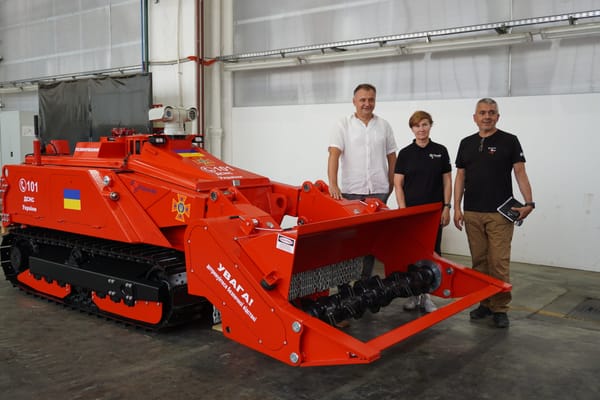
Ukraine’s position at #20 globally highlights how the country has evolved into one of Europe’s most battle-tested militaries. The ranking likely captures not only force size and mobilization, but also the scale of operational activity and sustained wartime structure.
Poland (#21) – The Leading CEE Conventional Power
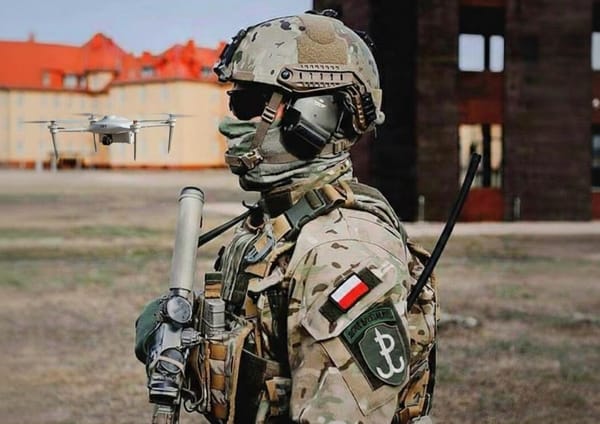
Just behind Ukraine, Poland ranks #21, confirming its growing status as the most significant long-term land power builder within the European Union. Warsaw’s deep modernization efforts and large-scale procurement programs have increasingly positioned Poland as a core pillar of NATO’s frontline defense posture.
Romania (#51) and Czechia (#53) – Mid-Tier NATO Contributors
Further down the list, Romania (#51) and Czechia (#53) represent capable mid-tier forces within the CEE block. Both play important roles in NATO readiness, with Romania’s security relevance rising through its proximity to the Black Seaand the wider eastern flank.
SEE: A Region Defined by One Heavyweight and Several Small Forces
In the SEE space, the ranking shows a sharp imbalance between major and small militaries.
Turkiye (#9) – The Dominant Regional Military Actor
Turkiye ranks #9 globally, making it the clear heavyweight in Southeastern Europe and one of the most significant military actors in NATO overall. Its position reflects scale, domestic industry depth, and a broad force structure across land, sea, and air domains.
Greece (#30) – A Strong Military Power in the Eastern Mediterranean
Greece at #30 continues to rank among Europe’s stronger militaries, shaped by its strategic geography and long-term defense focus across air defense and maritime capabilities.
Western Balkans: Low Global Ranking, Limited Scale
The Western Balkans remain positioned in the lower half of the ranking, reflecting limited budgets, force size constraints, and smaller inventories.
Serbia (#63) – Highest Ranked in the Western Balkans
Serbia ranks #63, making it the best-positioned Western Balkan country on the 2025 GFP list. This reflects the relative size of its ground forces and overall inventory compared to its neighbors.
Croatia (#74) – NATO Member with Moderate Force Structure
Croatia is ranked #74, placing it in the middle-lower tier globally. While Zagreb continues modernization initiatives, the GFP ranking reflects the realities of overall scale and force density.
Slovenia (#96) – Small Force Footprint
Slovenia ranks #96, underlining the constraints typical for small NATO militaries with limited force mass and narrower capability sets.
Montenegro (#127) and Bosnia and Herzegovina (#132) – Bottom-Tier Positions
At the very low end of the global ranking, Montenegro (#127) and Bosnia and Herzegovina (#132) appear among the weakest ranked European states in GFP 2025. The difference between them is small, but the broader message is clear: both remain in the “lightweight” category in terms of conventional military power.
What the GFP 2025 Ranking Signals for CEE and SEE
1) CEE is becoming Europe’s key land-power zone
The placements of Ukraine and Poland highlight a broader reality: Europe’s military center of gravity is increasingly shifting eastward, where scale, mobilization capacity, and sustained readiness are becoming the dominant strategic priorities.
2) SEE’s strength is uneven — with Turkiye far ahead
Turkiye’s Top 10 position is a reminder that SEE includes a major military-industrial actor, but most neighboring states remain significantly smaller in global terms.
3) Western Balkans remain limited by scale, not ambition
Modernization efforts exist across the region, but GFP rankings point to a consistent problem: without volume, logistics depth, and sustained defense investment, overall power remains constrained.
4) Defense industry and sustainment are becoming decisive multipliers
Even though GFP is platform- and inventory-heavy, the post-2022 European environment increasingly rewards countries that can sustain operations, build ammunition stocks, and expand maintenance and industrial output — not only those with larger paper inventories.
Selected CEE/SEE Positions in GFP 2025
- Turkiye – #9
- Ukraine – #20
- Poland – #21
- Greece – #30
- Romania – #51
- Czechia – #53
- Serbia – #63
- Croatia – #74
- Slovenia – #96
- Montenegro – #127
- Bosnia and Herzegovina – #132
The GFP 2025 ranking reinforces a clear regional picture: CEE is rising in strategic relevance, SEE remains structurally uneven, and the Western Balkans are still positioned at the low end of European conventional power.
For defense planners and industry stakeholders, the ranking is less about prestige — and more about what it implies: the future balance of power in Europe will increasingly depend on industrial capacity, logistics, readiness depth, and the ability to scale, not only headline procurement announcements.