Israel Commits Over $100 Billion to Build Fully Independent Munitions Industry
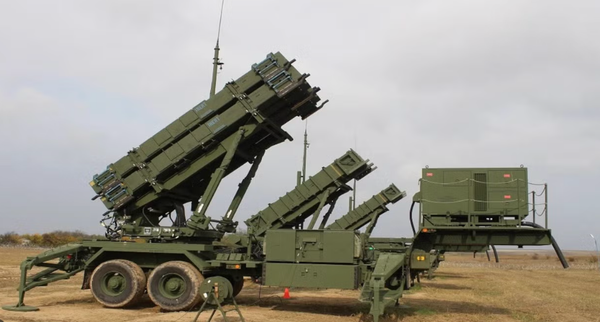
Israel has approved a $100+ billion, decade-long investment to build a fully independent domestic munitions industry, aiming to secure long-term military self-reliance, and shield national defense from external embargoes and political pressure following the war triggered by Hamas’ October 7 attack.


Israel will invest more than $100 billion over the next decade to establish a fully independent domestic munitions industry, Prime Minister Benjamin Netanyahu announced this week, marking one of the most ambitious defense-industrial initiatives in the country’s history.
Speaking at a graduation ceremony for Israeli Air Force pilots, Netanyahu said the government had approved a NIS 350 billion (approximately $108 billion) multi-year program aimed at ensuring Israel can sustain prolonged, high-intensity warfare without reliance on external suppliers.
“This is a direct lesson from the war we have been fighting on multiple fronts,” Netanyahu said, referring to the security environment following the October 7, 2023 attack by Hamas. “We must reduce dependence on all players — including friends.”
Strategic Autonomy After Supply Restrictions
The decision follows a period in which several Western partners imposed restrictions or delays on arms exports to Israel amid the Gaza war. While Israel continues to maintain strong defense ties with key allies, the government has concluded that strategic autonomy in munitions and key weapons systems is no longer optional.
Netanyahu emphasized that Israel’s growing self-reliance does not come at the expense of exports. On the contrary, he noted that international demand for Israeli systems continues to rise, particularly from European customers seeking combat-proven capabilities.
The initiative builds on a policy direction Netanyahu publicly outlined in early 2024, when he called for a long-term plan to free Israel from dependence on external military procurement. That message intensified later in the year when he warned that Israel must be prepared to stand alone if necessary — a remark that sparked controversy but underscored the urgency felt within Israel’s security establishment.
Preserving Air Superiority
Netanyahu also reaffirmed Israel’s commitment to maintaining uncontested air superiority in the Middle East, calling it “a cornerstone of national security.” Israel remains the only country in the region operating the F-35 stealth fighter, with 45 aircraft already in service and additional units on order.
Without naming specific states, Netanyahu said Israel would act to prevent hostile actors from acquiring advanced aerial capabilities that could erode its qualitative military edge — a principle that has guided Israeli defense policy for decades.
Israel’s concerns are heightened by regional arms dynamics, including renewed efforts by Turkey to re-enter Western fighter programs after its earlier removal following the purchase of Russian air defense systems. Ankara has emerged as one of the most vocal critics of Israel since October 2023, with President Recep Tayyip Erdoğan repeatedly accusing Israel of genocide while openly praising Hamas.
Regional Balance Remains Central
The announcement also comes amid reports that the United States plans to sell advanced fighter aircraft to Saudi Arabia. U.S. officials have stressed that any systems delivered would be downgraded compared to Israeli variants, preserving Israel’s qualitative edge — a long-standing U.S. policy commitment.
By dramatically expanding domestic production, Israel aims to ensure that future conflicts cannot be constrained by foreign political pressure, embargo threats, or supply chain vulnerabilities.
For Israel’s leadership, the conclusion is clear: deterrence, resilience, and sovereignty in defense production are inseparable — and the price of independence is now seen as an essential investment in long-term national survival.