Israel delivers Arrow 3 missile-defense system to Germany — largest export deal in Israeli history
Germany has formally received the Israeli-built Arrow-3 missile-defense system, introducing exo-atmospheric interception capability into Europe’s air-defense network for the first time and deepening strategic ties between Berlin and Jerusalem.

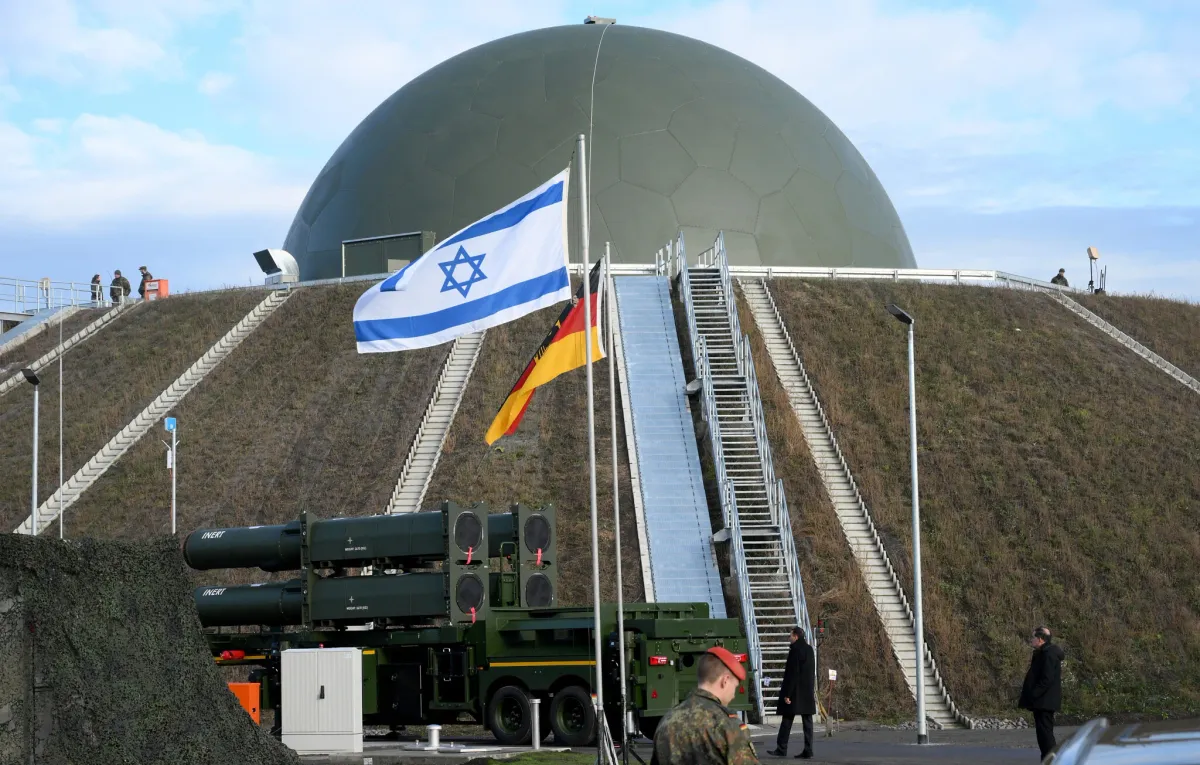
HOLZDORF AIR BASE, Germany — In the biting December wind on a quiet tarmac south of Berlin, German and Israeli officers stood side by side to mark a moment that only a decade ago would have seemed unthinkable: the formal delivery of Israel’s Arrow-3 exo-atmospheric missile-defense system to the German armed forces.
What unfolded was not merely a military acquisition. It was a symbolic handover between two states bound by history and now, increasingly, by security.
The Arrow-3 — capable of intercepting ballistic missiles in space before they re-enter the atmosphere — will become the top tier of Germany’s multi-layered defensive shield, intended to protect both German territory and surrounding European skies from high-altitude threats. Its arrival reflects Berlin’s accelerated push to modernize after Russia’s invasion of Ukraine shattered decades of assumptions about continental security.
The deal, valued at over €4 billion, is the largest defense export ever recorded for Israel. For Germany, it represents confidence in Israeli engineering and a willingness to diversify beyond traditional American and European air-defense architectures. For Israel, it marks the first time the Arrow-3 has been entrusted to another nation — and to one with profound historical resonance.
While German defense officials have avoided explicitly naming adversaries, the underlying premise is clear: Europe believes it must be prepared for long-range missile threats, including those that could be launched from the east or beyond. The Arrow-3’s role is not tactical engagement, but strategic denial — neutralizing threats before they cross borders.
Israel Aerospace Industries has positioned the Arrow-3 as a flagship of its expanding missile-defense portfolio — part deterrent, part insurance policy. The system will operate alongside Germany’s Patriots and IRIS-T SLM batteries, creating an air-defense web that connects radar, command networks, and interceptor launchers across multiple layers.
It is expected that crews from the German Air Force will undergo structured operational training in the coming months, with full operational readiness planned on an accelerated schedule. Senior officials described the system as a foundation upon which Europe may later build a broader shared missile-defense architecture — one that spans not just NATO territory, but cooperative procurement and pooled coverage.
The delivery at Holzdorf did not include triumphant speeches; rather, it carried a tone of sober realism. Ukraine’s bombardments, Iran’s missile tests, and the re-militarization of global competition have quietly reordered European priorities.
Germany is not only buying capability. It is buying time — and distance. The Arrow-3 intercepts in the cold vacuum of space, long before a missile can unleash its payload toward a city.
In that sense, the ceremony marked two transitions: one technological, the other political. From the ground at Holzdorf, the implicit message was unmistakable: Europe is preparing for threats once considered remote. And Israel, long forced to innovate under existential pressure, is now exporting that experience to shape the security of others.