NestAI Launches Sovereign Military AI Program With Finland and Estonia
Finnish defense technology company NestAI is developing sovereign AI models for battlefield autonomy and military command applications. The Finnish and Estonian defense forces will receive early access to pilot the first systems.


NestAI has launched a program to develop European-controlled artificial intelligence models for unmanned systems and battlefield command, with Finland and Estonia selected as the first military pilot users.
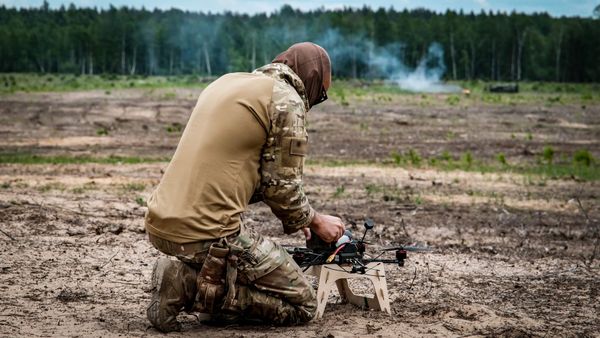
The Finnish company said the initial models will address two areas. The first covers battlefield autonomy, including decisions made by unmanned platforms. The second focuses on battlefield orchestration, where AI supports command functions and coordination across multiple systems and units.
Development will use operational data generated through NestOS, the company’s software environment for unmanned platforms and command systems. This information will be supplemented with synthetic data and large-scale simulations designed to represent contested terrain, changing threats, electronic warfare, and scenarios that are difficult or unsafe to reproduce during exercises.
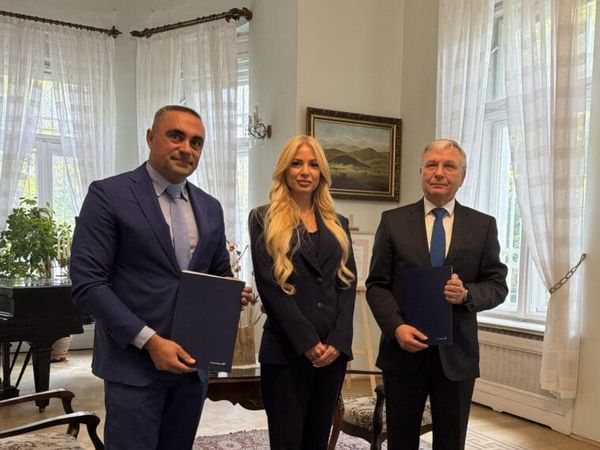
The Finnish Defense Forces AI Center of Expertise will receive early access to the models. The Estonian Defense Forces will participate through a cooperation framework established with Finland and NestAI on June 30.
The letter of intent does not include financial commitments. It instead creates a framework for knowledge sharing, joint development, training, and technical cooperation between the Finnish Ministry of Defense, the Estonian Defense Forces, and NestAI.
Initial cooperation will cover adaptive AI, command and control support, autonomous platforms, and unmanned systems. The partners plan to use open and modular architectures intended to support integration across equipment from different manufacturers and reduce dependence on a single supplier.
For the European defense market, the program represents an attempt to develop the software and AI layer alongside domestically produced drones, communications equipment, sensors, and command systems. The approach is intended to retain national control over operational data, model development, and future capability upgrades.
However, the current initiative remains at the research and pilot stage. NestAI, Finland, and Estonia have not disclosed trial schedules, procurement quantities, contract values, or timelines for operational deployment. Future acquisition decisions will depend on the results of military testing and integration work.
NestAI said its development team includes around 200 engineers and scientists. The company is working with AMD, the ELLIS Institute Finland, and the LUMI AI Factory on computing and model development. It is also developing methods to operate larger AI models within the processing and power limits of deployed edge systems.
The company was founded in 2025 and secured a combined €100 million investment from Nokia and Finnish state-owned investment company Tesi later that year. The financing was linked to the development of AI capabilities for autonomous systems, command and control, surveillance, security, and defense applications.
NestAI is also integrating its software with Nokia’s deployable 5G networks, radio planning tools, and sensing technologies. The companies are developing applications for mobile command networks, connectivity-aware mission planning, and threat detection in communications-denied environments.
The Finland and Estonia pilots could provide NestAI with a military test base for validating its models against NATO interoperability requirements. The wider commercial opportunity will depend on whether the technology progresses from bilateral experimentation into funded national or multinational procurement programs.