Poland Delivers First Batch of BORSUK Infantry Fighting Vehicles to Armed Forces
Poland has delivered the first 15 serial-production BORSUK infantry fighting vehicles to the Armed Forces, marking the acceleration of one of NATO’s most important modernization programs. The 6.5-billion-złoty contract will see 111 next-generation, amphibious IFVs fielded by 2029.

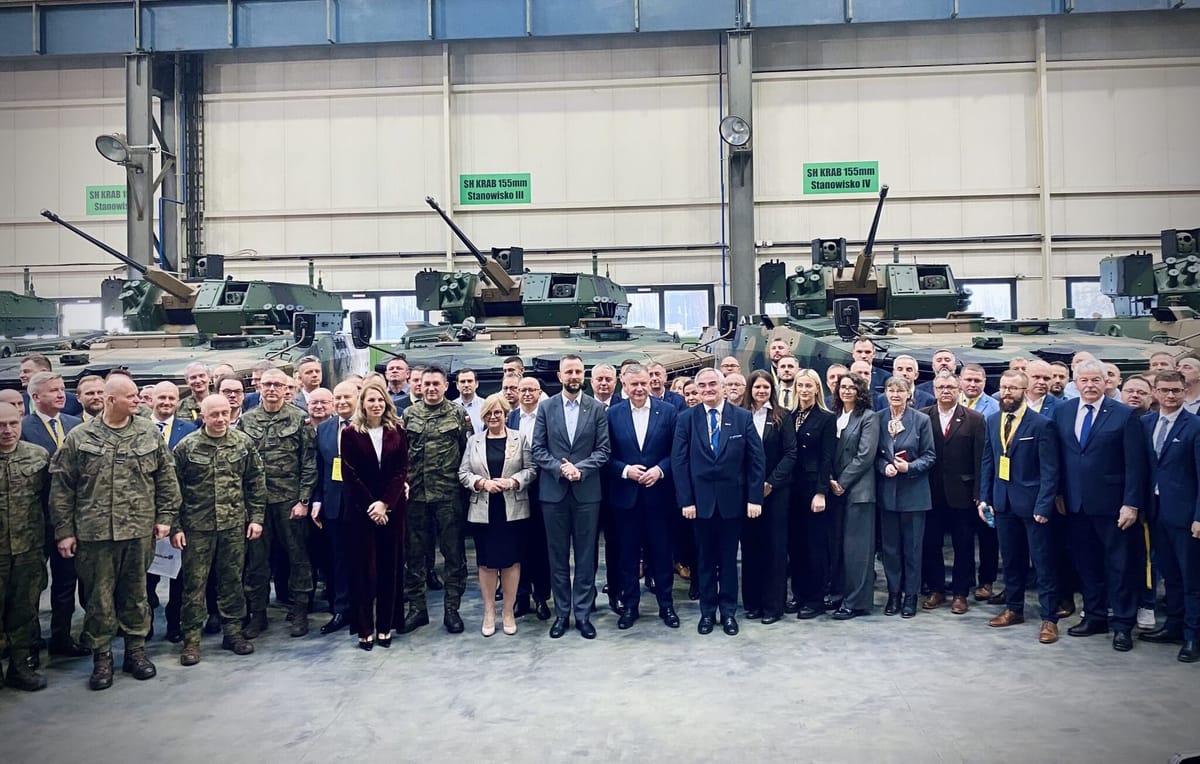
Poland has formally handed over the first 15 serial-production BORSUK infantry fighting vehicles to the Polish Armed Forces, marking a critical milestone in Warsaw’s armored modernization effort. The ceremony took place at Huta Stalowa Wola (HSW), the core manufacturing facility of Polska Grupa Zbrojeniowa (PGZ).
The delivery comes just nine months after the first executive contract was signed — an unusually fast turnaround for a tracked, amphibious IFV program of this complexity.
PGZ President Adam Leszkiewicz stated that the handover confirms the industry’s ability to execute on schedule despite surging demand and elevated production pressures: “We are delivering the first 15 Borsuks — the most advanced amphibious vehicles in their class. PGZ and the wider Polish defense sector are fulfilling their task effectively.”
First Vice-President of PGZ Arkadiusz Bąk officially announced readiness to transfer the new platforms into service, underscoring the strategic urgency behind deployment timelines.
The March 27, 2025 contract between Poland’s Armament Agency, PGZ, and HSW covers 111 BORSUK vehicles with a total value exceeding PLN 6.5 billion. Deliveries are planned from 2025 through 2029 as Poland accelerates the replacement of legacy BMP-1 fleets and strengthens maneuver capabilities on NATO’s eastern flank.
Next-Generation IFV for a High-Intensity Battlespace
The BORSUK is a fully amphibious, tracked infantry fighting vehicle designed to survive direct small-arms fire, anti-tank grenade attacks, and improvised explosive devices while transporting a full infantry squad into contested terrain.
Primary armament includes:
- 30 mm Mk 44S Bushmaster cannon
- Dual Spike anti-tank guided missile launcher
- 7.62 mm UKM-2000C coaxial machine gun
All weapons are operated through the ZSSW-30 remote, unmanned turret system — a core technological leap compared to Eastern-legacy platforms still in service across the region.
The vehicle is crewed by three (commander, gunner, driver) and carries six soldiers in the infantry compartment.
Strategic Implications
The rollout of the BORSUK shifts Poland closer to its stated objective: a fully modern mechanized force able to operate in river-dense terrain, urban zones, and NATO joint maneuver formations. Amphibious capability remains a decisive attribute given Poland’s operational geography and the expanding role of rapid-crossing armored units on Europe’s eastern frontier.
As regional demand for modern IFVs intensifies — particularly among states bordering Russia and Belarus — the BORSUK program positions Poland not only to re-equip its own army but to establish itself as a production anchor within NATO’s land systems ecosystem.