Venezuela Is Not a Scandal. It Is a Strategic Asset Europe Keeps Misreading
Venezuela is often framed in Europe as a moral or political scandal. In reality, it is a strategic energy asset whose prolonged instability reflects a deeper misreading of power, resources, and leverage in global geopolitics.

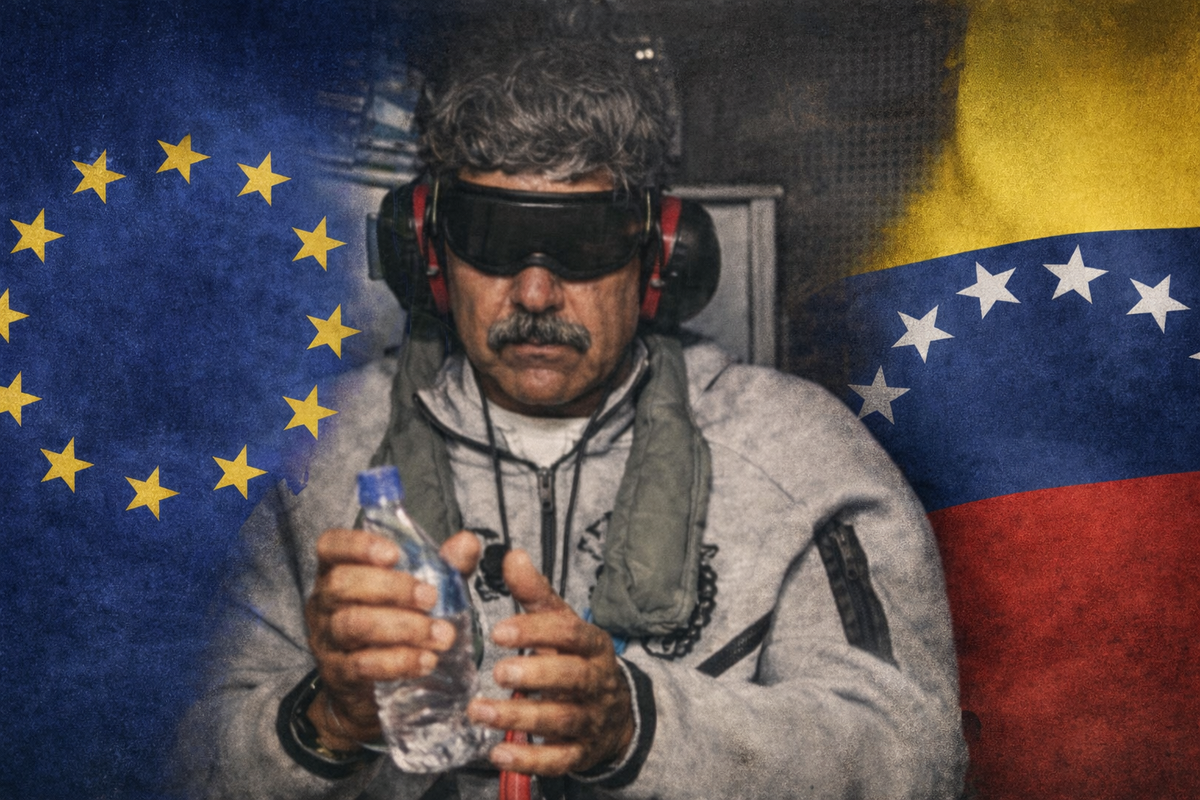
For years, Venezuela has been discussed in Europe as a morality play — a story of authoritarian decay, sanctions, humanitarian collapse and diplomatic outrage. It is an interpretation that comforts consciences but obscures reality.
Venezuela is not primarily a political scandal. It is a strategic asset with a broken operating system.
And in geopolitics, assets of that scale do not remain unmanaged indefinitely.
Strip Away the Narrative
This is not about narcotics accusations, courtroom indictments, or the personality of a single leader in Caracas. Those elements dominate headlines because they are easy to explain. Power politics is not.
At its core, Venezuela represents something far more elemental: energy, territory, population, and leverage. It holds the largest proven oil reserves in the world — larger than those of Saudi Arabia, Iran, Russia, or the United States. That fact alone guarantees it a permanent place on the strategic chessboard, regardless of who governs it.
Countries with that kind of resource base are never ignored forever. They are stabilized, absorbed, or forcibly reordered. Drift is not an option.
An Asset, Not a “Failed State”
Describing Venezuela as a failed or marginal state misunderstands its true position in the global system. Failed states are irrelevant. Venezuela is not.
Its problem has never been the absence of resources or people, but the collapse of institutions capable of operating them. In corporate terms, it is a company with extraordinary assets and catastrophic management. Markets do not write such entities off; they restructure them.
Seen through this lens, outside interest in Venezuela becomes predictable rather than conspiratorial.
The Geography of Power
Energy geopolitics has always favored scale. The world’s major oil producers — Venezuela, Saudi Arabia, Iran, Canada, Iraq, the United Arab Emirates, Kuwait, Russia, the United States, and Libya — form a rough map of influence rather than ideology.
They do not share values. They share relevance.
Venezuela’s prolonged instability has been tolerated largely because it remained contained. Once instability begins to affect broader energy flows, supply chains, or great-power competition, tolerance erodes. Intervention — diplomatic, economic, or otherwise — becomes a question of timing, not principle.
Europe’s Habitual Misreading
Here Europe consistently falls behind.
The United States tends to think in continents: logistics corridors, energy basins, maritime access, demographic scale. Europe thinks in procedures: committees, legal frameworks, moral positioning, and long-term roadmaps extending safely beyond current political cycles.
This difference is not philosophical; it is operational. One side plans for leverage. The other plans for consensus.
Venezuela exposes the cost of that gap. While European capitals debate legitimacy and ethics, others quietly assess refineries, ports, debt structures, and naval reach.
The China Dimension
The most immediate strategic loser in any Venezuelan realignment is not Europe — it is China.
Over the past decade, Beijing extended an estimated $19–20 billion in loans to Venezuela, largely structured through oil-for-loan agreements. These arrangements assumed political continuity. They were underwritten by access, not goodwill.
A government in Caracas aligned with Washington would face strong domestic and legal incentives to challenge those debts as illegitimate — obligations contracted by a regime that mortgaged national resources without public consent. A write-off of that magnitude would be unprecedented, and politically difficult for Beijing to contest.
Beyond finance, Venezuela has served as China’s most reliable foothold for energy access and military cooperation in Latin America. Losing that position sends a clear signal across the region: alignment choices have consequences.
China’s dependence on Venezuelan heavy crude has also been practical, not symbolic. A redirection of future production toward Western markets — particularly the US Gulf Coast — would quietly cut China out of a privileged supply channel at a moment of tightening global energy competition.
Not a Presidency, but a Pattern
Framing these dynamics as the product of a single American administration misses the larger point. Political cycles change. Strategic geography does not.
For more than a century, the United States has treated Latin America as a core strategic theater. The language varies — democracy, security, stability — but the underlying logic remains constant: resources and proximity matter.
Venezuela’s dysfunction was tolerable as long as it did not decisively reshape the balance of power. Once it did, ambiguity became a liability.
Europe’s Strategic Test
Europe’s challenge is not hypocrisy or moral failure. It is strategic inertia.
By externalizing hard-power thinking and embedding energy security inside regulatory frameworks, Europe repeatedly finds itself reacting to outcomes rather than shaping them. Venezuela is another reminder that the global order is reverting to fundamentals.
The next phase of geopolitics will not be led by the most ethically coherent policy paper. It will be led by those who control energy flows, secure supply chains, and act decisively when strategic assets drift into chaos.
Europe can continue to comment — or it can begin to compete.
The board, as always, is already moving.