Why Pre-Event Visibility Is Becoming Critical for Defense Companies at Trade Shows
As exhibition costs rise and decision-makers plan meetings weeks in advance, defense companies are rethinking how they approach trade shows. A growing number are adopting structured pre-event visibility strategies to build awareness before the doors open.

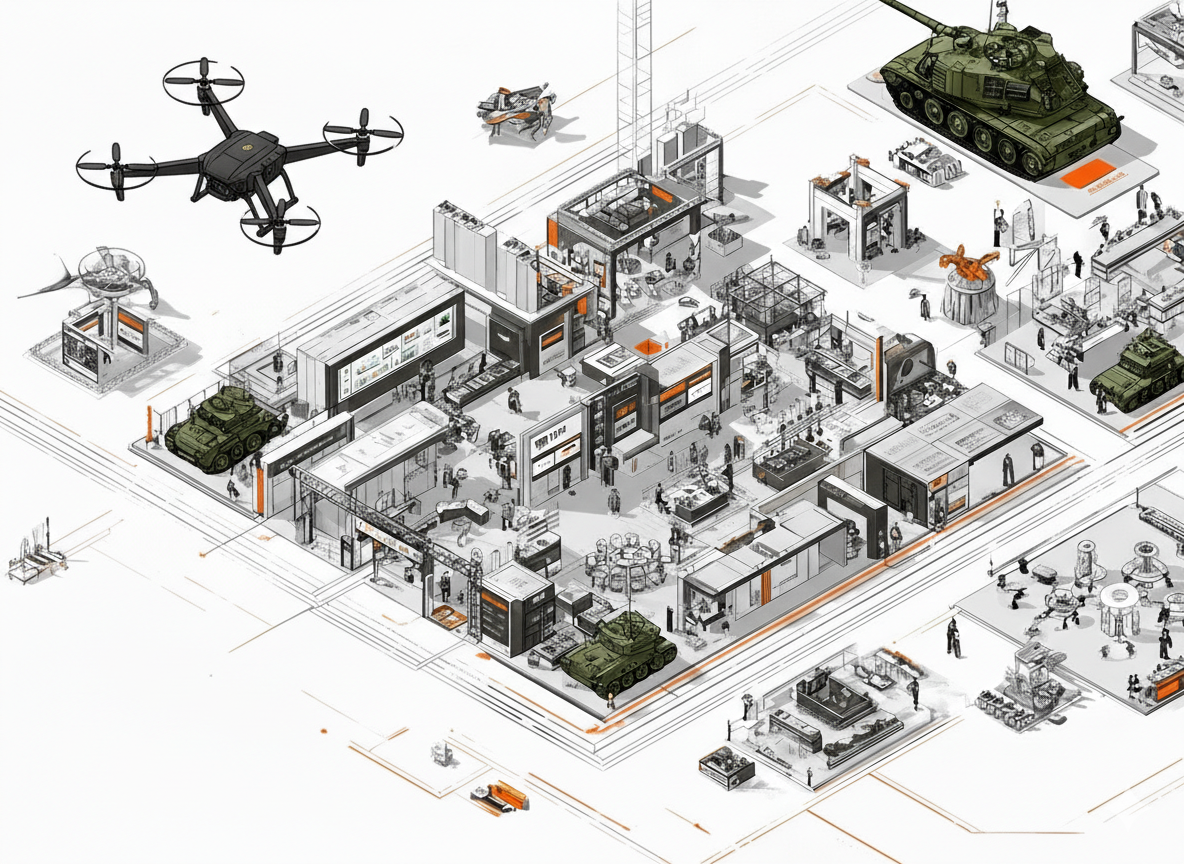
Defense and security trade shows remain one of the most important meeting grounds for manufacturers, integrators, government delegations, and procurement teams. From Eurosatory and DSEI to IDEX and MSPO, companies routinely invest between tens of thousands and several hundred thousand euros per event when booth construction, logistics, staffing, and travel are taken into account.
Yet despite this level of investment, a recurring challenge continues to surface across the industry: many exhibitors still rely heavily on on-site visibility and organic booth traffic to generate opportunities.
Increasingly, this approach is being questioned.
Decision-Makers Plan Before the Doors Open
Procurement teams, program stakeholders, and prime contractors rarely arrive at major exhibitions without a plan. Meetings are often scheduled weeks in advance, internal priorities are aligned beforehand, and shortlists of companies to visit are prepared long before opening day.
In this environment, companies that wait until the event to create visibility may find themselves competing for attention in an already crowded information landscape.
This shift has led to a growing recognition across the sector that exhibition success is no longer determined solely on the show floor — but in the weeks leading up to it.
The Emergence of Structured Pre-Event Engagement
A noticeable trend across recent major defense exhibitions is the rise of structured pre-event engagement strategies. These typically include:
- Mapping and prioritizing target organizations
- Direct outreach to relevant stakeholders
- Thought-leadership positioning ahead of the event
- Digital visibility focused on event audiences
Rather than replacing traditional exhibition presence, these efforts act as a preparatory layer — ensuring that key audiences are already familiar with a company’s capabilities before arriving at the venue.
Industry observers note that this approach mirrors broader shifts in B2B markets, where buying journeys increasingly begin long before face-to-face interaction.
Specialized Providers Supporting the Shift
Alongside this strategic evolution, a small number of specialized firms have emerged to support exhibitors with structured visibility around trade shows.
Among them is DefenseLead, a service platform focused specifically on pre-event awareness and targeted engagement for defense exhibitions. The model combines account-focused outreach in the weeks leading up to an event with digital reinforcement during the exhibition itself, aiming to increase recognition among relevant stakeholders rather than broad audiences.
Speaking to AdriaDefense, DefenseLead’s Head of Sales, Gordan Smith, noted that demand for structured pre-event visibility continues to accelerate across multiple regions.
“In 2026 we’re seeing a clear surge in new clients, particularly from the United States, South Korea, and across the MENA region. What’s consistent is that companies adopting a structured visibility approach arrive at exhibitions with far more productive conversations already underway. We remain confident that organizations using this model will continue to see stronger commercial outcomes as competition at major shows intensifies.”
Why the Approach Is Gaining Traction
Several factors are contributing to the growing adoption of pre-event visibility strategies:
1. Higher Cost Pressure
With exhibition budgets rising, companies are under greater pressure to demonstrate measurable outcomes.
2. More Competitive Show Floors
The number of exhibitors at major events continues to grow, making differentiation increasingly difficult.
3. Longer Sales Cycles
Defense procurement timelines mean that early awareness can significantly influence long-term opportunities.
4. Data-Driven Business Development
Companies are seeking more predictable pipelines rather than relying on chance encounters.
Together, these dynamics are gradually shifting exhibitions from purely physical showcases to hybrid engagement campaigns spanning several weeks.
From Foot Traffic to Meeting Density
One of the key performance indicators increasingly referenced by business development teams is not booth traffic volume, but the number and quality of scheduled meetings.
Companies adopting pre-event engagement strategies often report:
- Higher meeting density
- More senior-level interactions
- More structured follow-up pipelines
While exhibition presence remains essential for relationship building and product demonstrations, the role of preparation is becoming a defining factor in overall return on investment.
A Structural Shift Rather Than a Passing Trend
The growing focus on pre-event visibility reflects a broader transformation in how defense companies approach market engagement. Trade shows are evolving from isolated events into integrated campaign moments within a longer commercial cycle.
As digital channels and targeted outreach capabilities continue to mature, the distinction between “before the show” and “during the show” is increasingly blurred.
For many exhibitors, the question is no longer whether pre-event engagement is useful — but how structured and consistent their approach should be.
Looking Ahead
With the 2026 exhibition calendar already filling with major events across Europe, the Middle East, and Asia, companies are reassessing how they allocate resources between physical presence and pre-show engagement.
Those that treat visibility as a continuous process rather than a single-week effort are likely to enter events with a strategic advantage — arriving not just with a stand, but with established awareness and scheduled conversations.
For companies preparing for upcoming defense exhibitions, exploring structured pre-event visibility approaches can provide additional perspective on how the model works in practice: https://defenselead.com