7 Czech Defense Tech Startups and Scaleups to Watch in 2026
Seven Czech defense tech firms working on drone detection, autonomous flight, pilot training, satellite intelligence, and military supply chains in 2026.

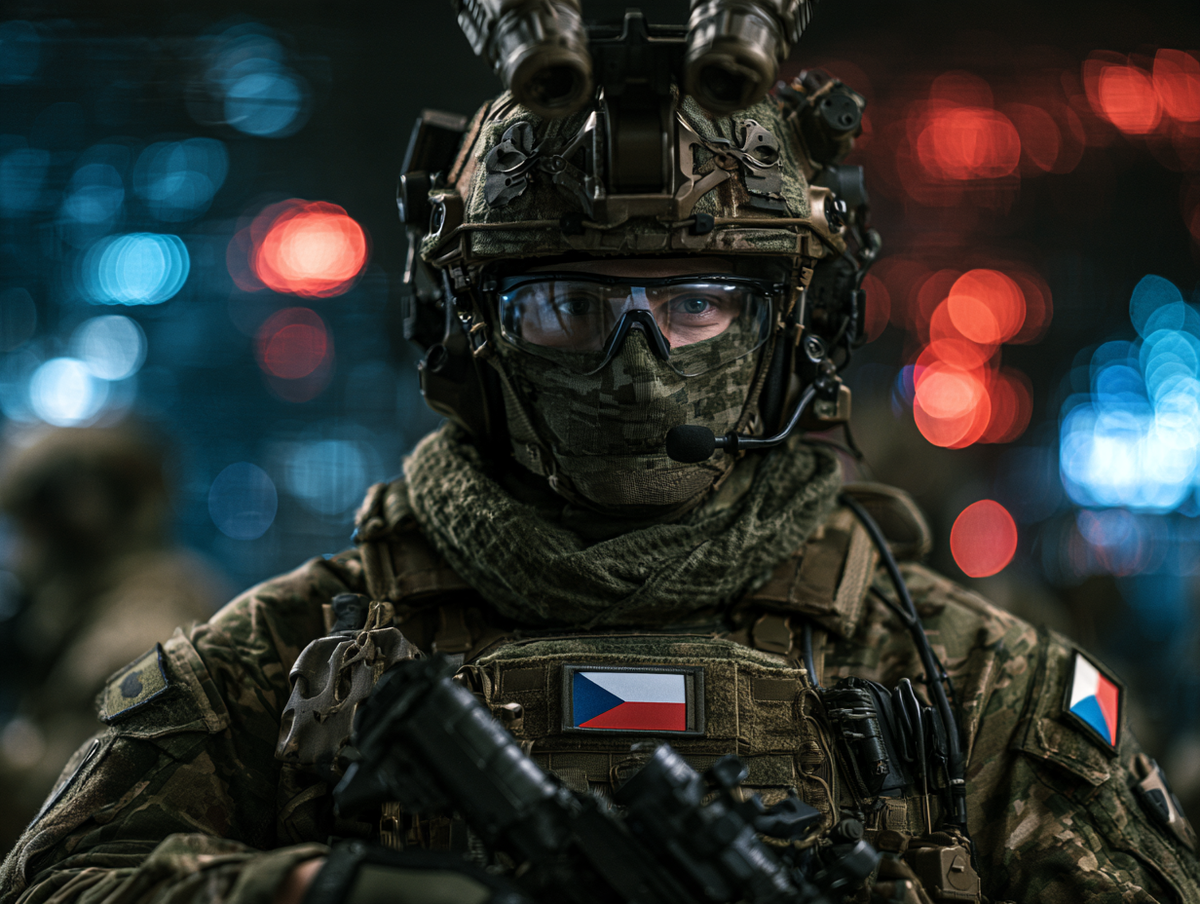
Seven Czech defense tech startups and scaleups stand out in 2026 for identifiable products and documented activity in military or dual-use markets: Dronetag, U&C UAS, EAGLE.ONE, Fly4Future, Vrgineers, TRL Space, and PARTORY. Their work spans drone detection and interception, reconnaissance, autonomous flight, pilot training, satellite intelligence, and the manufacture of military components. The list is an editorial selection, not a ranking by revenue, funding, or operational performance.
How Adria Defense selected the seven companies
Each company has a substantial Czech base, a defined technology or service, and public evidence of a defense application, industry partnership, institutional program, or customer activity. Startup describes the younger ventures in the group, while scaleup covers firms that have progressed into larger commercial or industrial programs. Inclusion does not imply that every product has been fielded by an armed force or independently tested at its advertised performance level.
1. Dronetag: passive drone detection
Prague-based Dronetag builds drone identification and detection hardware. Its fixed Scout receiver and portable RIDER system collect radio signals emitted by drones and feed detections into the company’s software platform. Passive detection can help protect a site without transmitting a jamming signal, but identification depends on which signals the receiver can capture and decode.
In March 2026, Dronetag joined the European Union Defence Innovation Scheme business accelerator under a counter-drone theme. The company says it is expanding beyond standardized Remote ID toward additional proprietary drone protocols and first-person-view signals; those roadmap features should not be confused with capabilities already in service. AdriaDefense previously covered its accelerator selection.
2. U&C UAS: reconnaissance drones with a Czech production base
U&C UAS, registered in Prague and built around Ukrainian operational experience, develops reconnaissance and strike unmanned aircraft. The company says it manufactures in the Czech Republic and Ukraine. Its published range includes the STORK LR reconnaissance aircraft and the MACE loitering munition. Its CHASER counter-drone interceptor is marked as coming soon, so it should not be described as fielded.
In 2026, U.S. government contractor ATP Gov said it had sourced and integrated U&C reconnaissance drones for U.S. Army units in Europe. U&C also announced the arrangement, but the public statements do not provide a contract value or drone quantity. The collaboration gives U&C an identifiable route into allied procurement without establishing an independently verified fleet size.
3. EAGLE.ONE: autonomous drone capture
EAGLE.ONE develops the Drone Hunter interceptor, designed to pursue unauthorized drones and capture them with a net. The company says it can accept targeting information from external sensors, positioning it as an interceptor within a wider counter-drone system.
A Future Forces 2026 exhibitor statement says EAGLE.ONE is completing pilot projects in defense and critical infrastructure protection. That is evidence of testing, not proof of a completed military deployment or mass production. Fly4Future and researchers at the Czech Technical University in Prague have worked with EAGLE.ONE on the underlying robotics; the firms are separate but connected.
4. Fly4Future: autonomy without satellite navigation
Fly4Future develops autonomous flying robots and software with roots in research at the Czech Technical University in Prague. Its work on navigation without satellite positioning has potential applications in inspection, emergency response, and defense. Fly4Future also contributes research to EAGLE.ONE’s interceptor, while EAGLE.ONE handles its commercialization.
Fly4Future and the university reached the final of Germany’s 2026 Fully Autonomous Flight 2.0 challenge as the F4F and CTU Skygraph team. Germany’s Federal Agency for Breakthrough Innovation lists the Czech team among the finalists and identifies HERMES as the overall winner. The finalist result demonstrates research progress; it is not a military procurement award.
5. Vrgineers: virtual and mixed reality pilot training
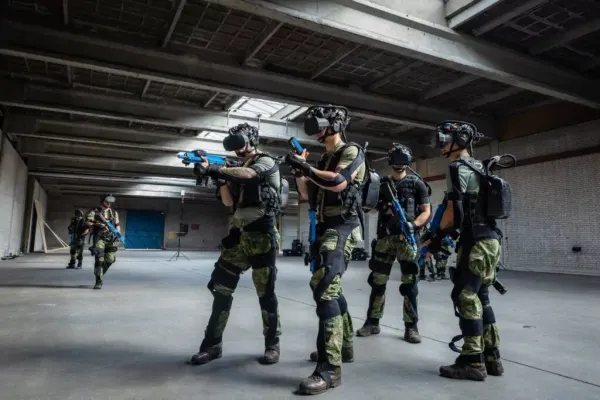
Founded in 2017, Vrgineers develops virtual and mixed reality headsets and flight training systems for professional and military users. Its range includes portable and classroom simulators that can be configured for different training needs.
In May 2025, the Czech Ministry of Defence reported that Vrgineers signed an industrial cooperation agreement with Lockheed Martin related to the Czech F-35 program. The ministry identified simulation technology as the company’s area of work. The agreement documents an industrial role; it does not by itself establish that a particular simulator has received F-35 training certification.
6. TRL Space: satellite intelligence and resilient drone links
Brno-based TRL Space works on satellite missions and analysis of Earth observation data for security applications. Its TRULY platform is presented as a way to combine satellite imagery with other information, including vessel tracking data, to flag activity for further investigation. These are company-described analytical capabilities, not a claim of continuous coverage everywhere.
TRL Space also leads ASCUS, a Czech defense research project involving TRL Drones and Brno University of Technology. It aims to combine autonomous drones with resilient satellite communications in electronically contested conditions. TRL Space plans an integrated demonstration by 2028, making ASCUS a development program in 2026 rather than an already deployed system. AdriaDefense has reported on a separate TRL Drones interceptor project.
7. PARTORY: distributed production for defense supply chains
PARTORY is a Czech-Slovak industrial technology company that coordinates metal-parts production through a supplier network. Its defense offering covers components for military vehicles, transport equipment, and support systems, including replacements for older equipment. The company describes reverse engineering military vehicle spares in a case study, but does not publicly name that customer.
Its inclusion reflects a less visible defense bottleneck: sourcing qualified parts when drawings, materials, or original suppliers are unavailable. Jet Investment disclosed a €1.25 million investment in September 2024. Some posts on PARTORY’s newer English-language site carry January 2026 dates for that investment, but the financing itself dates to 2024.
Which Czech capabilities have reached the market?
The seven firms sit at different stages. Dronetag sells detection hardware, U&C and its U.S. contracting partner describe an Army supply arrangement, and Vrgineers has a signed industrial cooperation agreement. EAGLE.ONE reports pilots, Fly4Future has competition and research results, TRL Space is developing a defense project alongside its space business, and PARTORY markets an operating procurement service.
Which Czech defense tech startups focus on drones?
Dronetag develops detection, U&C UAS makes reconnaissance aircraft and loitering munitions, EAGLE.ONE develops an interceptor, and Fly4Future works on autonomy and navigation. EAGLE.ONE and Fly4Future collaborate, but they are separate companies.
Which company is involved in the Czech F-35 program?
Vrgineers signed an industrial cooperation agreement with Lockheed Martin connected to the Czech F-35 program. The Czech Ministry of Defence identifies simulation technology as its area of cooperation.
Does this list rank the companies by size or performance?
No. It is an editorial selection based on Czech presence, identifiable technology, and public evidence of defense relevance as of September 2026. Company specifications and development plans remain attributed to their sources.