Top 7 Israeli Defense-Tech Companies Expanding Into Europe
Beyond Elbit, IAI, and Rafael: seven independent, mid-size Israeli defense-tech companies building real traction in Europe, from counter-drone AI to maritime intelligence.

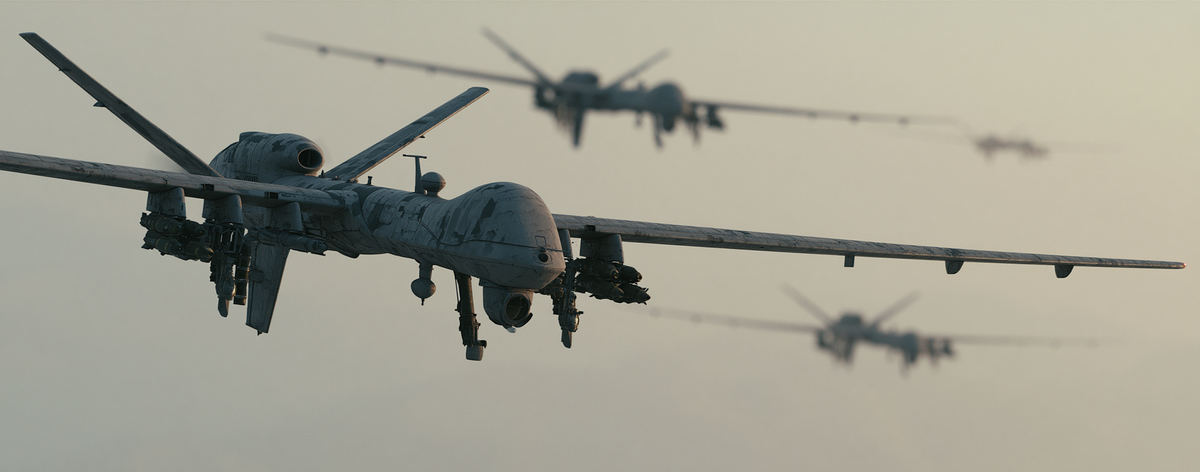
Israel's defense-tech sector has nearly doubled in size since 2023, and Europe is where most of that new capacity wants to sell. When European coverage discusses Israeli defense exports, it usually means Elbit Systems, Israel Aerospace Industries, and Rafael: multi-billion-euro primes signing government-to-government deals like the Arrow 3 contracts with Germany. Below that tier sits a much larger, more approachable group of companies that are privately held, mid-size, and still actively building their European distribution networks.
These seven were selected using three filters. First, independent ownership: none is a subsidiary of Elbit, IAI, or Rafael, and none has recently been absorbed by a foreign buyer. Second, a demonstrated European footprint: a signed contract, a local subsidiary, a trade show presence, or a named partnership. Third, a scale where a regional industry relationship, not just a Pentagon line item, still moves the needle for their growth.
1. Axon Vision: Teaching Cameras to Spot Drones First
Founded in 2018, Axon Vision builds AI-based computer vision systems that turn ordinary cameras into automated aerial threat spotters. Its EdgeUAV and EDGE ClearSky product lines process thermal and visual feeds from vehicles, static installations, or radar networks to flag drones before a human operator typically would. The Israeli Ministry of Defense has ordered the systems in volume, and the company has already sold to the Swiss Army.
Its clearest European signal came in July 2026, when Axon Vision publicly demonstrated its ClearSky system integrated with Czech radar maker RETIA and fellow Israeli firm TSG's command software during trials in the Czech Republic. The company also holds a strategic partnership with Czechoslovak Group (CSG), one of Europe's largest defense manufacturers, giving it a built-in channel into the CEE market well before most competitors arrive.
2. Netline Communications Technologies: Jamming the Threat Before It Lands
Netline Communications Technologies has spent more than 25 years building electronic warfare systems, and its DroneNet family covers detection, direction-finding, and jamming of hostile drones across a wide frequency range. The privately held company, founded in 1998, sells to defense forces and homeland security agencies worldwide and treats counter-drone jamming as a core, not a side, business line.
Netline is a regular exhibitor at Eurosatory in Paris, one of Europe's largest land defense procurement events, where it has repeatedly launched new DroneNet variants aimed squarely at European buyers. As European militaries build layered counter-drone doctrine in response to repeated airspace incursions, a mature, independent jamming specialist without prime-company overhead is a distinctly different pitch than buying a bundled system from a much larger integrator.
3. SmartShooter: Turning Rifles Into Counter-Drone Weapons
SmartShooter, headquartered in Kibbutz Yagur, makes the SMASH family of AI-assisted fire control systems that let a standard rifle engage small drones at the individual soldier level. The company already operates subsidiaries in the United States, Germany, and Australia, and its systems are fielded by the US Army, Navy, Marine Corps, and Air Force alongside forces in the UK, Germany, and other NATO states.
In February 2026, US soldiers trained alongside Belgian troops using SMASH 2000 systems at Grafenwoehr in Germany, part of a broader NATO push to give dismounted units their own counter-drone capability instead of relying solely on higher-echelon air defense. That German subsidiary and existing Bundeswehr-adjacent fielding make SmartShooter one of the more Europe-embedded names on this list, without the scale of an Elbit or a Rafael.
4. ASIO Technologies: Navigation When GPS Goes Dark
Based near Tel Aviv, ASIO Technologies spent roughly two decades as a quiet geo-positioning specialist before pivoting five years ago into GNSS-denied navigation, a niche that has become urgent as jamming and spoofing spread across contested airspace. Its NOCTA and GeoFusion technologies let drones keep flying accurately when GPS signals are jammed or spoofed, using optical and inertial data instead.
The company was bootstrapped and profitable for most of its history, only closing its first outside funding round in 2026. It exhibited at ILA Berlin 2026 alongside 14 other Israeli companies and has stated it is actively expanding across North America, Europe, and Asia. For European drone manufacturers and militaries confronting Russian electronic warfare, ASIO's technology addresses a problem that is only getting worse, not a niche that might fade.
5. BIRD Aerosystems: Protecting VIP and Military Aircraft
BIRD Aerosystems builds airborne self-protection systems, chiefly its AMPS missile protection suite and SPREOS directed infrared countermeasure system, designed to shield helicopters, transport aircraft, and head-of-state jets from MANPADS and other ground-to-air threats. The privately held company has repeatedly won certification under the European Union Aviation Safety Agency for installations on aircraft including the Falcon 7X, the Airbus A319, and the Boeing 737 BBJ.
BIRD has received multiple follow-on orders described only as coming from a "NATO European client," with public reporting pointing toward Hungary's Falcon 7X and A319 fleet. It has also equipped VIP aircraft for undisclosed European customers in partnership with regional defense integrators. Head-of-state aircraft protection is a narrow market, which is exactly why a company this size, rather than a prime, still treats each European contract as strategically significant.
6. UVision: Loitering Munitions Built for NATO Stockpiles
UVision, based in Tzur Yigal and founded in 2011, developed the Hero family of loitering munitions now built into several NATO procurement frameworks. Its 2021 partnership with German giant Rheinmetall put UVision in a supporting role (supplying munitions manufactured through Rheinmetall's Italian subsidiary RWM Italia) while Rheinmetall leads sales and industrial production for the European market.
In November 2025, that partnership delivered a contract worth a low three-digit-million euro sum from an unnamed NATO customer for several hundred Hero systems. In March 2026, UVision went further and opened UVision Europe GmbH in Munich, a dedicated subsidiary for local customer support, sourcing, manufacturing, and training. That is about as direct a signal of long-term European commitment as a mid-size company can send.
7. Windward: Watching Europe's Waters From Tel Aviv and London
Windward is an Israeli-founded, now UK-headquartered maritime intelligence company that fuses AIS data, satellite imagery, and behavioral analytics into a single picture of what is happening at sea, including vessels actively trying to hide. Its Maritime AI platform is already used by European institutions such as the EU's Maritime Analysis and Operations Centre for Narcotics, alongside navies and coast guards tracking Russia's so-called dark fleet.
An April 2026 partnership with satellite intelligence firm Vantor added persistent space-based monitoring on top of Windward's existing analytics, aimed at tracking vessels that disable their transponders near chokepoints like the Strait of Hormuz. For Adriatic and Mediterranean coastal states watching undersea cable sabotage and sanctions evasion, Windward's technology is directly relevant even though it rarely gets covered alongside hardware-focused defense-tech names.
Frequently Asked Questions
Which Israeli defense companies are not owned by Elbit, IAI, or Rafael?
Companies like Axon Vision, Netline Communications Technologies, SmartShooter, ASIO Technologies, BIRD Aerosystems, UVision, and Windward remain independently or privately owned. Many well-known Israeli names, including Controp, DSIT Solutions, TSG, and BlueBird Aero Systems, are majority or fully owned by IAI or Rafael.
Why are mid-size Israeli defense-tech companies expanding into Europe now?
European defense spending has risen sharply since 2022, and repeated drone incursions into European airspace have created urgent demand for counter-UAS technology that Israeli companies have already combat-tested. Independent companies without a prime's existing European infrastructure are opening local subsidiaries and signing distribution partnerships to capture that demand directly.
Do these companies already operate in Europe, or are they just entering the market?
Most already have concrete European activity. UVision has a Munich subsidiary and NATO contracts, SmartShooter has a German subsidiary and Bundeswehr-adjacent training exposure, BIRD Aerosystems holds EASA certifications on several aircraft types, and Windward is headquartered in the UK and already works with EU maritime authorities.
What sectors do these companies cover?
The group spans counter-drone AI detection, electronic warfare and jamming, soldier-level kinetic counter-drone systems, GNSS-denied navigation, airborne self-protection, loitering munitions, and maritime domain awareness, covering most of the layers a modern European defense procurement office is currently trying to fill.
Europe's drone and electronic warfare procurement cycle is still early. The primes will keep winning the multi-billion-euro missile defense contracts, but the companies worth watching over the next two years are these smaller, independent ones building the distribution networks, local subsidiaries, and certifications now.