Austria Leads Six-Nation Plan for Drone-Based CBRN Detection System
Austria and five European partners have backed a future joint procurement of an unmanned CBRN detection system using drones, ground robots and sensors, with technological maturity targeted for 2027.


Austria is leading a European initiative to jointly procure an unmanned chemical, biological, radiological and nuclear reconnaissance system, bringing together six countries in a project designed to detect hazardous substances without exposing soldiers to contaminated environments.
On November 17, Austrian Defense Minister Klaudia Tanner, together with representatives from Croatia, Slovenia, Slovakia, Germany and Lithuania, presented a declaration supporting the future cooperative procurement of the system.
The technology, known as CBRN Surveillance as a Service (CBRN SaaS), is being developed under Austrian leadership, with joint procurement through the European Defence Agency (EDA) envisaged once it reaches technological maturity, currently expected in 2027.
Drones and ground robots could reduce detection time
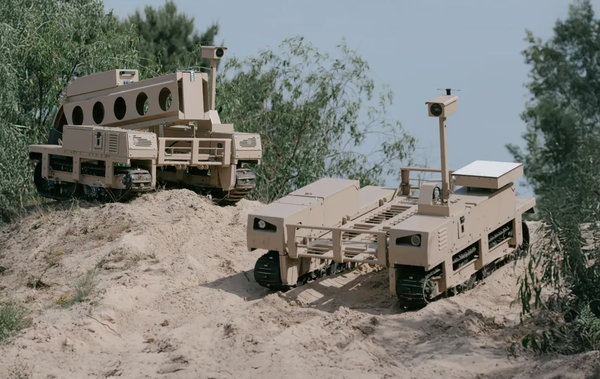
According to the Austrian Armed Forces, the semi-autonomous system combines unmanned aerial vehicles, a robotic ground platform and a network of specialized sensors to identify chemical, biological, radiological and nuclear hazards.
The technology is intended to allow reconnaissance teams to collect and transmit measurements from contaminated locations without physically entering the affected area.
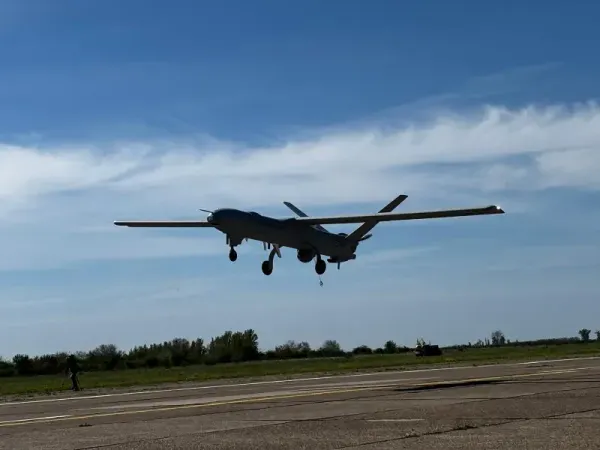
Commercially available drones fitted with specially developed sensor modules will gather data, which can then be transmitted to military headquarters for analysis.
Predictive models are intended to help commanders assess how contamination could spread over the following hours or days, supporting evacuation, protective measures and operational planning.
Brigadier Jürgen Schlechter, who oversees the relevant Austrian armaments and defense technology work, said a detection process that currently takes approximately two to three hours could eventually be completed in just a few minutes.
That improvement remains a projected capability, rather than a publicly verified operational performance figure.
Austria coordinates a broader European development effort
The initiative is part of the European Union's Permanent Structured Cooperation (PESCO) framework.
Development participants include Austria, Croatia, Slovenia, Slovakia, Italy, France and Germany. Lithuania's participation in the November procurement declaration illustrates how the potential purchasing group can differ from the original development partnership.
The project began approximately seven years ago and is intended to create a capability not currently available as a complete commercial system.
The November declaration signals political support for collective acquisition but does not constitute a finalized procurement contract. The eventual purchase volumes, suppliers and contract values have not been publicly announced.
Applications extend beyond the military
Although designed around military reconnaissance requirements, the Austrian-led system could also support civilian emergency services.
Fire departments, police units and disaster response organizations may eventually use the technology to assess industrial chemical incidents, radiological contamination or other hazardous situations.
For European governments, the program represents an attempt to combine robotics, distributed sensors and cross-border procurement into a common protection capability.
The next major milestone will be the system's expected technological maturity in 2027, after which participating countries intend to pursue procurement through the EDA.