Bosnia’s Military Modernization Is Still Built on Donations
Bosnia and Herzegovina has received drones, armored vehicles, counter-drone systems, communications equipment, and rescue gear from foreign partners. The assistance is useful, but it has also become a substitute for the national procurement system the country has failed to build.


At military ceremonies in Bosnia and Herzegovina, the pattern has become familiar.
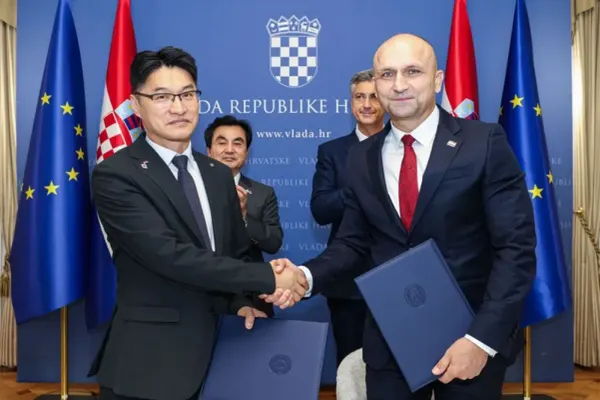
A foreign delegation arrives. Officials gather beside a newly delivered vehicle, drone, or piece of technical equipment. Speeches emphasize partnership, security, and modernization. Photographs are released, and the donation is presented as another step toward a more capable armed force.
Then the ceremony ends.
What remains is often a small number of systems, limited supporting infrastructure, and no publicly defined plan for what comes next.
Over the past three years, Bosnia and Herzegovina has received or secured military equipment from Turkey and the United States that would have been difficult to finance through its existing defense budget.
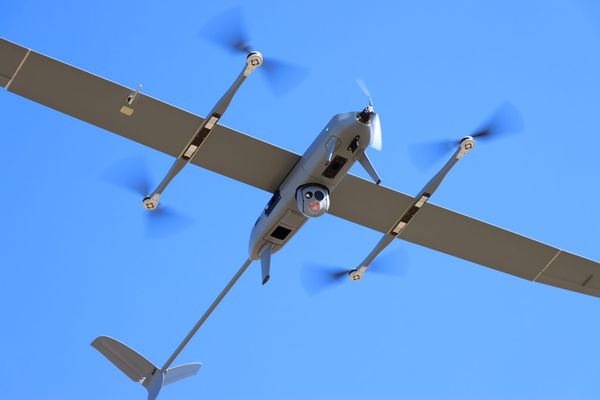
Turkey approved the donation of two Bayraktar TB2 unmanned aircraft. It delivered four Kirpi II mine-resistant vehicles and provided an ASELSAN counter-drone system. Bosnia and Herzegovina also moved toward obtaining additional KANGAL counter-drone devices.
The United States supplied information technology and audiovisual equipment worth about $455,000. It later donated a helicopter rescue hoist valued at roughly $352,000. Earlier American assistance also included technical and mechanical equipment recorded through the Foreign Military Sales system.
Each package meets a real requirement.
The drones can support surveillance, reconnaissance, disaster response, and training. The armored vehicles offer better protection against mines and improvised explosive devices. Counter-drone systems can defend selected locations from small unmanned aircraft. The American rescue equipment can improve operations in mountainous and inaccessible terrain.
But the collection of donated systems also reveals something more uncomfortable.
Bosnia and Herzegovina is not modernizing according to a national military plan. It is modernizing according to what its partners are prepared to give.
A capability measured in twos and fours
The two Bayraktar TB2 aircraft are the most prominent of the recent donations.
For the Armed Forces of Bosnia and Herzegovina, they represent entry into a class of unmanned aviation that has become central to military operations, border surveillance, emergency response, and intelligence gathering.
But two aircraft do not amount to a sustainable fleet.
Unmanned aviation depends on more than aircraft. It requires trained operators, mission planners, secure data links, ground-control stations, maintenance facilities, spare parts, technical personnel, and a reliable operating budget.
With only two aircraft, every technical problem or maintenance cycle can sharply reduce availability. A donation can introduce the capability, but it cannot guarantee that the capability will remain operational over time.
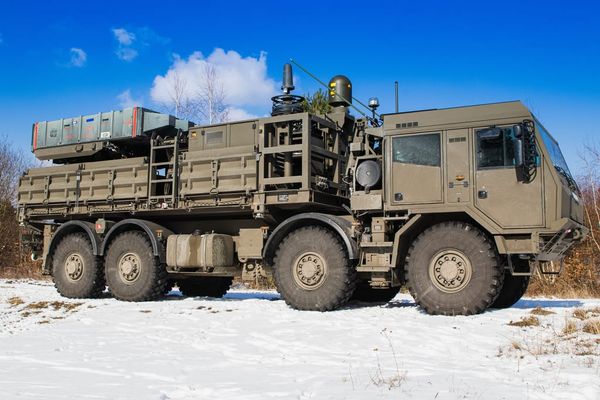
The same problem applies to the four Kirpi II protected vehicles supplied by Turkey.
For the soldiers assigned to them, the improvement is significant. The vehicles offer better protection and can be used for training, deployments, or specialist missions.
But four vehicles cannot transform the mobility of an armed force.
A functioning protected-vehicle capability requires enough vehicles to equip units, along with recovery platforms, communications systems, weapons, maintenance support, spare parts, and trained crews.
The difference between four vehicles and a fleet is not merely numerical. It is the difference between possessing equipment and possessing an operational system.
Protection from drones, but only in selected places
The threat posed by small drones has become impossible for military planners to ignore.
Low-cost commercial aircraft can conduct surveillance, carry explosives, direct artillery, and strike exposed personnel or equipment. Even a modest counter-drone capability can therefore provide meaningful protection.
ASELSAN’s KANGAL systems are designed to disrupt the radio-frequency links used by small drones, including first-person-view aircraft.
For Bosnia and Herzegovina, that capability is relevant. Military facilities, ammunition depots, command posts, and deployed units all face potential exposure to unmanned threats.
But a small number of systems can defend only a small number of locations.
They do not create continuous coverage. They do not replace radar networks, missile-based air defense, secure command systems, or the layered structure required to monitor and protect national airspace.
The problem is not that Bosnia and Herzegovina has failed to build something comparable to Turkey’s Steel Dome air defense architecture. No serious observer would expect a small Balkan state to reproduce a Turkish national program built around a much larger military, defense budget, and industrial base.
The relevant question is simpler.
Can Bosnia and Herzegovina build even a limited, coherent system for protecting its most important military sites?
So far, the answer remains unclear.
American assistance follows the same pattern
The recent American donations are less visible than the Turkish drones and armored vehicles, but they illustrate the same structural problem.
In April 2025, the United States provided computers, software, cameras, recording equipment, printers, and other audiovisual systems to the Ministry of Defense and the Armed Forces.
The equipment was intended primarily to improve public affairs, communications, and institutional functions.
It was useful.
It was not a combat capability.
In June 2026, the United States donated a helicopter rescue hoist designed for search-and-rescue missions in difficult terrain. The system can support disaster relief, medical evacuation, firefighting, and mountain rescue.
It may save lives.
It is still a single piece of equipment attached to an aviation structure that continues to face broader problems of fleet age, maintenance, availability, and replacement.
Together, the publicly confirmed American packages from 2025 and 2026 were worth about $807,000.
That is meaningful assistance for a defense institution operating under tight financial constraints.
It is also far below the scale required to modernize aviation, mobility, air defense, artillery, communications, or logistics across the armed forces.
One possible purchase stands apart
The proposed acquisition of AW119Kx light utility helicopters offers a glimpse of what a different model could look like.
In May 2025, the U.S. State Department approved a possible Foreign Military Sale to Bosnia and Herzegovina worth up to $100 million.
The proposed package included helicopters, training, spare parts, ground equipment, technical support, manuals, transportation, and other logistical services.
This was not a donation.
It was authorization for a possible sale, and it did not by itself confirm that Bosnia and Herzegovina had signed a final contract or secured the necessary financing.
Still, the case matters because it begins with a defined requirement rather than a foreign offer of surplus or assistance.
A purchase requires the state to decide what it needs, how many systems it can afford, how they will be maintained, and how they fit into the larger force.
That is the foundation of modernization.
Bosnia and Herzegovina rarely reaches that stage.
A defense industry disconnected from its own military
The country’s dependence on donations is particularly striking because Bosnia and Herzegovina is not without defense production.
Its factories manufacture ammunition, primers, propellants, explosives, small arms, vehicle components, and other military products. Companies such as UNIS Ginex, Igman Konjic, Pretis, Binas, BNT-TMiH, TRB, and Tehnički remont Bratunac have maintained or expanded production and serve export markets.
The industry brings in revenue and has become increasingly important to the economy of the Federation of Bosnia and Herzegovina.
Yet the Armed Forces continue to rely on aging equipment and foreign assistance.
The contradiction is difficult to miss.
Bosnia and Herzegovina can export military products, but it has not created an effective system for turning domestic industrial capacity into military capability at home.
That does not mean the Armed Forces should be forced to purchase every item made by local factories.
Equipment must meet military requirements. It must pass testing, satisfy safety standards, remain affordable, and fit with existing systems.
But a country with an established defense industry should be able to organize multiyear contracts for at least some of its own needs.
Those needs could include ammunition reserves, small arms, protective equipment, vehicle maintenance, engineering support, selected unmanned systems, and military infrastructure.
Instead, the state often treats the industry and the armed forces as separate worlds.
One exports.
The other waits.
Meetings with ASELSAN are not yet an industrial policy
Bosnian officials have also promoted possible cooperation between local manufacturers and ASELSAN, Turkey’s largest defense electronics company.
ASELSAN develops radar, communications, electronic warfare, electro-optical systems, air defense equipment, and counter-drone technology. Its scale and technical portfolio make it an attractive partner for smaller defense companies seeking access to new supply chains and export markets.
But the public record so far contains more ambition than detail.
There has been no clear disclosure of which products might be manufactured in Bosnia and Herzegovina, how much work would be assigned to local companies, whether technology would be transferred, or whether the cooperation would create sustained orders.
There is a difference between a meeting, a memorandum, and a production contract.
Bosnia and Herzegovina has often celebrated the first two.
Its defense industry needs more of the third.
Croatia and Serbia buy what Bosnia receives in fragments
Bosnia and Herzegovina does not need to match Croatia or Serbia weapon for weapon.
Its population, economy, security policy, and military structure are different. A direct numerical comparison can easily become misleading.
But the procurement methods of the neighboring countries remain relevant.
Croatia has financed combat aircraft, infantry fighting vehicles, unmanned systems, rocket artillery, tanks, and self-propelled howitzers. It acquired 12 Rafale fighters and purchased six Bayraktar TB2 aircraft as part of a complete system that included control elements, equipment, training, and support.
Serbia has ordered 12 Rafale aircraft and has acquired Chinese and Russian air defense systems, unmanned aircraft, helicopters, artillery, and armored vehicles. It continues to invest in its domestic defense industry and is seeking equipment from an increasingly diverse group of foreign suppliers.
Both countries receive foreign assistance.
But in Croatia and Serbia, assistance sits alongside national procurement.
In Bosnia and Herzegovina, assistance often stands in its place.
That is the real regional gap.
It is not simply a difference in the number of aircraft, armored vehicles, or missile systems. It is a difference in the ability of the state to identify a requirement and pay for it.
The ceremony has become the strategy
Donations are politically attractive.
They allow officials to present new equipment without explaining how the government will finance a large procurement. They create visible results in a system where major defense decisions are slow, contested, and vulnerable to institutional blockage.
They also reduce immediate pressure on the defense budget.
But the political convenience of donations carries a long-term cost.
A force assembled through isolated foreign packages becomes difficult to standardize and expensive to maintain. Each system may require different training, spare parts, software, communications equipment, maintenance procedures, and foreign support.
The result can be a military inventory that grows on paper while remaining thin in operational depth.
There are drones, but only two.
There are protected vehicles, but only four.
There is counter-drone equipment, but only enough for selected sites.
There is rescue equipment, but no fully funded aviation renewal program.
There are domestic factories, but no durable mechanism connecting them to national defense requirements.
The announcements are larger than the capabilities they produce.
What Bosnia and Herzegovina actually needs
A realistic modernization policy would not begin with combat aircraft or expensive long-range missile systems.
It would begin with a limited list of priorities that the country can finance and sustain.
Those could include secure tactical communications, protected mobility, helicopter readiness, surveillance drones, counter-drone systems, short-range air defense, engineering equipment, cyber defense, ammunition reserves, and maintenance infrastructure.
Some equipment could be purchased abroad.
Some could be produced or maintained domestically.
Some could still be donated.
But donations would have to fit into a national plan rather than become the plan.
That would require multiyear financing, transparent procurement, realistic force goals, and political agreement on what the Armed Forces are expected to do.
Without those elements, every delivery will remain an isolated success.
Bosnia and Herzegovina will continue to receive equipment.
It will continue to hold ceremonies.
And it will continue to postpone the harder question of when it intends to start buying and sustaining the military capabilities it says it needs.