Bulgarian Navy Recovers Drones Along Black Sea Coast
Bulgarian Navy teams recovered drones and UAV debris at multiple Black Sea locations as unexplained objects continue to reach Bulgaria's coast.

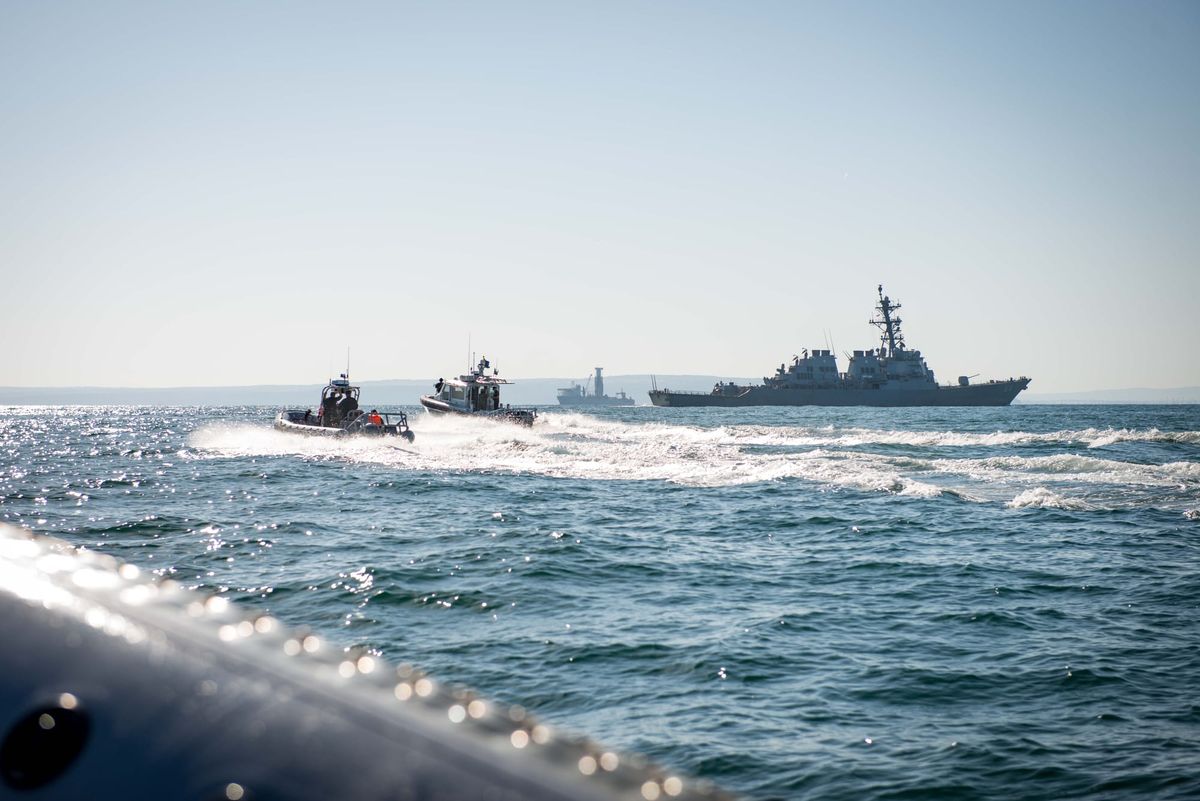
Bulgarian Navy teams have recovered additional unmanned aerial vehicles and drone debris from several locations along Bulgaria's Black Sea coast, extending a series of discoveries that has prompted repeated military deployments in recent days. The latest objects were found near Shabla, Chernomorets and Ahtopol on August 28, following earlier discoveries near Kavarna, Kamchia, Varna, Pomorie and other coastal locations.
Bulgaria's Ministry of Defense has not publicly identified the manufacturer, model or country of origin of the recovered drones. Defense Minister Dimitar Stoyanov said the UAVs examined by Bulgarian authorities had not carried munitions and described them as reconnaissance or decoy drones.
The incidents put renewed attention on the movement of unmanned systems through the Black Sea and the operational burden they can create for NATO members bordering the region, even when the recovered aircraft do not carry explosives.
Navy teams recover drones from Shabla to Ahtopol
A specialized team from the Bulgarian Navy's Varna Naval Base responded on August 28 after authorities received a report of a drone approximately 1 kilometer north of Shabla Lighthouse, close to Bulgaria's northeastern Black Sea coast.
Naval personnel conducted reconnaissance and identified the aircraft as safe before transporting it to the Varna base for further handling.
Later that day, personnel from the Burgas Naval Base recovered UAV debris near the beach at Chernomorets and Bungalata Beach in Ahtopol, significantly farther south along Bulgaria's coastline. The discoveries show that the incidents are not concentrated around a single coastal location.
A separate incident involved a UAV discovered on August 27 at the northern pier opposite St. Ivan Island near Sozopol. A Bulgarian Navy team inspected the aircraft before destroying it at the site for safety reasons.
The August 28 discoveries followed several other Bulgarian Navy responses during the same week.
On August 27, naval personnel investigated part of a drone approximately eight nautical miles south of Kavarna. Specialists determined that the object was part of a UAV tail section.
Another object found off Kamchia was identified as a UAV without explosives and transported to the Varna Naval Base. A Burgas-based team also responded to an object located approximately 1,000 to 1,500 meters offshore near Chernomorets.
On August 26, a drone washed ashore at Kabakum near Varna. Bulgarian personnel found no explosive material and transported the aircraft to the naval base. Navy teams conducted additional missions near Pomorie and Cape Galata that day.
The pattern extends beyond the final week of August. On August 22, Bulgarian personnel recovered UAV debris between Kranevo and the Albena resort complex and near Rakitenika. Authorities classified the object recovered between Kranevo and Albena as a decoy drone without explosive material.
Bulgaria has not identified the drones' origin
The Bulgarian government has so far provided limited technical information about the aircraft.
Stoyanov said on August 26 that all drones recovered up to that point had been unarmed. According to the defense minister, authorities considered the recovered aircraft either reconnaissance platforms or decoys.
The Ministry of Defense has not publicly attributed the drones to Russia, Ukraine or another operator. It has also not released confirmed model designations for the latest aircraft.
That distinction matters because the presence of drone debris on NATO territory does not by itself establish who launched an aircraft, its original mission or how it reached Bulgarian waters.
Sea currents can also move floating wreckage over significant distances, meaning the location where a UAV or component reaches the coast does not necessarily indicate where the aircraft operated or entered the water.
Black Sea drone incidents add to Bulgaria's maritime workload
The repeated discoveries come as Bulgaria expands its focus on Black Sea security following more than four years of warfare across the region.
Since Russia's full-scale invasion of Ukraine in February 2022, NATO members Bulgaria, Romania and Turkey have faced maritime security risks including drifting mines, debris and the wider effects of military operations around the Black Sea.
Bulgaria, Romania and Turkey established the Mine Countermeasures Naval Group in the Black Sea in 2024 to address the floating-mine threat while maintaining the operation as a regional initiative among the three NATO allies.
Bulgaria is also expanding its mine-countermeasure fleet. Sofia approved the acquisition of seven minehunter vessels from Belgium and the Netherlands in August 2026, with the ships intended to strengthen Bulgaria's ability to contribute to Black Sea security operations.
The latest UAV discoveries present a different challenge. Unlike conventional mine-countermeasure operations, unidentified drones and debris can appear close to populated beaches and tourist areas, requiring rapid identification, explosive-safety assessments and coordination between civilian authorities and specialized military teams.
For Bulgaria, the incidents demonstrate how unmanned warfare around the Black Sea can generate security requirements beyond the immediate combat zone even when individual aircraft recovered on its territory are unarmed.
The Bulgarian Navy is continuing to respond to reports under orders from the Chief of Defense and instructions from the Commander of the Bulgarian Navy. Further technical examination of recovered aircraft could provide more information about their type and origin, but Bulgarian authorities had not publicly released such an assessment at the time of publication.
Bulgarian Black Sea drones: key questions
Where have drones been found on Bulgaria's Black Sea coast?
Recent discoveries and Navy responses have included locations near Shabla, Kavarna, Kranevo, Varna, Kamchia, Chernomorets, Sozopol, Pomorie and Ahtopol. The incidents cover a substantial portion of Bulgaria's Black Sea coastline.
Were the drones carrying explosives?
Bulgarian Defense Minister Dimitar Stoyanov said the drones examined by authorities up to August 26 had not carried munitions. The Ministry of Defense also specifically reported finding no explosives on several inspected aircraft.
Does Bulgaria know who launched the drones?
Bulgarian authorities have not publicly attributed the recovered UAVs to a specific country or operator. No confirmed origin should therefore be assigned to the aircraft based solely on their discovery along the Bulgarian coast.
Why are the incidents significant for NATO?
Bulgaria is a NATO member bordering the Black Sea. Repeated UAV discoveries require military reconnaissance, explosive-safety procedures and recovery operations, illustrating how regional drone warfare can create additional security demands for NATO states outside the immediate combat zone.