Capital Defense Technologies Backs Shield AI in $1.5 Billion Series G
CDT has disclosed an investment in Shield AI’s $1.5 billion Series G, adding the $12.7 billion defense autonomy company to its growing national security technology portfolio


Capital Defense Technologies has invested in Shield AI as part of the defense technology company’s $1.5 billion Series G round, adding one of the most closely watched companies in military autonomy to its portfolio.
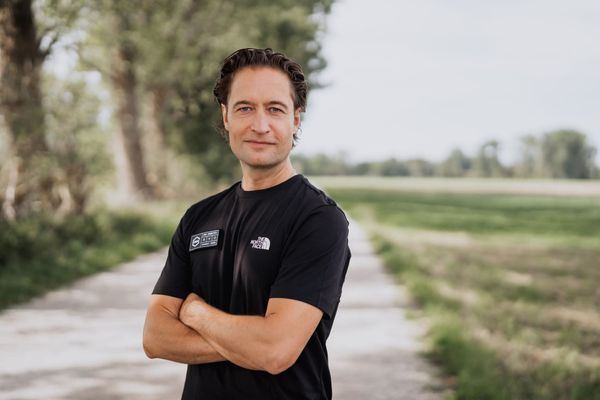
Andrew Bair, the firm’s president, chief executive and founding partner, disclosed the investment on Monday. The size of Capital Defense Technologies’ stake was not disclosed.
Shield AI raised the Series G in March at a post-money valuation of $12.7 billion. Advent International led the round, with JPMorganChase’s Strategic Investment Group serving as co-lead. Shield AI named Snowpoint Ventures, InnovationX, Riot Ventures, Disruptive and Apandion among the participants at the time, while leaving several other investors unidentified.
Capital Defense Technologies’ announcement now confirms that it was among them.
A major bet on military autonomy
The financing came as Shield AI continued an aggressive expansion of its autonomy business. The company has built much of its reputation around Hivemind, software designed to allow aircraft and other systems to operate with limited human direction, including in environments where GPS or communications may be unreliable.
Shield AI also develops the V-BAT vertical takeoff and landing drone and is pursuing more ambitious autonomous combat aircraft programs. Its technology has drawn growing attention from the Pentagon as the United States pushes to field larger numbers of lower-cost autonomous systems alongside crewed aircraft.
The Series G was part of a broader financing package that included $500 million in preferred equity from funds managed by Blackstone and a further $250 million delayed-draw facility. Shield AI also used the financing period to expand through its acquisition of Aechelon Technology, a developer of simulation and synthetic-environment software.
For Capital Defense Technologies, the investment is closely aligned with the firm’s focus on companies working in artificial intelligence, autonomy, space, intelligence and advanced sensing.
A career spanning Bosnia, defense and investment
The firm is relatively new, but the people behind it are not.
Bair has spent decades moving between national security, government, defense industry and technology investing. Long before venture capital became crowded with defense-focused funds, he had already worked inside the national security establishment and alongside companies selling into it.
During the wars in the former Yugoslavia, Bair served two tours as a United Nations political officer. In Bosnia, he worked as special assistant to the U.N. chief of mission and later as political adviser to the commissioner of the United Nations International Police Task Force.
He subsequently served as a senior adviser to the U.S. special representative responsible for the implementation of the Dayton Peace Accords.
Earlier in his career, Bair worked as a senior national security analyst at Science Applications International Corporation, where he managed the Center for National Security Negotiations. He later moved deeper into the private defense sector, eventually becoming chief executive of Diamondback Tactical, a manufacturer of body armor and tactical equipment.
In the years that followed, he became increasingly active as an investor and adviser to technology companies operating in areas with national security applications.
That background helps explain the model behind Capital Defense Technologies. The firm presents itself not simply as a source of capital, but as an investor capable of helping young technology companies navigate a market where procurement cycles are long, government relationships matter and technical merit alone rarely guarantees a program of record.
Its advisory network reflects that approach. It includes former NSA and U.S. Cyber Command director Admiral Mike Rogers, former U.S. ambassador Robert Gelbard, retired Vice Admiral Robert Harward and retired Lieutenant Generals Doug Lute and Paul Ostrowski.
Capital Defense Technologies has also backed companies including Blackbird.AI, Antaris Space and Numenor Maritime.
Positioning for the next defense technology cycle
The Shield AI investment is Capital Defense Technologies’ most prominent disclosure to date and puts the firm alongside some of the largest institutional investors now competing for exposure to the fast-growing defense technology sector.
For Shield AI, the attraction is straightforward: more capital for an increasingly expensive race to turn autonomous systems from promising demonstrations into deployable military capability.
For Capital Defense Technologies, the bet is equally clear. Shield AI sits near the center of one of the biggest shifts now underway in defense: the move toward software-driven, increasingly autonomous weapons and aircraft that can operate with fewer people and less dependence on traditional communications infrastructure.