Czech Republic Becomes NATO’s First SPYDER Air Defense Operator
The Czech Republic is introducing Rafael’s SPYDER air defense system, becoming its first NATO operator as four batteries replace Soviet-era 2K12 Kub systems.

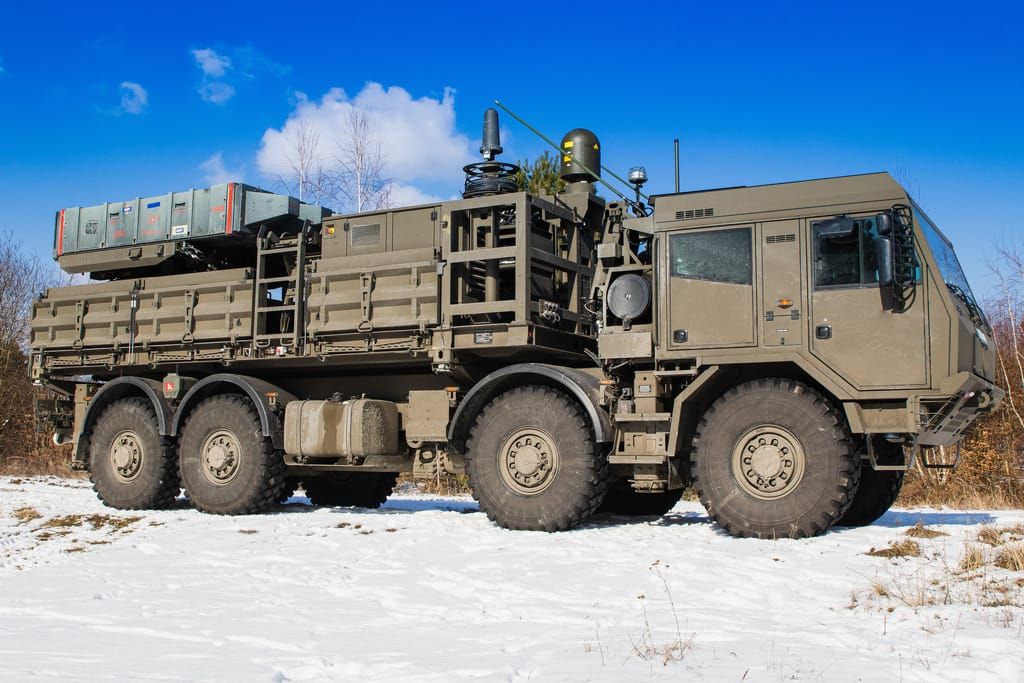
The Czech Republic is introducing the Israeli-made SPYDER air defense system, becoming the first NATO country to field the Rafael system. Prague is acquiring four SPYDER batteries under a CZK 13.7 billion contract to replace its Soviet-designed 2K12 Kub surface-to-air missile systems and strengthen ground-based air defense.
The complete SPYDER batteries were presented to the Czech public during NATO Days in Ostrava on September 19. Czech defense officials said the system has been integrated into NATO’s air defense architecture and will support protection of both strategic infrastructure and maneuvering ground forces.
Janes reported on September 21 that the delivery of the Czech Air Force’s SPYDER system had been announced following the display of system components at Leoš Janáček Airport in Ostrava.
Four SPYDER batteries will replace Czech 2K12 Kub systems
The Czech Ministry of Defense signed the government-to-government agreement with Israel in October 2021. The CZK 13.7 billion contract covers four batteries, with each battery equipped with its own three-dimensional radar, command-and-control and fire-control systems, and four launchers.
The package also includes short- and medium-range missiles using infrared or radar guidance. Czech defense authorities originally planned deliveries through 2026.
Each Czech battery includes a radar, four launchers, a loading vehicle and command-and-control equipment. The system elements use Czech-made Tatra 815-7 8x8 chassis, providing a domestic mobility platform already operated by the Czech Armed Forces.
The SPYDER batteries will replace four Soviet-designed 2K12 Kub systems operated by the 25th Anti-Aircraft Missile Regiment in Strakonice. The Kub has served in Czech military inventories since the 1970s, making SPYDER part of Prague’s broader effort to remove legacy Soviet equipment from critical air defense roles.
The 251st Anti-Aircraft Missile Battalion in Strakonice will operate the new system.
Czech industry holds a major role in the SPYDER program
The acquisition also includes a significant Czech industrial component. The original contract allocated 38 percent of the project to Czech defense industry, with RETIA and the Military Technical Institute among Rafael’s principal domestic partners.
Tatra Trucks, ELDIS Pardubice, Ray Service and the Military Research Institute were also identified among Czech companies participating in the program. Czech industry is expected to remain involved throughout the system’s service life, including maintenance and support activities.
The Czech Ministry of Defense said on September 19 that maintenance and servicing for the system will be provided inside the Czech Republic. This gives Prague a domestic support structure for a capability expected to remain in service for at least two decades.
The acquisition therefore extends beyond the replacement of individual missile batteries. It combines Israeli missile technology with Czech vehicles, integration work and lifecycle support, reducing dependence on foreign maintenance for a core national air defense capability.
SPYDER strengthens NATO air defense in Central Europe
SPYDER uses missile technology derived from Rafael’s Python and Derby families. The system can engage multiple categories of aerial targets, including aircraft, helicopters, unmanned aerial vehicles and cruise missiles.
For the Czech Republic, the system provides both point defense of strategic locations and mobile protection for ground forces. The Czech Ministry of Defense has identified urban areas, nuclear power plants, industrial centers and airfields among the types of infrastructure that ground-based air defense systems are intended to protect.
The timing also places the Czech acquisition within a broader expansion of European ground-based air defense. NATO members are increasing investment in short-, medium- and long-range systems as the alliance moves from procurement decisions toward fielded capabilities.
Romania is following the Czech Republic in adopting Rafael systems. Romania signed a framework agreement in July 2025 covering six integrated SHORAD-VSHORAD systems, six additional SHORAD systems and six VSHORAD systems, together with ammunition, training and logistics support. The Romanian Ministry of National Defence valued the framework at approximately €2.038 billion excluding VAT.
That procurement gives SPYDER a growing footprint on NATO’s eastern flank, with Czech and Romanian programs creating two significant Rafael air defense customers in Central and Eastern Europe.
From procurement contract to operational capability
The Czech program has progressively moved through manufacturing, integration and military testing. The first battery had already passed an operational test before the 2026 introduction phase, while Rafael and Czech partners continued training and documentation work needed for service entry.
Prague’s next challenge is therefore not the selection of a replacement for Kub, but converting four new batteries into sustained operational capability. Crew training, ammunition stocks, command-and-control integration, maintenance capacity and interoperability with NATO sensors will determine how much additional coverage the new system provides.
The transition also marks a structural change for Czech ground-based air defense. A Soviet-era system developed during the Cold War is being replaced by a networked system integrated with NATO standards and supported by a domestic industrial base.
Q&A: Czech SPYDER air defense system
Is the Czech Republic the first NATO country to operate SPYDER?
Yes. Czech military authorities previously identified the country as the first NATO member that would use SPYDER for airspace protection, and the system is entering Czech service in 2026.
How many SPYDER batteries did the Czech Republic buy?
The Czech Republic ordered four batteries. Each includes a radar, four launchers, a loading vehicle and command-and-control and fire-control equipment.
How much did the Czech SPYDER contract cost?
The 2021 government-to-government contract with Israel is valued at CZK 13.7 billion including VAT. Czech authorities said the negotiated price was CZK 2 billion below the initial Israeli offer.
What air defense system does SPYDER replace in Czech service?
SPYDER replaces the Soviet-designed 2K12 Kub systems operated by the Czech Armed Forces since the 1970s. The replacement removes one of the Czech military’s remaining major Soviet-origin ground-based air defense capabilities.