Estonia Weighs Patriot, SAMP/T and David’s Sling for Air Defense
Estonia plans a September decision on long-range air defense, with Patriot, SAMP/T and David’s Sling competing for a procurement that could exceed €1 billion.

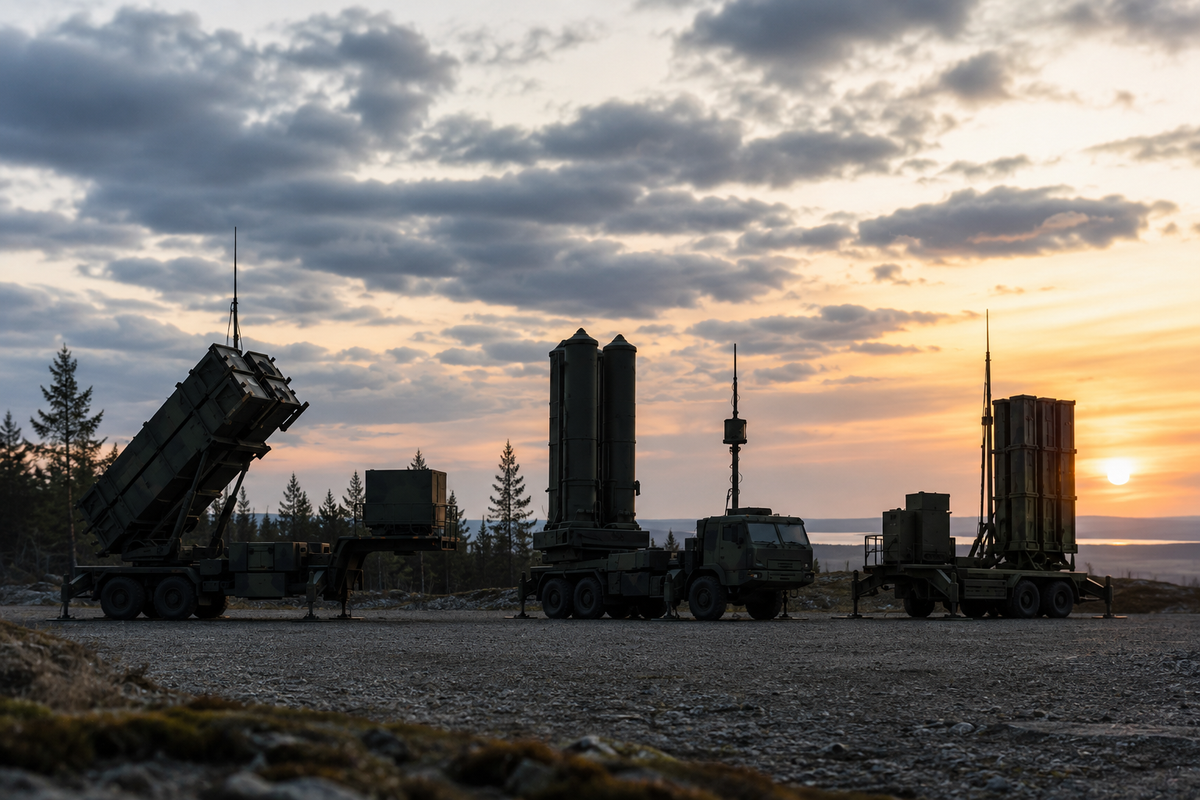
Estonia plans to make a preliminary decision in September 2026 on the supplier and scope of a new long-range air and ballistic missile defense capability, with the procurement potentially exceeding €1 billion. The U.S. Patriot, French-Italian SAMP/T and Israeli David’s Sling are among the systems under consideration as Tallinn moves to add a higher defensive layer above its recently acquired IRIS-T medium-range air defense capability.
Estonian Defense Minister Hanno Pevkur said the government intends to address the procurement during September state budget negotiations. The Estonian Centre for Defence Investments has completed an extensive market assessment, providing the government with the basis for deciding which supplier should enter contract negotiations and at what scale.
The final value has not yet been fixed. Pevkur indicated that the government still has to determine whether the ballistic missile defense acquisition will cost less or more than €1 billion.
Patriot, SAMP/T and David’s Sling compete for Estonia
Estonia has requested offers from four or five companies as it evaluates long-range air defense options. Earlier reporting by Estonian public broadcaster ERR identified Patriot, David’s Sling and SAMP/T as the three principal systems under consideration.
The candidates represent three different defense-industrial pathways.
Patriot is the established U.S. system and is already operated by multiple NATO countries in Europe. SAMP/T provides a European alternative developed through the French-Italian defense industrial base, while David’s Sling gives Estonia an Israeli option designed around air and missile defense missions.
The Estonian requirement goes beyond conventional aircraft interception. Tallinn wants a system capable of protecting strategic targets against ballistic missile threats, adding another layer to the country’s expanding air defense architecture.
Potential protected sites include airports, ports and Estonian Defense Forces command centers. The loss of such infrastructure during a conflict could directly affect Estonia’s ability to sustain national and allied military operations.
Delivery times range from two to nine years
Availability could become one of the decisive factors in Estonia’s selection.
According to Pevkur, some suppliers could deliver their systems within two to three years, while others have indicated timelines of eight to nine years. The offers also differ technically, with some companies proposing products that have not yet entered production but are approaching the final stages of development.
Those differences make a direct comparison more complicated than evaluating acquisition price alone. Estonia must balance system capability, ammunition availability, delivery schedules and the maturity of the proposed configuration before entering detailed negotiations.
Pevkur also identified pressure on U.S. production and ammunition availability as an issue that Estonia must assess. U.S.-made air defense equipment remains heavily demanded, including for Ukraine, creating questions over whether proposed delivery schedules can be fulfilled.
The issue illustrates a wider challenge facing European air defense procurement. NATO members are simultaneously seeking additional interceptors and launch systems while Ukraine continues to require substantial quantities of air defense ammunition.
Estonia builds a layered air defense network
The long-range procurement would sit above a rapidly expanding Estonian air defense structure rather than replace existing systems.
Estonia’s 2026 defense budget reaches €2.4 billion, equivalent to 5.4% of gross domestic product under NATO criteria. Procurement accounts for €1.27 billion of the 2026 budget, while the government plans to maintain defense spending at no less than 5% of GDP between 2027 and 2029.
The country’s 2026-2029 defense development plan identifies air defense as a priority and includes the establishment of a dedicated Air Defence Brigade. Estonia is expanding short- and medium-range capabilities with additional IRIS-T, Piorun and Mistral systems and associated ammunition while pursuing the ballistic missile defense requirement.
The first IRIS-T medium-range systems are arriving in Estonia in 2026. Adding a long-range system capable of engaging ballistic threats would therefore extend the defensive envelope around strategically important military and civilian infrastructure.
For Estonia, supplier selection will consequently involve more than choosing between three missile systems. Delivery speed and access to interceptors could determine how quickly Tallinn can close one of the most demanding gaps in its national air defense architecture.
A September decision would allow the Estonian Centre for Defence Investments to move toward negotiations with the selected supplier, although the government has not announced a contract date or final acquisition value.
Estonia air defense procurement: key questions
Which long-range air defense systems is Estonia considering?
Estonia is considering the U.S. Patriot, the French-Italian SAMP/T and Israel’s David’s Sling as options for its planned long-range air and ballistic missile defense capability. Offers have been requested from four or five companies.
How much could Estonia spend on ballistic missile defense?
The procurement could exceed €1 billion, but the government has not finalized the acquisition scale. Defense Minister Hanno Pevkur said the September budget discussions should determine whether the eventual procurement falls below or above the €1 billion level.
When could Estonia receive the new air defense system?
Supplier timelines vary substantially. According to the Estonian defense minister, some companies have indicated delivery within two to three years, while others would require eight to nine years.
How does the new system fit with Estonia’s IRIS-T?
The planned long-range capability would complement Estonia’s IRIS-T medium-range air defense rather than replace it. Estonia is building a layered network covering short-, medium- and long-range threats, including ballistic missiles.