Estonia’s Threod Puts Laser Targeting on 15.5kg Eos D Drone
Threod Systems’ 15.5kg Eos D VTOL combines a 2kg eOpic-6 ISTAR payload with NATO-standard laser designation for precision-guided weapons.

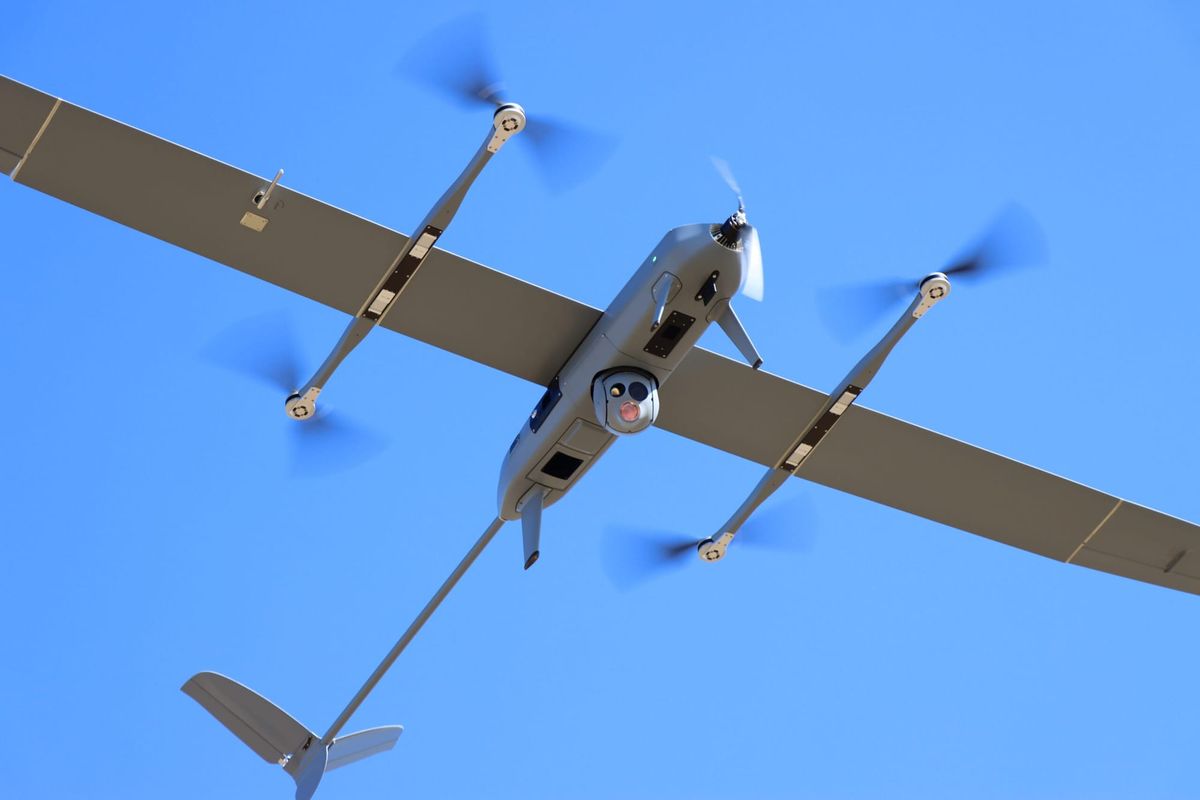
Estonian defense company Threod Systems is bringing laser target designation to a lightweight tactical drone with its Eos D ISTAR, a 15.5 kg electric vertical takeoff and landing platform designed to support precision-guided weapons from the air. The system combines up to three hours of endurance and a 50 km communications range with the company’s 2 kg eOpic-6 ISTAR payload, which provides electro-optical surveillance, target tracking and NATO-standard laser designation.
Threod is highlighting the system during Estonian Defence Week 2026 in Tallinn, although Eos D ISTAR itself is not a new unveiling. The company first presented the configuration at Eurosatory in Paris in June 2026, following earlier testing of the underlying laser-designation concept during a Hellenic Armed Forces exercise.
The development is significant because airborne laser designation has traditionally depended on larger unmanned aircraft, helicopters or crewed platforms capable of carrying heavier stabilized sensor systems. Threod is attempting to move the same basic function onto a tactical VTOL aircraft that can be transported and operated by smaller military units.
A 2kg payload provides surveillance and laser designation
At the center of the Eos D ISTAR configuration is Threod’s eOpic-6, a gyro-stabilized electro-optical payload weighing between 1.5 and 2 kg depending on configuration. It combines visible and thermal imaging, target tracking and navigation functions with a 1064 nm laser target designator compatible with NATO STANAG 3733 coding.
The visible sensor provides Full HD imagery and 28x optical zoom. According to Threod, it can detect a vehicle at 22 km, recognize it at 12 km and identify it at 6 km under specified conditions. The laser designator has a stated vehicle designation range of 3 km, while Threod lists an extended designation range of up to 8 km.
Integrating that payload into Eos D gives the complete system a weight of approximately 15.5 kg. The electrically powered aircraft can remain airborne for up to three hours, operate at altitudes of up to 4,500 meters and maintain a radio line-of-sight link at distances of up to 50 km.
Those specifications place Eos D in a substantially lighter category than many tactical unmanned aircraft used for airborne target designation. The aircraft can take off and land vertically, removing the need for a runway or separate launch and recovery equipment.
Greek exercise demonstrated the sensor-to-shooter concept
Threod has already demonstrated the underlying targeting concept with a live weapon.
During the Hellenic Armed Forces exercise Aisios Omenos 25 in November 2025, Threod worked with Greek unmanned aircraft manufacturer S.A.S. Technology to connect two separate drones in a reconnaissance and strike sequence.
A Threod Eos VTOL equipped with the eOpic-6 ISTAR payload located and designated the target. An S.A.S. Technology Sarisa II SRS multirotor then launched a Thales FZ275 70 mm laser-guided rocket against the designated target.
Threod reported that the rocket achieved a direct hit. The company also described the event as the first launch of a Thales 70 mm laser-guided rocket from an unmanned aircraft, although AdriaDefense has not independently verified that first-of-its-kind claim.
The more relevant aspect of the demonstration was the separation of the sensor and shooter. Instead of requiring a single aircraft to find the target, designate it and carry the weapon, the two functions were distributed between separate unmanned platforms.
That arrangement allows a reconnaissance drone to remain focused on surveillance and target designation while another aircraft or compatible weapon system conducts the strike. It also opens the possibility of using one airborne designator to support several different precision-guided weapons, provided they are compatible with the laser coding and targeting architecture.
Threod targets precision fires at the tactical level
Threod is positioning Eos D ISTAR as a way to move precision targeting closer to tactical units without requiring a larger unmanned aircraft solely to carry the necessary electro-optical equipment.
The company says the eOpic-6 designation capability has been tested with multiple NATO guided projectiles, but it has not publicly identified the full list of compatible weapons. The Thales FZ275 used during the Greek exercise remains the clearest publicly documented example.
Eos D also builds on Threod’s experience with its earlier Eos C VTOL. The Estonian company says Eos C has accumulated thousands of operational flight hours and is used by armed forces including seven NATO members and Ukraine. Threod says its wider product portfolio has been delivered to 27 countries, including 14 NATO members.
The company is also emphasizing cost as part of the Eos D proposition. Estonian Defence Week organizers say a lightweight system of this type could cost several times less than larger unmanned aircraft performing comparable surveillance and laser-designation tasks. Neither Threod nor the organizers have published a unit price or a direct platform comparison, however, making the cost advantage difficult to quantify independently.
For military users, the more immediate question is whether the smaller platform can provide sufficient sensor stability, communications resilience and target-designation performance under operational electronic warfare conditions. Threod lists navigation without Global Positioning System signals and electronic-warfare resilience among the capabilities of its Eos family, but detailed performance data in contested environments is not publicly available.
Estonia’s drone industry moves toward the sensor-to-shooter chain
Eos D also reflects a broader direction within Estonia’s defense technology sector. Rather than concentrating exclusively on reconnaissance drones, Estonian companies are increasingly working on autonomy, sensors, communications and other components that connect battlefield detection with precision engagement.
For Threod, the eOpic-6 turns a small reconnaissance aircraft into part of that wider sensor-to-shooter chain. The drone does not need to carry a weapon itself to influence a strike. Its role can instead be to locate, identify and designate the target for another platform.
That distinction could become increasingly relevant as European armed forces expand their inventories of guided artillery ammunition, rockets and unmanned strike systems. Smaller airborne designators could provide another method of generating targeting data without tying larger and more expensive aircraft to individual tactical units.
The Eos D ISTAR has passed an important technical milestone through the Greek live-fire demonstration, but the next milestone will be commercial and operational. Threod has not publicly identified an armed force that has ordered the Eos D ISTAR configuration.
A disclosed military customer, particularly one planning to integrate the drone with an existing precision-guided weapon, would provide the clearest indication that lightweight airborne laser designation is moving from demonstrations into regular tactical use.
Eos D ISTAR: key specifications
The Eos D ISTAR weighs approximately 15.5 kg with its sensor payload and offers up to three hours of endurance. Its radio line-of-sight communications range reaches 50 km, while the aircraft can operate at altitudes up to 4,500 meters.
Its eOpic-6 ISTAR payload weighs approximately 1.5 to 2 kg and combines visible and thermal imaging with target tracking and laser designation. Threod lists a 3 km laser designation range against vehicles and an extended designation range of up to 8 km. The laser operates at 1064 nm and supports NATO STANAG 3733 coding.
The system was publicly unveiled at Eurosatory 2026 and follows a November 2025 live-fire demonstration in Greece in which Threod’s laser designation technology supported the launch of a Thales FZ275 guided rocket from another unmanned aircraft.