Europe's Next Generation Tank Programs Reshape the Future of Armored Warfare
European armies are accelerating investments in new main battle tank programs as governments seek to replace aging fleets and strengthen land warfare capabilities. Several competing platforms are now shaping the future of armored forces across NATO and Europe.

Europe is entering a new phase of armored vehicle modernization as defense ministries and industry partners pursue next generation main battle tank programs designed to meet evolving battlefield requirements. The renewed focus on heavy armor comes amid growing security concerns, lessons learned from the war in Ukraine, and increasing defense spending across NATO member states.
Among the most ambitious projects is the Main Ground Combat System (MGCS), a joint French-German initiative intended to replace the Leopard 2 and Leclerc fleets in the coming decades. The program is envisioned as more than a traditional tank, combining manned and unmanned systems, advanced sensors, and networked capabilities into a broader combat architecture. While the project has faced industrial and political challenges, it remains a central element of long-term European defense planning.
At the same time, Germany's defense industry has pursued parallel developments centered on the Leopard family. The Leopard 2A8 has emerged as a near-term solution for several European operators seeking improved protection, firepower, and interoperability. Countries including Germany, the Czech Republic, Lithuania, Norway, and others have selected or expressed interest in the platform as part of wider modernization efforts.
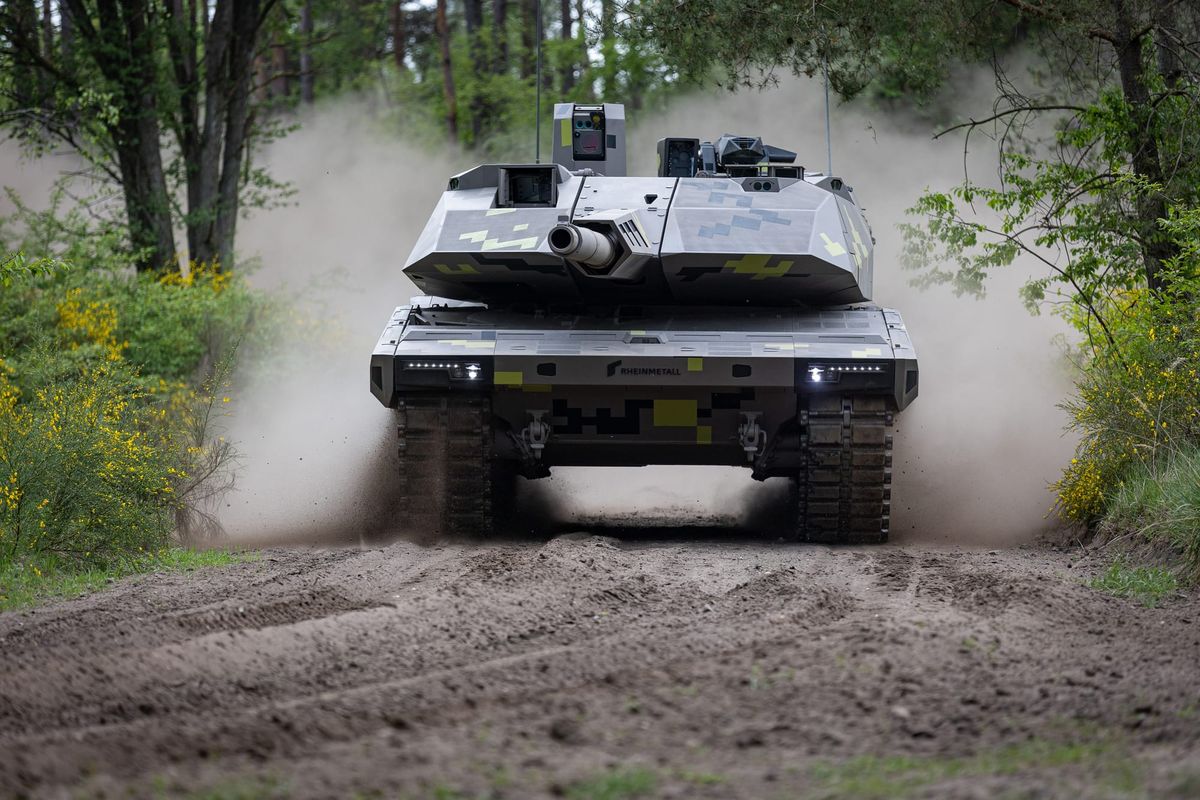
Another notable entrant is the KF51 Panther, developed by Rheinmetall as a next generation tank concept. The vehicle incorporates a new 130 mm main gun, advanced electronic architecture, active protection systems, and provisions for integrating unmanned systems. Rheinmetall has positioned the Panther as both a potential successor to existing Leopard fleets and a candidate for future export programs.
Beyond Western Europe, several countries are pursuing their own armored vehicle initiatives. Poland has launched one of the continent's largest modernization efforts through the acquisition of South Korean K2 tanks while also exploring domestic production and future upgrades. The program reflects Warsaw's broader objective of expanding national industrial capabilities alongside military modernization.
Italy is also seeking to replace aging armored platforms and has strengthened cooperation with European industry partners to support future tank development. Meanwhile, other NATO members are evaluating options that balance operational requirements, industrial participation, and long-term sustainment costs.
The war in Ukraine has reinforced the importance of armored forces while highlighting new challenges. The widespread use of drones, loitering munitions, precision-guided weapons, and advanced surveillance systems has increased pressure on tank designers to improve survivability. As a result, future platforms are expected to place greater emphasis on active protection systems, electronic warfare capabilities, and integration into wider battlefield networks.
Industrial considerations are playing an increasingly important role in procurement decisions. Many governments now view tank acquisition not only as a military requirement but also as an opportunity to strengthen domestic defense manufacturing, technology transfer, and supply chain resilience. This trend has encouraged greater cooperation between governments and industry while increasing competition among European manufacturers.
Despite differing national approaches, a common objective is emerging across Europe. Defense planners are seeking armored platforms capable of operating in highly contested environments while remaining adaptable to future technological developments. Whether through multinational programs such as MGCS, upgraded Leopard variants, or entirely new designs like the KF51 Panther, the next generation of European tanks is expected to shape the continent's land warfare capabilities for decades to come.