Former Polish Defense Minister Says Patriot Aid Dispute Is Politically Driven
Former Polish Defense Minister Janusz Onyszkiewicz has rejected claims that transferring Patriot interceptors to Ukraine significantly weakened Poland’s defenses. He described the dispute as part of an internal political confrontation over military aid and government transparency.

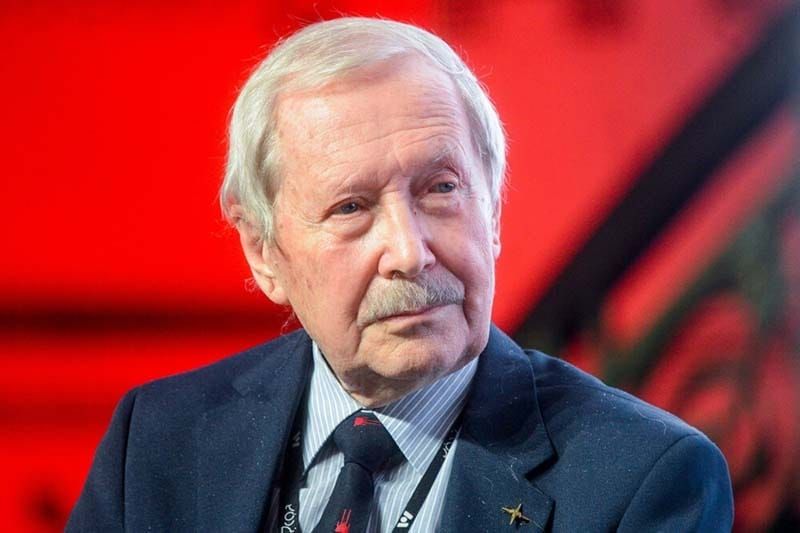
Former Polish Defense Minister Janusz Onyszkiewicz has argued that Poland’s dispute over the transfer of Patriot interceptor missiles to Ukraine is primarily driven by domestic politics rather than operational concerns.
The controversy followed the government’s disclosure of information about military assistance provided to Ukraine since Russia launched its full-scale invasion in 2022. Opposition politicians have accused the government of reducing Poland’s air defense capacity by supplying PAC-3 missiles used by the Patriot system.
Onyszkiewicz said any transfer of military equipment could technically be presented as a reduction in national inventories. However, he indicated that this argument was being used selectively in Poland’s internal political debate.
He also said the government’s decision to disclose the scale of previous military assistance was intended to counter allegations that information about the transfers had been concealed. According to Onyszkiewicz, publishing only partial data could have generated further accusations against Prime Minister Donald Tusk’s government.
The former minister noted that the Law and Justice party, now among the critics of the transfer, oversaw significantly larger weapons deliveries to Ukraine while it was in government. Most of Poland’s reported military assistance was supplied during 2022 and 2023.
Poland has valued its military assistance to Ukraine at approximately 16.5 billion zlotys, equivalent to nearly 4 billion euros. About 90 percent of that support was delivered during the first two years of the full-scale war.
Onyszkiewicz maintained that strengthening Ukraine’s ability to intercept Russian aircraft and ballistic missiles also supports Poland’s security. From an operational perspective, Patriot interceptors remain among the most important assets available to Ukraine for countering advanced missile threats.
The issue has also exposed disagreements between the Polish government and the presidency over consultation procedures and responsibility for the transfer. Defense Minister Władysław Kosiniak-Kamysz has said presidential representatives were informed during national security meetings, while President Karol Nawrocki’s office has maintained that the decision was not formally coordinated with the president.
The debate comes as Poland continues to expand its own layered air and missile defense architecture through the Wisła and Narew programs. Warsaw is acquiring additional Patriot batteries, PAC-3 MSE interceptors, new radars and command infrastructure while developing shorter-range capabilities with substantial participation from Polish industry.