German Ports Warn of Espionage and Sabotage Threats
German ports warn that cyberattacks, espionage and sabotage increasingly threaten infrastructure central to NATO military movements across Europe.


German seaport operators have warned that cyberattacks, espionage and sabotage pose a growing threat to infrastructure that would be critical for moving NATO forces across Europe in a crisis. The warning comes days before the Bundeswehr begins a military logistics exercise in Hamburg built around the arrival of allied forces and their onward movement toward NATO's eastern flank.
Florian Keisinger, managing director of the Central Association of German Seaport Operators, said the security environment facing Germany's ports has deteriorated significantly. Norman Zurke, managing director of the Hamburg Port Business Association, identified cyberattacks as the most immediate concern and also pointed to physical sabotage as a threat to logistics operations.
The comments were reported by Welt am Sonntag and German news agency dpa on September 19.
Germany's North Sea and Baltic ports handle civilian trade but also form part of the transport network NATO would depend on to reinforce Central and Eastern Europe. Hamburg, Bremerhaven, Wilhelmshaven, Rostock and Lübeck connect maritime routes with Germany's rail and road infrastructure.
That role has made the security of ports increasingly relevant to German defense planning as NATO prepares for the movement of larger formations across Europe.
Bundeswehr to test military movements through Hamburg
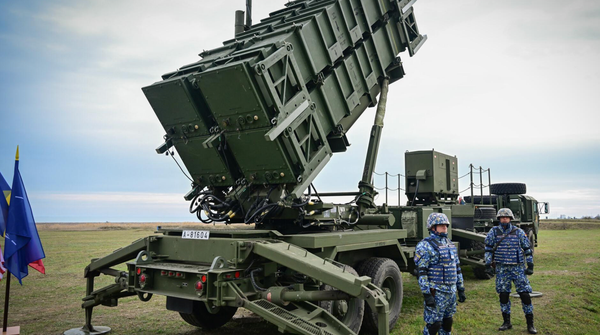
The Bundeswehr will test part of that logistics chain during Red Storm Charlie, which runs from September 24 to 26.
Around 500 military personnel are expected to take part alongside Hamburg authorities, police, firefighters, emergency organizations and private companies. The Port of Hamburg will be one of the main locations for the exercise.
The scenario assumes that allied forces arrive in Hamburg with personnel, vehicles and equipment before continuing toward NATO territory farther east.
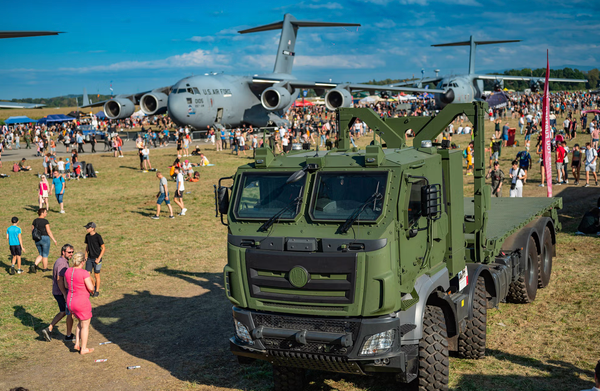
Military convoys from other German states will move into Hamburg during the exercise, while helicopter operations and movements of military vehicles are also planned across parts of the city.
The Bundeswehr said Red Storm Charlie will be larger and more complex than the previous Red Storm Bravo exercise.
Hamburger Hafen und Logistik AG, the Hamburg Port Authority and Airbus are among the companies participating alongside government and emergency organizations.
The exercise forms part of Germany's wider work under Operationsplan Deutschland, the national framework intended to coordinate military, government, commercial and civilian resources during a defense crisis.
Civilian infrastructure becomes part of NATO defense planning
Ports are only one part of the problem Germany is trying to address.
Large-scale reinforcement of NATO's eastern flank would depend on commercial railways, highways, telecommunications networks, energy infrastructure and logistics companies operating alongside military organizations. Disruption at any point in that network could slow the movement of troops and equipment without requiring a direct attack on a military installation.
German defense infrastructure has already faced suspected sabotage.
Authorities investigated two shipyard workers over suspected attempts to damage German Navy corvettes at the Blohm+Voss shipyard in Hamburg in 2025. The case drew attention to the vulnerability of military assets while they are being built or maintained at civilian industrial facilities.
Port operators are now seeking greater federal involvement in protecting infrastructure against both digital and physical threats.
The issue is particularly relevant for Hamburg because of its position in Germany's transport network. In a NATO reinforcement scenario, equipment arriving by sea could move through Germany before continuing toward Poland, the Baltic states and other parts of the alliance's eastern flank.
Red Storm Charlie will test how that movement works when military requirements have to be coordinated with a functioning civilian city and commercial port.
For the Bundeswehr, the exercise begins September 24. For German port operators, the wider concern is whether the infrastructure NATO would rely on during a crisis can remain operational while facing cyberattacks, espionage and attempts at physical disruption.