Germany Identifies Suspects in Russian Intelligence Operation
German investigators have identified suspects in the Leipzig drone plot as Berlin links the operation to Russian state structures and disposable agents.

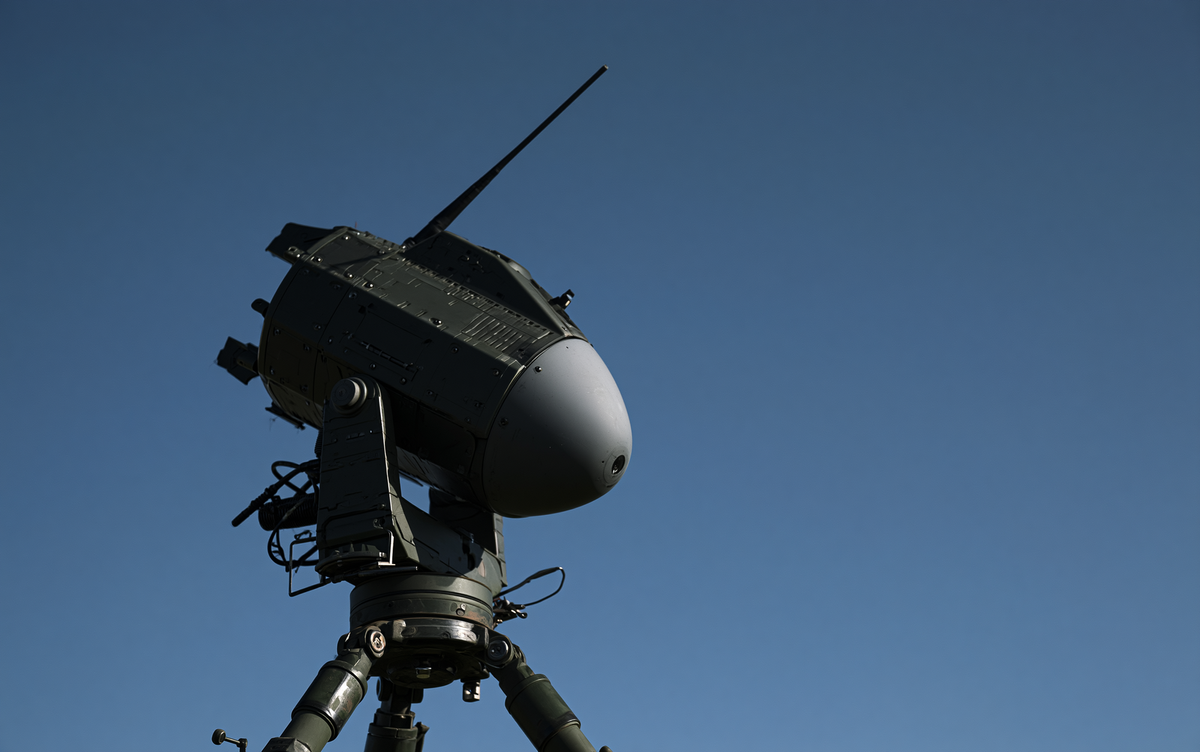
German investigators have identified suspects in the attempted explosive-drone attack at Leipzig/Halle Airport as Berlin increasingly treats the case as a Russian intelligence operation conducted through recruited operatives inside Europe. German Interior Minister Alexander Dobrindt said evidence points to individuals acting on behalf of Russian state structures, while investigators have traced suspects with connections to Russia.
The case provides a new indication of how European security agencies assess Russian intelligence activity beyond traditional espionage. Instead of relying exclusively on intelligence officers operating under diplomatic cover, authorities increasingly face suspected disposable agents recruited to conduct surveillance, sabotage and other high-risk operations with limited direct links to Moscow.
German investigators identify suspects linked to Russia
Germany's Federal Criminal Police Office has identified suspects in the Leipzig investigation, according to reporting by NDR, WDR and Süddeutsche Zeitung published on September 2.
One suspect is a Belarusian national who reportedly also holds a Russian passport. Investigators found DNA evidence linked to him and reconstructed his movements into and out of Germany.
The man reportedly entered the Schengen area using an Italian tourist visa issued in Minsk in late April. German investigators also found that he had previously come to the attention of authorities in the Baltic region in connection with criminal activity.
Reuters reported that investigators are examining two suspects linked to Russian intelligence. The second suspect was identified as a Latvian passport holder of Russian origin.
German authorities have not publicly disclosed evidence establishing that either suspect was a formal Russian intelligence officer.
Instead, the investigation points toward a model increasingly associated with Russian covert operations in Europe: recruiting individuals without formal intelligence status to conduct specific missions.
Germany points to Russian state structures
The German government formally attributed the attempted attack to Russia on September 1 following weeks of investigation.
Dobrindt said German authorities had identified people believed to have acted on behalf of Russian state entities. He characterized the case as consistent with a known pattern of Russian hybrid operations in Europe.
Investigators recovered an explosive-equipped drone near a Ukrainian Antonov cargo aircraft at Leipzig/Halle Airport during the night of August 4 to 5.
German authorities also recovered explosive material and triggering technology that Berlin says resemble equipment previously observed in Russian hybrid operations and in Russia's war against Ukraine. The government described the technical configuration as professional and requiring substantial expertise and organizational preparation.
An antenna discovered near the airport has become another part of the investigation. German security authorities believe the device may have served as a signal amplifier used to help control the explosive-equipped drone. DNA traces were also recovered during the investigation.
Moscow denies responsibility for the operation.
Disposable agents complicate European counterintelligence
The Leipzig investigation highlights a broader challenge facing German and European counterintelligence services.
Suspected Russian operations increasingly involve individuals recruited outside Russia's formal intelligence services. These operatives can include people motivated by money, criminals and individuals approached through online channels.
Such personnel are sometimes described by European security services as disposable agents because the sponsoring intelligence service can distance itself from them if an operation fails.
The model provides several advantages for the state directing the operation. It reduces the exposure of trained intelligence officers, complicates attribution and creates additional layers between the person carrying out an operation and the organization that commissioned it.
The Leipzig case appears to fit elements of this pattern, according to the German government's assessment.
German reporting has also drawn parallels between the airport incident and previous suspected Russian sabotage operations involving European air cargo networks.
Leipzig connects espionage, sabotage and NATO logistics
The location of the attempted attack increases its security significance.
Leipzig/Halle is one of Germany's major cargo airports and functions as an important logistics hub. Ukrainian Antonov aircraft operating from the airport have supported cargo movements linked to Ukraine, while the broader facility has relevance to NATO logistics.
The suspected operation therefore sits at the intersection of intelligence collection and physical sabotage.
A successful attack against an aircraft or logistics infrastructure would have effects beyond the destruction of a single target. Such operations can disrupt transportation networks, force governments to increase security spending and demonstrate vulnerabilities at infrastructure supporting Ukraine and NATO.
The German government has subsequently raised the country's threat assessment and accelerated measures intended to strengthen protection against drones and hybrid attacks.
Germany's federal government said the Leipzig incident demonstrates that the country faces an increasing threat from sabotage, drone operations and other forms of hybrid activity. Berlin has also strengthened legislation covering the protection of critical infrastructure and expanded measures related to counter-drone security.
Germany faces a wider Russian intelligence challenge
The Leipzig case does not stand alone.
On August 6, German prosecutors detained a 33-year-old Ukrainian national suspected of gathering information about a defense company in southern Germany for potential sabotage.
Federal prosecutors said the suspect had allegedly collected information about the company's premises and security arrangements.
Another Ukrainian national, identified by prosecutors as Vitalii M., was arrested in March 2026 on suspicion of collecting information in Germany for a Russian intelligence service since at least November 2025.
Taken together, the investigations illustrate how the counterintelligence challenge has expanded from the protection of classified government information to defense factories, transport hubs and other civilian infrastructure with military relevance.
The Leipzig investigation is particularly significant because German authorities have now publicly attributed the operation to Russian state structures and identified suspected operatives.
Who are the suspects in the Leipzig drone operation?
German investigators have identified suspects with connections to Russia. One is reportedly a Belarusian national who also holds a Russian passport and entered the Schengen area using an Italian tourist visa. Reuters reported that investigators are also examining a Latvian passport holder of Russian origin.
Does Germany believe Russian intelligence was behind the attack?
Yes. The German government formally attributed the operation to Russia on September 1. Interior Minister Alexander Dobrindt said evidence points toward individuals who acted on behalf of Russian state structures. Russia denies responsibility.
What are disposable agents in Russian intelligence operations?
The term describes recruited operatives who are not necessarily professional intelligence officers. Using such individuals allows an intelligence service to conduct surveillance, sabotage or other operations while maintaining distance between the operatives and the state directing them.
Why is Leipzig/Halle Airport strategically important?
Leipzig/Halle is a major European cargo hub used by Ukrainian Antonov aircraft and connected to logistics supporting Ukraine and NATO. That makes activity around the airport relevant not only to German internal security but also to the protection of European military logistics.
The investigation will now be important for understanding how German authorities reconstruct the chain between the suspected operatives and their alleged Russian handlers. Establishing that command structure could provide further evidence of how Russian intelligence services recruit and direct disposable agents for operations against European defense and logistics targets.