Germany Moves to Add Fourth SIGINT Ship as Naval Intelligence Build-Up Accelerates
Germany plans to expand its next-generation maritime intelligence fleet from three to four Class 424 vessels, boosting the Bundeswehr’s SIGINT and electromagnetic surveillance capabilities.


Germany is moving to expand its planned fleet of next-generation intelligence-gathering vessels from three to four, strengthening the Bundeswehr’s ability to monitor the electromagnetic spectrum across sea, air and land.
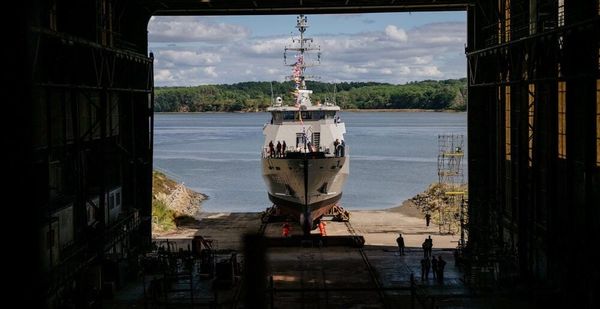
Germany plans to procure a fourth Class 424 intelligence vessel for the German Navy, Defence Minister Boris Pistorius announced during the keel-laying ceremony for the third ship at Rheinmetall’s Peene-Werft shipyard in Wolgast.
The additional vessel has not yet been formally contracted. Germany’s Defence Ministry is now moving the proposal into the parliamentary approval process, while Rheinmetall has been asked to submit an offer for the fourth ship.
The decision reflects a revised Bundeswehr capability requirement that calls for four vessels rather than the three currently under construction.
Pistorius said the new generation of ships will provide significantly improved surveillance of the electromagnetic spectrum across land, air and sea, supporting Germany’s ability to detect, collect and analyze information that may remain hidden from conventional sensors.
The vessels will be operated jointly by the German Navy and specialists from the Bundeswehr’s Cyber and Information Domain Service, or CIR, which will use the shipborne sensor systems to collect and evaluate intelligence and contribute to Germany’s wider military situational picture.
Germany expands maritime intelligence capacity
The approximately 130-meter-long Class 424 vessels are being built as replacements for Germany’s ageing Oste-class fleet service ships, which have served as the Bundeswehr’s principal maritime intelligence-gathering platforms since the late 1980s.
The existing ships specialize in electronic, communications and acoustic intelligence, monitoring activity across large maritime and coastal areas.
The new Class 424 generation is intended to significantly increase that capability.
According to Rheinmetall, the vessels are equipped with advanced sensors for maritime intelligence gathering and are designed to meet future military requirements. Earlier program information also indicated that the ships will be able to support unmanned systems and a medium helicopter, while onboard data processing will increasingly rely on automated and artificial-intelligence-supported systems.
The first Class 424 vessel is expected to enter service from 2029, with the new ships gradually replacing the current Oste-class fleet.
Rheinmetall accelerates construction
The announcement came as Rheinmetall marked the keel laying of the third Class 424 vessel at its Wolgast shipyard.
The milestone was reached significantly ahead of the original schedule, with Rheinmetall saying construction is running roughly a year earlier than initially planned.
All three vessels from the original order are now under construction.
The program has also taken on growing industrial significance for Rheinmetall following the company’s expansion into naval shipbuilding and the cancellation of Germany’s troubled F126 frigate program.
Peene-Werft, now part of Rheinmetall Naval Systems, is one of the German facilities involved in construction of the Class 424 ships.
A fourth vessel would provide additional workload for the shipyard while giving Germany greater redundancy and availability for persistent maritime intelligence missions.
The expansion comes as European armed forces place increasing emphasis on electronic warfare, signals intelligence and surveillance capabilities amid heightened tensions with Russia and growing concern over hybrid activity in European waters.
For Germany, the fourth Class 424 would turn what was originally conceived as a replacement program for three ageing intelligence vessels into a broader expansion of its maritime intelligence fleet.