Ground A Raises €9.1M to Scale GA 1000 Counter-Drone Laser
German defense startup Ground A raised €9.1M to industrialize its GA 1000 laser counter-drone system and prepare series production in Germany.

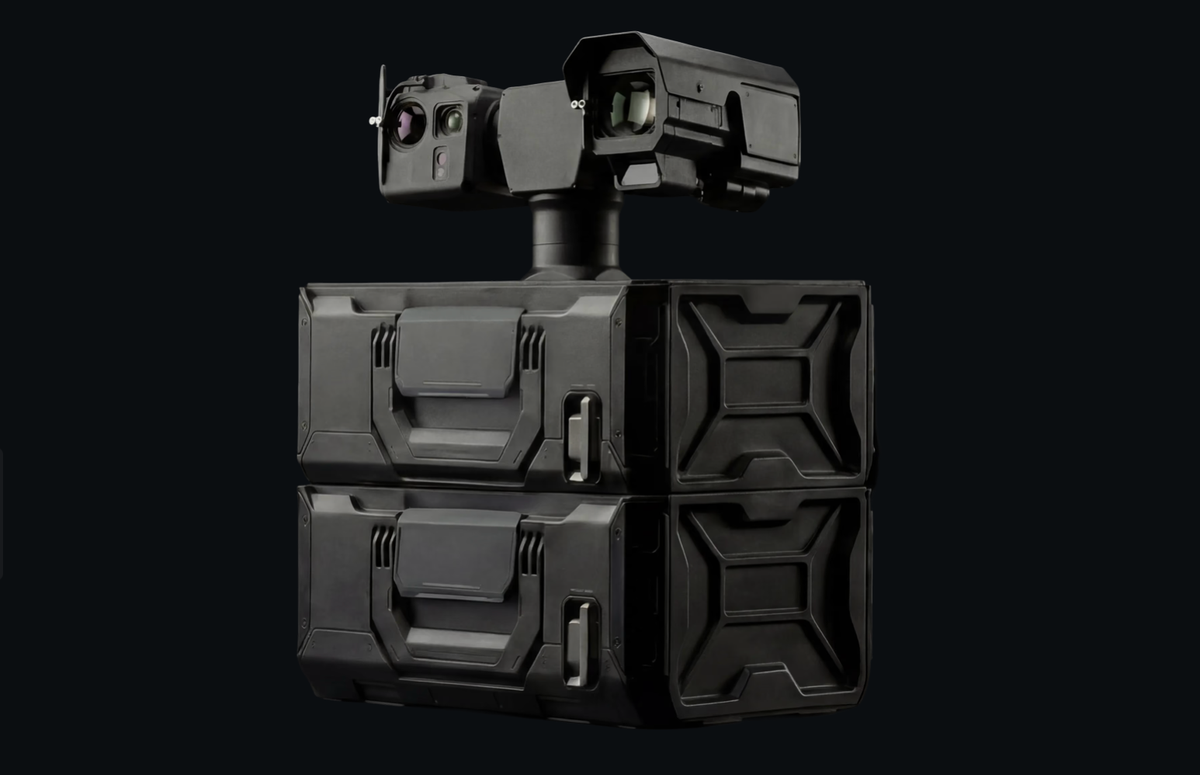
German defense technology startup Ground A has raised €9.1 million in pre-seed funding to industrialize its GA 1000 laser-based counter-drone system and prepare modular series production in Germany. Founded in January 2026, the company says the GA 1000 has completed its prototype phase and entered testing and validation ahead of a planned market launch.
Vsquared Ventures led the financing round, with Quantum Systems participating as a corporate investor. Other investors include the Global Resilience Innovation Fund, Robin Capital, ABACON, Leblon Capital and OVNI Capital.
Ground A closed the financing in June but announced it publicly on September 8 as the Berlin and Düsseldorf-based company began presenting its technology more widely. The funding will support industrialization of the GA 1000 and development of a broader counter-drone and air-defense product platform.
GA 1000 combines radar, AI and a high-energy laser
The GA 1000 combines radar, multi-sensor fusion, computer vision and proprietary artificial intelligence with a high-energy laser effector in a single counter-unmanned aerial system.
According to Ground A, the system automatically detects, classifies and tracks small and agile drones. The decision to engage a target remains with a human operator.
The complete system, including its effector and energy modules, is designed around a Euro-pallet footprint. Ground A says self-contained, swappable energy modules allow the system to operate independently of fixed electrical infrastructure.
The company lists 360-degree threat detection and target acquisition at ranges of several kilometers. After target lock, Ground A says the laser can produce an effect within seconds, although the company has not publicly provided enough independent test data to assess performance across operational conditions.
That distinction is important. The GA 1000 has moved beyond the prototype phase, according to Ground A, but remains in testing and validation rather than operational series deployment.
Ground A targets the counter-drone cost problem
Ground A is entering a European counter-UAS market shaped by the rapid proliferation of inexpensive unmanned systems and the cost imbalance created when higher-value interceptors are used against relatively cheap drones.
The GA 1000 attempts to address that problem through a directed-energy effector that does not require conventional interceptor ammunition for each engagement. Ground A lists energy as the system's consumable and claims an engagement cost below €0.10. That figure is a company specification and should not be interpreted as the full operational cost of detecting and defeating a drone.
Mobility is another part of the design. Rather than developing the GA 1000 exclusively as fixed-site infrastructure, Ground A is positioning the system for military units, critical infrastructure and integration onto other platforms.
Its architecture is designed to remain vendor and system agnostic. The company says GA 1000 can integrate with existing air-defense and command-and-control networks as well as land, maritime and airborne platforms.
That approach could be significant in a European market where armed forces increasingly need counter-UAS effectors to operate within layered air-defense architectures rather than as isolated systems.
Ground A prepares series production in Germany
Ground A is establishing modular series production in Germany while the GA 1000 proceeds through testing and validation.
The company plans another financing round in 2027, alongside a significant expansion of production capacity. Ground A has not disclosed a confirmed production volume or customer delivery schedule.
German reporting indicates the company intends to begin series production in 2027. Ground A publicly demonstrated the system in Berlin as it emerged from its initial period of low-profile development.
The speed of development is notable. Ground A was established in January 2026 and says it moved the GA 1000 from development through its prototype phase within its first months of operation.
The next phase will be more consequential than the initial development timeline. Testing, validation, production scaling and customer adoption will determine whether the GA 1000 develops from a defense-tech prototype into a deployable counter-UAS product.
Quantum Systems joins the investor group
The participation of Quantum Systems gives the funding round an additional defense-industry dimension.
The German unmanned systems company joined Vsquared Ventures and the other investors backing Ground A. Vsquared said the round also included the Global Resilience Innovation Fund, Elephant Lake Capital, Robin Capital, ABACON, Leblon Capital and OVNI Capital.
Ground A's investor group also includes entrepreneurs and investors from the European defense and software sectors. Tech.eu identified Quantum Systems co-founder Florian Seibel and ARX Robotics Managing Director Stefan Roebel among individual industry figures involved.
For Ground A, the financing provides capital for a transition that many European defense startups now face: moving from a demonstrable technology into validated hardware that can be manufactured at useful scale.
The company's decision to develop production capacity in Germany also aligns the project with Europe's broader push to expand domestic defense manufacturing and reduce bottlenecks in critical military capabilities.
European counter-UAS investment moves toward scalable effectors
Ground A is entering a sector where European armed forces and critical infrastructure operators are evaluating multiple approaches to drone defense.
Electronic warfare, guns, interceptor drones, missiles and directed-energy systems each offer different advantages and limitations. Lasers are particularly attractive for repeated engagements because they do not depend on a conventional magazine of interceptor ammunition, but their effectiveness can depend on factors including atmospheric conditions, target characteristics, tracking quality and available power.
Ground A's architecture attempts to combine the effector with the sensing, tracking, AI and energy infrastructure needed to create a compact integrated system.
For now, the GA 1000 remains a system approaching market entry rather than a fielded capability at scale. The €9.1 million financing gives Ground A resources to move into industrialization, but testing results, procurement decisions and production contracts will provide the more important measures of its progress.
If Ground A completes that transition, the company would join a growing group of European defense technology firms trying to solve one of the central air-defense problems exposed by recent conflicts: how to defeat large numbers of inexpensive drones without relying exclusively on expensive or supply-constrained interceptors.
Ground A GA 1000: Key questions
What is the Ground A GA 1000?
The GA 1000 is a German-developed counter-drone system combining radar, multi-sensor fusion, computer vision, proprietary AI and a high-energy laser. It is designed to detect, classify and track small drones automatically while keeping the engagement decision with a human operator.
How much funding did Ground A raise?
Ground A raised €9.1 million in a pre-seed round led by Vsquared Ventures. Quantum Systems participated alongside several European venture investors. The round closed in June 2026 and was publicly announced on September 8.
Is the GA 1000 already operational?
Ground A says the GA 1000 has completed its prototype phase and is now undergoing testing and validation ahead of market launch. The company is preparing modular series production in Germany but has not announced operational deployment at scale.
When will Ground A begin series production?
Ground A is preparing modular manufacturing in Germany and plans to expand capacity alongside another financing round in 2027. German reporting says series production is planned from 2027, but the company has not disclosed confirmed production volumes or customer delivery schedules.