Italy Eyes 5,031 APKWS II Kits for Eurofighter Drone Defense
Italy is evaluating 5,031 APKWS II guidance kits worth up to $364 million as a lower-cost counter-drone weapon, potentially for its Eurofighter fleet.

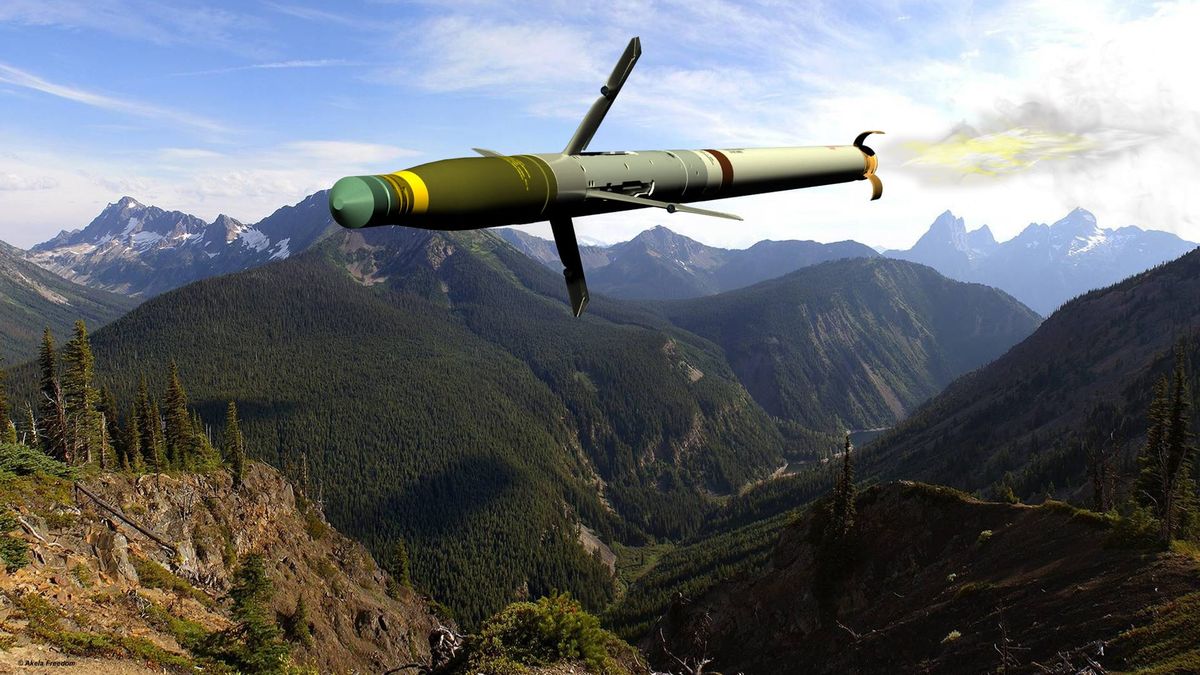
Italy is evaluating the acquisition of 5,031 Advanced Precision Kill Weapon System II guidance sections under a potential U.S. Foreign Military Sale valued at up to $364 million, creating a new lower-cost option for intercepting drones. The Italian Air Force has not yet signed a contract, but Eurofighter Typhoon fighters are considered the likely platform if Rome proceeds with the acquisition.
The U.S. Department of State has approved the possible sale of the air-to-air variant of the BAE Systems-developed Advanced Precision Kill Weapon System II, or APKWS II. The proposed package centers on 5,031 WGU-59B/B guidance sections and also includes LAU-131 A/A launchers, Mk 152 high-explosive warheads, Mk 66 rocket motors, proximity fuzes, practice warheads and supporting equipment.
The potential acquisition reflects a broader European effort to reduce the cost of defeating relatively inexpensive unmanned aerial vehicles. Instead of relying exclusively on conventional air-to-air missiles, APKWS II would give Italian combat aircraft another weapon for targets that do not justify firing much more expensive interceptors.
Italy considers APKWS II as a lower-cost drone interceptor
APKWS II converts an unguided 70 mm rocket into a precision-guided weapon by inserting a laser guidance section between the rocket motor and warhead.
The system uses distributed aperture semi-active laser seeker technology contained in four fold-out control surfaces. The architecture allows existing rocket components to become precision weapons without requiring an entirely new missile.
The proposed Italian package is specifically significant because it includes the WGU-59B/B single-variant air-to-air configuration. U.S. Defense Security Cooperation Agency documentation added this configuration to its nonrecurring cost structure in May 2026.
The economics are central to Italy's interest. Defense News reported that an APKWS-equipped rocket can cost below €100,000, while an Advanced Medium-Range Air-to-Air Missile, or AMRAAM, can cost roughly ten times as much.
That difference matters as NATO air forces confront increasing numbers of relatively inexpensive drones.
Using a sophisticated air-to-air missile against a low-cost unmanned aircraft can successfully eliminate the target but creates an unfavorable cost exchange. APKWS II provides another layer between aircraft guns and higher-end missiles such as AMRAAM.
Eurofighter Typhoon emerges as likely Italian platform
Italy has not formally confirmed which aircraft would receive APKWS II if the acquisition proceeds.
However, Italian sources cited by Defense News identified the Eurofighter Typhoon as the likely recipient. Italy operates the aircraft as the F-2000, including for NATO air-policing and air-defense missions.
The operational requirement is no longer theoretical.
An Italian Eurofighter deployed on NATO's Baltic Air Policing mission shot down an unidentified drone after it entered Latvian airspace in August, highlighting the type of target for which a cheaper air-launched interceptor could prove useful.
Italy has also deployed Eurofighters and other air-defense assets to the Gulf region during 2026. The Italian Ministry of Defense confirmed an Air Force deployment supporting airspace surveillance and defense in Saudi Arabia, Kuwait and Bahrain following increased regional tensions.
APKWS II would therefore potentially add a dedicated counter-UAS option to aircraft already conducting NATO and expeditionary air-defense missions.
Royal Air Force integration gives Italy an existing model
Italy would not be the first Eurofighter operator to use APKWS II against aerial targets.
The British Royal Air Force announced in May that it had operationally integrated APKWS II with the Typhoon following a rapid program in which testing and deployment were completed within approximately two months. The British requirement focused specifically on providing pilots with a less expensive weapon for defeating drones.
That development provides Italy with an important precedent.
Both countries operate the Eurofighter Typhoon, meaning the British integration demonstrates that APKWS II can already be adapted to the European fighter platform. It potentially reduces technical uncertainty compared with introducing a counter-drone weapon with no existing Typhoon integration.
The change in European requirements has been rapid. According to The Aviationist, Eurofighter operators showed little public interest in integrating APKWS for counter-UAS missions in 2025, but interest increased substantially after the United Kingdom moved ahead with the capability.
Italy could now become another major Eurofighter operator to adopt the concept.
5,031 guidance kits would create a substantial interceptor stockpile
The scale of the proposed Italian request is also notable.
A potential inventory of 5,031 guidance sections would provide Italy with thousands of precision-guided rockets rather than a small experimental batch. However, the Foreign Military Sale authorization establishes a maximum potential package and does not mean Italy will necessarily purchase every item or spend the full $364 million.
That distinction is important. Italian sources told Defense News that no contract has been signed and that the Air Force is still evaluating the technology.
The final configuration, quantity and value could therefore change before an agreement is concluded.
If Italy proceeds, the acquisition would nevertheless demonstrate how European air forces are adapting existing fighter fleets to a threat environment increasingly shaped by inexpensive unmanned aircraft.
Rather than replacing conventional air-to-air missiles, APKWS II could complement them. Fighters could retain AMRAAM and other weapons for aircraft and higher-end threats while carrying substantially cheaper guided rockets for drones.
For NATO, that approach could become increasingly relevant as air forces balance interceptor inventories against persistent unmanned threats along the alliance's eastern and southern approaches.
Italy APKWS II purchase: key questions
Is Italy buying 5,031 APKWS II guidance kits?
The U.S. State Department has approved a possible Foreign Military Sale covering 5,031 WGU-59B/B APKWS II guidance sections and associated equipment. Italy has not yet signed the final procurement contract, according to Italian sources cited by Defense News.
How much could Italy's APKWS II acquisition cost?
The approved package has an estimated maximum value of $364 million. That figure includes guidance sections as well as launchers, warheads, rocket motors, proximity fuzes, training equipment and technical support.
Will Italy use APKWS II on Eurofighter Typhoon fighters?
The Italian government has not formally confirmed the platform. Italian sources identified Eurofighter as the likely recipient, and the United Kingdom has already integrated APKWS II onto Royal Air Force Typhoons.
Why use APKWS II against drones?
APKWS II offers a less expensive precision weapon for engaging unmanned aircraft than conventional air-to-air missiles. That could allow fighters to preserve higher-cost missiles for more demanding aircraft and missile threats.