Latvia Selects Czech Morana 155mm Howitzer Over Archer
Latvia has selected Excalibur Army’s Morana 155 mm howitzer over BAE Systems Bofors’ Archer after evaluating cost, delivery, capability and local industry.

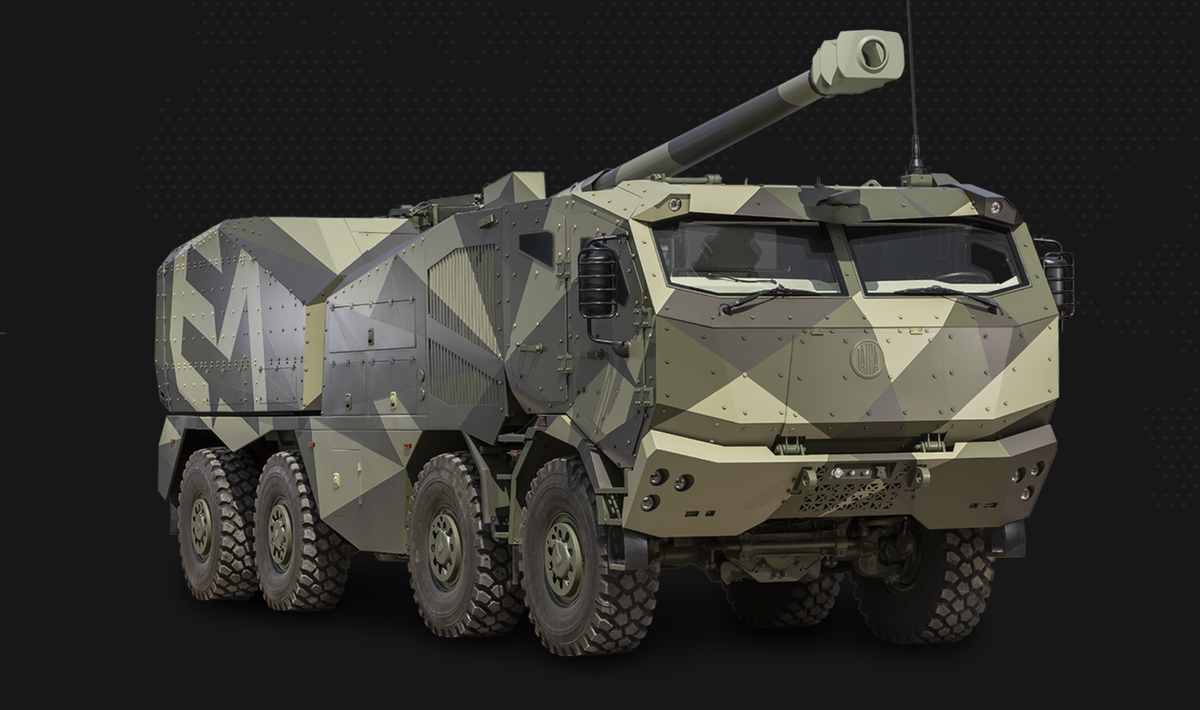
Latvia has selected the Czech-built Morana 155 mm wheeled self-propelled howitzer from Excalibur Army for the Latvian National Armed Forces, moving away from an earlier plan centered on the Swedish Archer system. The Latvian government made the decision on September 15 after evaluating cost, delivery schedules, operational capabilities and participation by the domestic defense industry.
The decision marks a significant change in Riga's artillery modernization program. Latvia and Sweden signed a letter of intent in June 2025 that envisaged the future purchase of 18 Archer systems, while the Latvian government gave conceptual approval to the Archer acquisition in January 2026.
Latvia has not disclosed the number of Morana systems it intends to purchase or the value and delivery schedule of the planned procurement. Those details remain important as the program moves from government selection toward contracting.
Latvia chose Morana after negotiations with two suppliers
The Latvian Ministry of Defence began market research for a new 155 mm wheeled artillery system in May 2024. Following its evaluation, the ministry continued negotiations with BAE Systems Bofors for Archer and Czech manufacturer Excalibur Army for Morana.
Riga ultimately selected the Czech proposal after comparing the offers on four stated criteria: cost, delivery time, operational capabilities and involvement of Latvia's defense industry. Defense News reported that the Czech offer provided more favorable pricing and delivery terms, while local industrial participation also formed part of the proposal.
The choice is notable because Latvia had moved relatively far toward acquiring Archer. The June 2025 Latvian-Swedish letter of intent covered 18 systems and envisaged an eventual intergovernmental agreement, joint training and cooperation between the two armed forces. Sweden had also committed to provide leased artillery systems until delivery of Latvia's new equipment.
In January 2026, Latvia's government then conceptually approved the planned Archer procurement as part of the country's effort to expand indirect-fire capabilities. Eight months later, the Morana proposal has displaced that plan.
Morana combines a 155 mm gun with a Tatra 8x8 chassis
Morana is a 155 mm/52-caliber self-propelled artillery system developed by Excalibur Army, part of the Czech defense group Czechoslovak Group. The system made its public debut at Eurosatory in Paris in 2022.
The howitzer combines an armored autonomous turret with a Tatra Force 8x8 wheeled chassis. Excalibur Army describes the architecture as combining elements of truck-mounted artillery with the protected turret arrangement found on heavier self-propelled howitzers.
According to manufacturer specifications, Morana carries 45 rounds and its 155 mm/52-caliber weapon can reach targets at distances exceeding 41 km, depending on ammunition. Its automatic loading system allows a rate of up to six rounds during the first minute after occupying a firing position.
The system supports Multiple Rounds Simultaneous Impact firing and incorporates an inertial navigation system with GPS, ballistic calculations and onboard diagnostic functions. The architecture also allows integration with a customer's chosen fire-control system.
Defense News, citing Excalibur Army data, reported that Morana uses a three-person crew and can reach a maximum road speed of 90 km/h.
Latvia had planned to acquire 18 Archer howitzers
Latvia's previous plan provides important context for the scale of the change.
The June 2025 letter of intent between Latvia and Sweden specifically envisaged 18 Archer 8x8 artillery systems. The two countries also planned closer artillery cooperation, including joint training and the creation of a joint unit.
Archer is produced by BAE Systems Bofors and is already fielded by Sweden, while Ukraine and the United Kingdom also operate the system. Latvia's planned acquisition therefore offered interoperability benefits with another Baltic Sea NATO ally as well as access to an established artillery platform.
The September decision shows that those cooperation benefits did not determine the final selection. Riga instead identified the overall Czech offer as its preferred path after comparing the competing proposals.
The Latvian Ministry of Defence has not stated that the previously planned quantity of 18 systems will carry over to the Morana procurement. Until a contract or further government documentation is published, the number of Morana howitzers should therefore not be assumed to match the earlier Archer requirement.
Latvia is expanding indirect-fire capabilities
The Morana acquisition forms part of Latvia's broader effort to strengthen its land forces and indirect-fire capability.
Latvia has allocated €2.16 billion, equivalent to 4.91% of gross domestic product, to defense in 2026, according to figures reported by Defense News. Artillery has been identified among the country's key capability-development projects.
The selection also creates a new opportunity for Czech defense industry in the Baltic region. Excalibur Army sits within Czechoslovak Group, whose portfolio includes artillery systems, ammunition and military vehicles, while Morana itself is built around the Czech Tatra 8x8 vehicle architecture.
For Latvia, domestic industrial participation was explicitly included among the factors considered during the selection. The Ministry of Defence has not yet detailed which Latvian companies could participate or which parts of production, maintenance, logistics or sustainment could take place in Latvia.
That industrial element is particularly relevant as Latvia develops domestic ammunition capacity. In September 2025, Latvian authorities signed a memorandum with Rheinmetall covering plans for an artillery ammunition plant involving more than €200 million in investment.
The next major milestones will be the conclusion of the Morana procurement contract, disclosure of the number of systems and delivery schedule, and clarification of Latvian industry's role in the program.