Mapping the Western Balkans' Growing Drone Ecosystem
From Croatia's Orqa to Serbia's Elbit joint venture and Kosovo's Skifteri, the Western Balkans is fast becoming a serious unmanned systems production hub. Here is who builds what.

Five years ago, unmanned systems in the Western Balkans meant imported Turkish Bayraktars and the occasional Chinese demonstrator. That picture has changed fast. Every state in the region now has some form of indigenous drone program, ranging from a vertically integrated European manufacturer in Croatia to a one-man operation in Kosovo claiming four-figure kilometer strike ranges. Adria Defense mapped what is verified, what is still a claim, and where the region is heading.
Croatia: Orqa Becomes Europe's Volume Producer
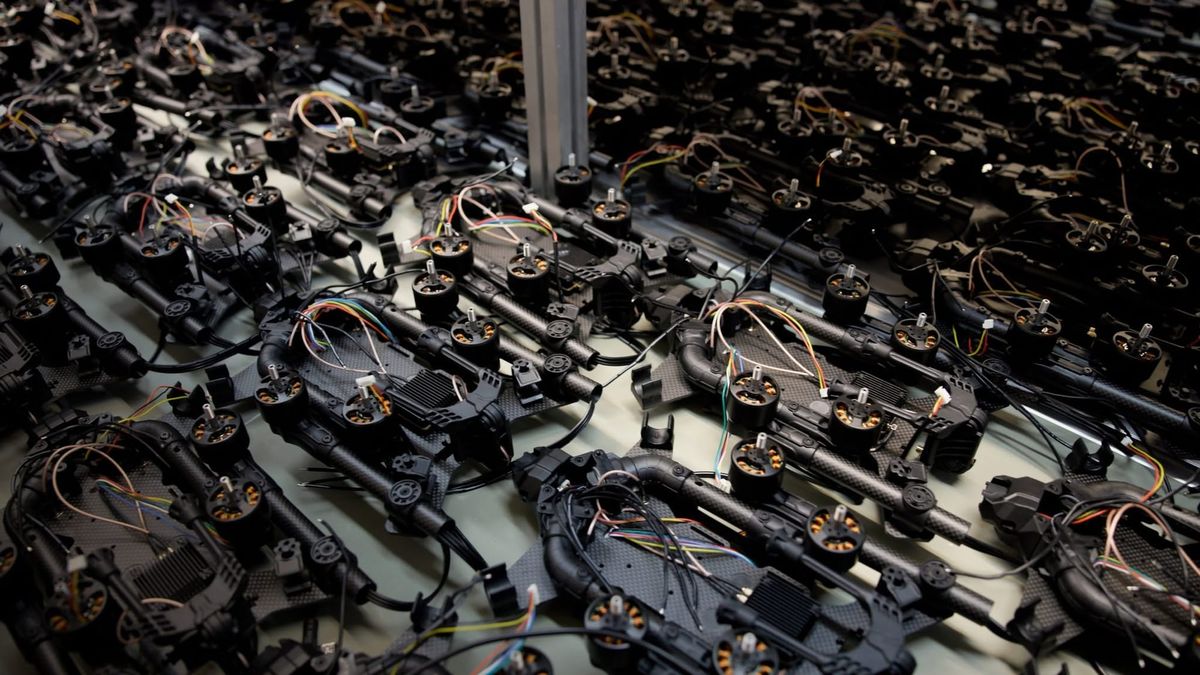
Croatia's Orqa, headquartered in Osijek, is the region's clearest industrial success story. The company designs and manufactures its flight controllers, radios, motors, cameras, and printed circuit boards in-house, and has deliberately eliminated Chinese components from its supply chain to secure NDAA compliance for the US market. Orqa scaled its Osijek facility to 280,000 drones annually by late 2025, with CEO Srdjan Kovacevic stating the company expects to reach 500,000 units and components by the end of 2026. A Series A round of €12.7 million, led by Expeditions, is funding a Global Manufacturing Partnership Program intended to push combined output past one million drones a year through licensed partners abroad.
The Croatian Armed Forces have already placed a roughly €10 million order for Orqa's MRM-2 Interceptor drones, and the company's products are also in use with Ukraine's forces. In April 2026, Orqa signed a memorandum with Ukrainian FPV manufacturer General Cherry to build an underground UAV components plant in Ukraine under the Build in Ukraine localization program, paired with parallel serial production in Croatia. It is a similar model to Croatia's earlier localization of DOK-ING's MV-4 demining robot inside Ukraine.
On the procurement side, Zagreb signed a €67 million contract with Baykar in November 2024 for six Bayraktar TB2s, making Croatia one of several regional buyers of the Turkish system alongside Kosovo and Romania.
Serbia: State Industry Plus a Strategic Israeli Partnership
Serbia's drone program runs through the state-owned Yugoimport SDPR, with UAV assembly concentrated at the Utva Aviation Industry plant in Pancevo. The flagship platform is Pegaz (Pegasus), originally an ISR aircraft first flown in 2011 that Yugoimport has since upgraded into a strike-capable system. The version shown at the Partner 2025 expo in Belgrade carries a 54-kilogram payload, has a stated range beyond 200 kilometers and 10 hours of endurance, and can deliver RASH-2M precision-guided mortar rounds developed jointly with the Military Technical Institute. At EDEX 2025 in Cairo, Yugoimport also unveiled the Gavran 145 loitering munition, quoted at a 150-kilometer range, roughly three hours of endurance, and a 15-kilogram warhead rated to defeat reactive armor.
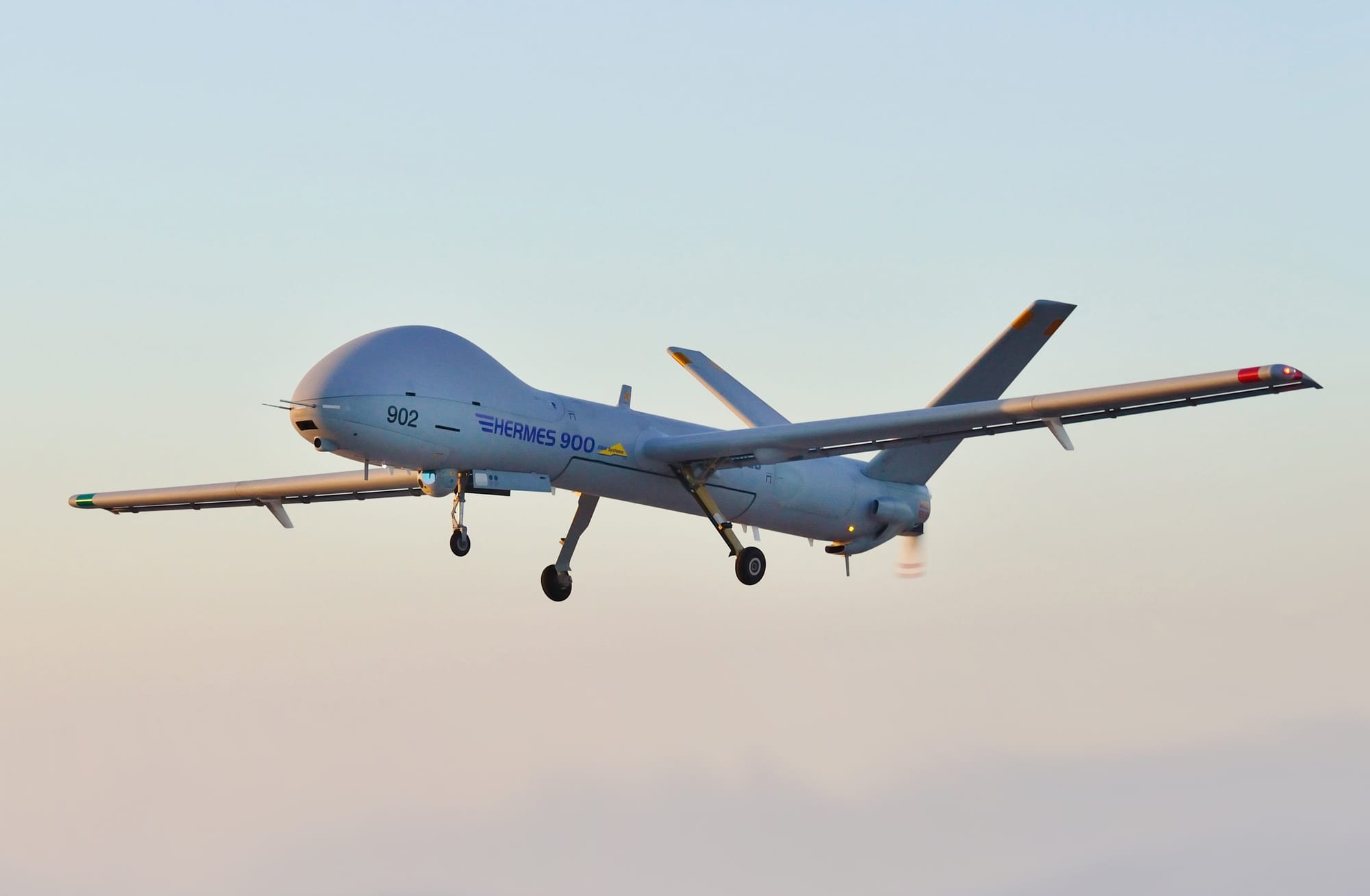
The bigger development is the joint venture with Israel's Elbit Systems, first reported by Haaretz in April 2026 and confirmed by President Aleksandar Vucic during Volodymyr Zelensky's Belgrade visit in August. Elbit holds 51 percent of the new facility in Simanovci, near Belgrade, with Yugoimport SDPR holding the remainder. Vucic has said the plant will open around mid-September 2026, producing both short-range strike drones and longer-range UAVs capable of operating up to 6,000 meters, positioned to eventually succeed Pegasus. The deal builds on Serbia's earlier purchase of Elbit's Hermes-900 and reported interest in the SkyStriker loitering munition, and reflects a fast-deepening defense-industrial relationship between Belgrade and Israeli manufacturers, with Serbian arms exports to Israel up roughly 42-fold since 2023, reaching €114 million in 2025.
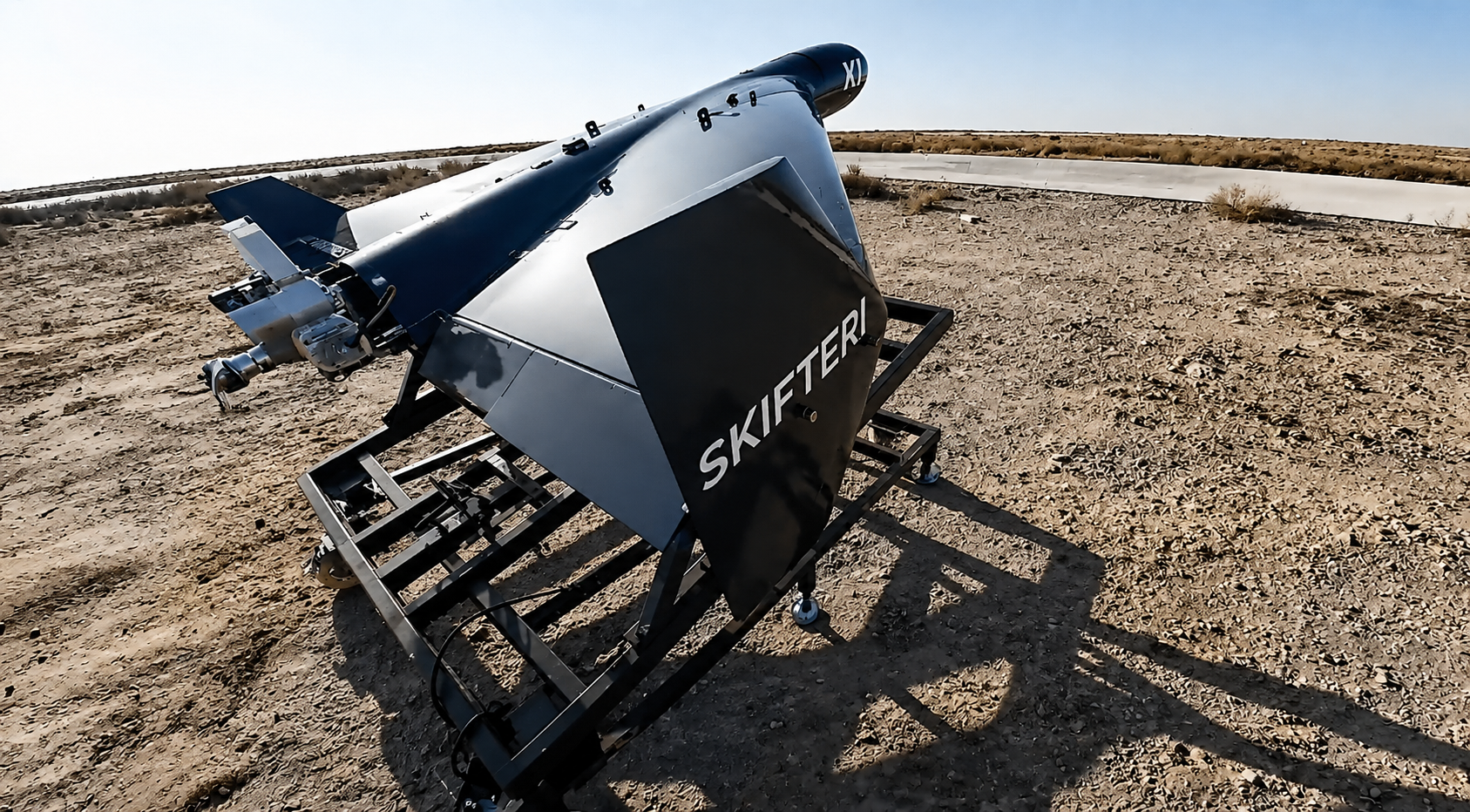
Kosovo: Impressive Claims, Still Awaiting Independent Confirmation
Kosovo's most visible drone effort is not a state program but the work of entrepreneur Ridvan Aliu and his company, marketed under the Skifteri brand. Aliu has announced four drone types in development, starting with smaller FPV models and progressing toward the Vitol, a five-meter-wingspan platform, and the flying-wing Skifteri K1, also called "Falcon." In a January 2026 test that Aliu says was conducted at a client's location outside Kosovo, footage showed the K1 completing a flight the manufacturer described as 1,124 kilometers over seven hours and twelve minutes while carrying a 42-kilogram payload before striking a target. Aliu has said the footage was deliberately altered (inverted, with a night-vision filter applied) for operational security reasons at the client's request. These figures come solely from the manufacturer; AD has not identified independent verification of the range, payload, or strike claims, and readers should treat them accordingly.
On the state side, Kosovo's security forces have taken delivery of Turkish Baykar systems, including Skydagger loitering munitions that arrived three months ahead of schedule in October 2025, alongside the existing TB2 and US-supplied Puma fleet. A long-discussed state-run ammunition and drone design factory, first floated by Prime Minister Albin Kurti in cooperation talks with a Turkish state manufacturer, remained in a "finalization phase" as of the most recent public update and has not been confirmed as operational.
The Rest of the Region
Montenegro entered the space in 2025 through a partnership with US firms, backed by Foreign Military Financing, to produce VTOL and FPV drones domestically for its own forces and for export to Ukraine-aligned partners, a departure from its traditional small-arms and explosives base built around Tara Aerospace and Defense Products and Poliex. Albania's Prime Minister Edi Rama announced in December 2025 that the country would begin domestic production of combat drones and counter-drone systems, with first orders already booked and initial products expected in the first half of 2026, adding to Albania's existing local assembly of tactical FPV drones. North Macedonia has not developed indigenous UAV manufacturing and remains focused on NATO-standard procurement, including JLTVs, Strykers, and Mistral 3 air defense.
Belgrade's Buildup Rattles Its Neighbors, Even as Cross-Border Deals Multiply
Croatia and Kosovo have both publicly called Serbia's drone rearmament a threat to regional stability. Belgrade denies it, and keeps expanding anyway: the Elbit joint venture alone will roughly double Yugoimport's UAV output once it opens in September.
The same neighbors accusing each other of destabilizing the region are also building with outsiders together. Croatia and Albania signed a joint defense declaration with Kosovo in 2025 to coordinate training, procurement, and logistics. The EU's counter-drone systems call under EDIP now includes nearly every country in this piece, Serbia included, alongside Ukraine. Regional rivalry and regional cooperation are running on parallel tracks, not sequential ones.
Orqa is the outlier worth watching longer term. It is the only company here whose scale is not tied to a single government contract or a single manufacturer's claims. If the Global Manufacturing Partnership Program hits its stated one-million-unit target, Croatia stops being a regional drone story and becomes a European one.
This article may be republished free of charge, in full or in part, provided that Adria Defense is credited as the original source and a direct hyperlink to the original article on AdriaDefense.com is included. Adria Defense retains all rights to the underlying reporting and analysis. For syndication inquiries or partnership arrangements, contact info@adriadefense.com.