Montenegro Military Develops In-House AI System for Command Staff
Montenegro's military has developed Digital Adjutant, an in-house AI system designed to support commanders with analysis, legal frameworks and military documents.

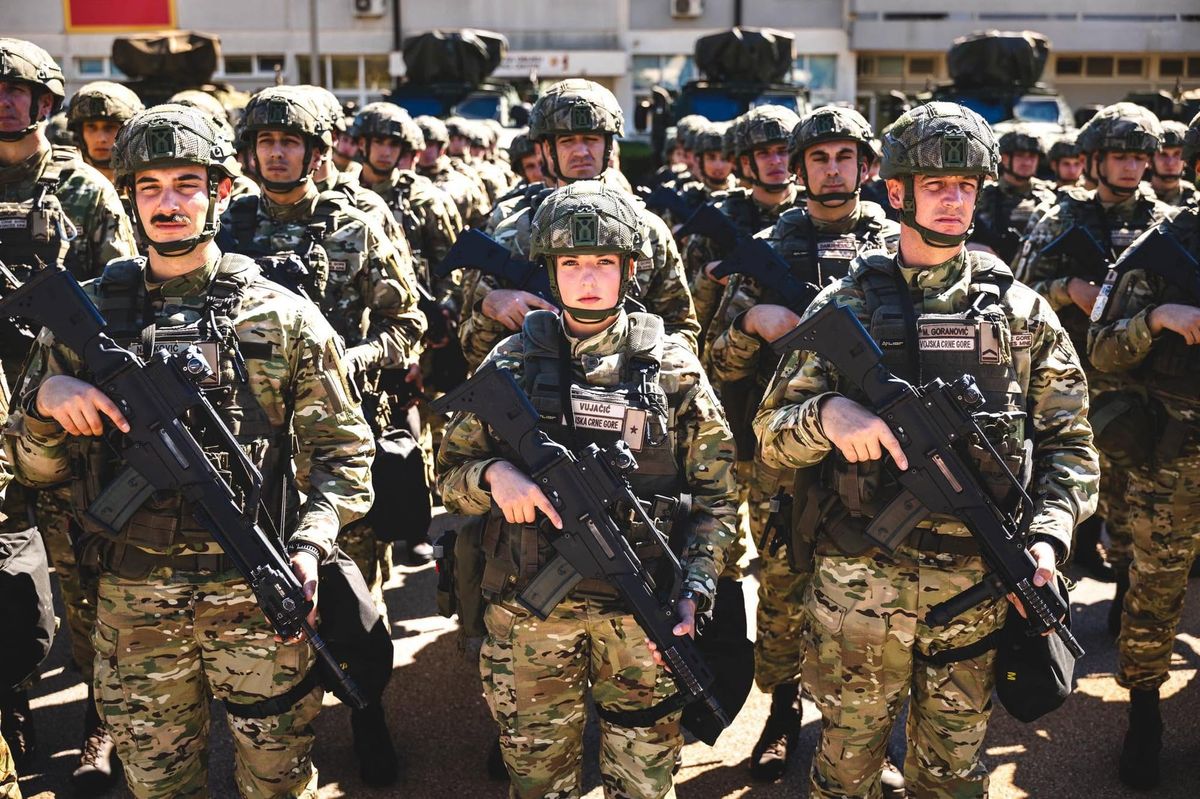
Montenegro's Armed Forces have developed an in-house artificial intelligence system called Digital Adjutant to support commanders and military decision-makers with information analysis, legal work and document preparation. The Ministry of Defense of Montenegro announced the system on August 31, describing it as a domestically developed capability built by military IT specialists rather than an externally supplied commercial defense product.
Digital Adjutant is intended primarily for everyday staff functions inside the Armed Forces of Montenegro. According to the ministry, the system can assist personnel with processing and analyzing information, applying and developing legal frameworks, and preparing military documents, official acts and other materials.
The ministry expects the system to reduce administrative workloads and allow personnel to focus on more complex tasks. It did not disclose which artificial intelligence models or computing infrastructure underpin Digital Adjutant.
Montenegro built Digital Adjutant with its own military IT staff
The Ministry of Defense said Digital Adjutant was developed and implemented entirely by IT specialists serving within the Armed Forces of Montenegro.
That distinction makes the project notable for one of NATO's smaller armed forces. Montenegro joined the alliance in 2017 and has increasingly modernized its forces through foreign procurement, including new unmanned aircraft, Joint Light Tactical Vehicles and offshore patrol vessels.
Digital Adjutant follows a different model by developing a software capability internally.
The ministry said the project forms part of a broader effort to invest in personnel and technical knowledge alongside conventional equipment procurement. It also indicated that Digital Adjutant will serve as a foundation for further development of military AI capabilities rather than as a completed standalone project.
Data control is central to Montenegro's military AI approach
Montenegro's defense ministry placed particular emphasis on data security and control over the new system.
The ministry said Digital Adjutant was developed according to high security and data-protection standards and provides what it described as full digital sovereignty over sensitive information processed through the platform.
The announcement, however, did not specify whether Digital Adjutant operates entirely on military-controlled infrastructure, whether it uses locally hosted large language models, or whether external cloud or commercial AI services form part of the architecture.
The ministry also did not state whether the system is authorized to process classified information.
Those details will determine how far Digital Adjutant can move beyond administrative assistance into operational military workflows. A locally controlled system could give the Armed Forces greater control over data handling and model configuration, but the technical architecture disclosed so far remains limited.
NATO is expanding AI use across military command structures
Montenegro's initiative comes as NATO and individual allied militaries expand the use of artificial intelligence for planning, information processing and command-and-control functions.
NATO's Maven Smart System reached full operational capability in June 2026 after receiving security accreditation for use on classified networks. The NATO platform connects command-and-control systems and supports AI models while keeping NATO data on alliance-controlled servers and infrastructure.
Digital Adjutant should not be considered equivalent to Maven based on the information Montenegro has released. Podgorica has described its system primarily as a tool for information analysis, legal support and document preparation, while NATO Maven supports a broader set of command-and-control and operational functions.
The comparison nevertheless highlights a wider shift toward military organizations controlling the infrastructure, data and deployment of AI tools used by their personnel.
For Montenegro, internal development could also provide a way to tailor AI software to national military procedures without depending entirely on foreign vendors for every stage of digital modernization.
What comes next for Montenegro's Digital Adjutant?
The Ministry of Defense said Digital Adjutant will undergo continued development and expansion as technology and military requirements evolve.
No timeline for additional capabilities was announced on August 31. The ministry also did not disclose development costs, the number of personnel involved, the models used by the system or how widely it has already been deployed across the Armed Forces.
Those unanswered technical questions will be important as Montenegro moves from development toward broader operational use.
What is Montenegro's Digital Adjutant?
Digital Adjutant is an artificial intelligence system developed by IT specialists within the Armed Forces of Montenegro. It is designed to help military personnel process information, work with legal frameworks and prepare military documents and other materials.
Who developed Montenegro's military AI system?
According to the Ministry of Defense of Montenegro, IT specialists from the Armed Forces developed and implemented Digital Adjutant internally.
Does Digital Adjutant process classified military information?
The Ministry of Defense has not disclosed whether Digital Adjutant is authorized to process classified information. It said the system was developed with security and data protection requirements intended to maintain control over sensitive information.
How will Montenegro use artificial intelligence in its military?
The initial Digital Adjutant functions focus on information analysis, legal support and document preparation for military personnel, particularly commanders and decision-makers. Montenegro plans to continue developing and expanding the system, but it has not disclosed specific future operational capabilities.