Northrop Grumman Expands Defense Partnerships in Eastern Europe
Northrop Grumman expands defense partnerships in Poland and Estonia around IBCS, Bushmaster cannons and the E-2D Advanced Hawkeye.

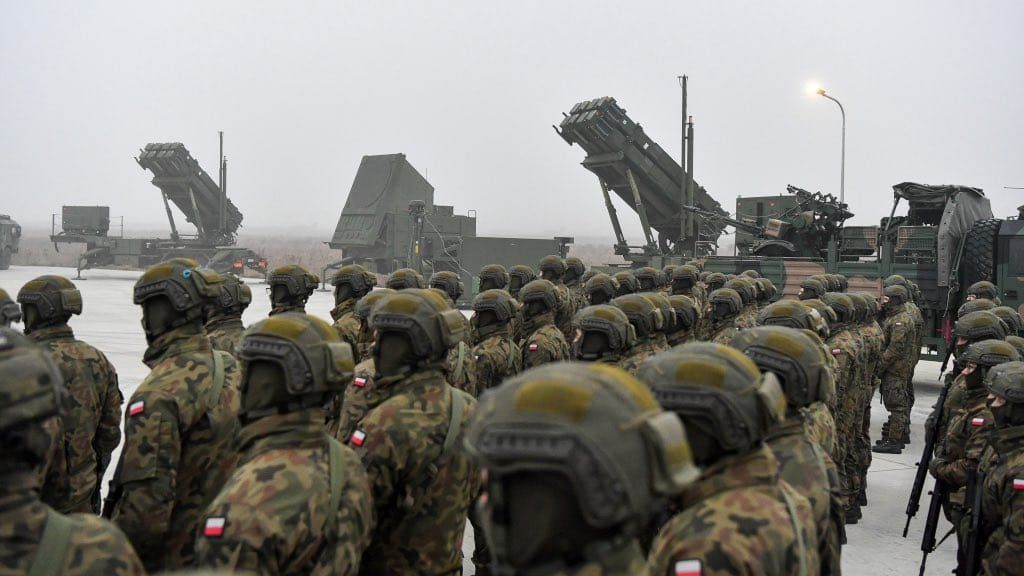
Northrop Grumman is expanding its defense-industrial footprint in Central and Eastern Europe through new agreements in Estonia and deeper cooperation in Poland covering integrated air defense, medium-caliber weapons and airborne command and control. The U.S. defense company announced the initiatives during the MSPO International Defence Industry Exhibition in Kielce, Poland, on September 10.
The expansion centers on three areas: new Estonian industrial partnerships supporting the Integrated Battle Command System, or IBCS; additional cooperation with Polish manufacturer Huta Stalowa Wola around Bushmaster cannons; and continued discussions with Poland over the E-2D Advanced Hawkeye airborne command and control aircraft.
The agreements come as Poland and other NATO eastern-flank states increasingly seek domestic production, maintenance and technology partnerships alongside major equipment purchases. Poland expects to spend about €53 billion on core defense in 2026, equivalent to roughly 4.7% of gross domestic product, while procurement from Polish and Central European companies has increased sharply since 2022.
Estonian companies join Northrop Grumman's IBCS supply network
Northrop Grumman signed memorandums of understanding with two Estonian companies, Go Craft and DefSecIntel. Go Craft will focus on defense-system integration, while DefSecIntel will work on specialized mast fabrication and production supporting defense systems.
The agreements are intended to support IBCS, Northrop Grumman's command-and-control architecture for integrated air and missile defense. The system connects sensors and effectors and combines sensor information into a common battlespace picture for engagement decisions.
Poland already operates IBCS as part of its Wisła medium-range air and missile defense architecture. Northrop Grumman says Poland has achieved full operational capability for its IBCS-enabled Wisła system, making the country the first U.S. NATO ally to fully operationalize IBCS.
The Estonian agreements therefore extend Northrop Grumman's industrial engagement around IBCS beyond Poland rather than representing an isolated national program. This is relevant as NATO reinforces its eastern flank and develops larger multinational formations across Central and Eastern Europe.
Poland cooperation expands around Bushmaster cannons
Northrop Grumman is also deepening cooperation with Poland's Huta Stalowa Wola for technology transfer, servicing and support associated with the Bushmaster family of Chain Guns.
Poland already represents an established market for the company's medium-caliber weapons. The MK44 and MK44 Stretch Bushmaster cannons equip Polish KTO Rosomak and Borsuk infantry fighting vehicles, giving the relationship an existing installed base rather than tying the new cooperation to a prospective platform acquisition.
Northrop Grumman identifies Poland as the largest operator of the MK44 Bushmaster and its largest aftermarket-services customer for the weapon. The company provides maintenance, training and spare parts for the Polish Rosomak fleet.
Expanded technology transfer and local support fit Poland's broader procurement policy, which increasingly links foreign defense purchases to domestic manufacturing and supply-chain capacity. Polish officials have publicly emphasized that foreign suppliers seeking major contracts should invest locally, transfer technology and work with Polish industry.
Northrop Grumman is already pursuing a separate Polish industrial track in ammunition. In April 2026, Defense News reported that Niewiadów Polish Military Group had partnered with Northrop Grumman and ST Engineering as part of efforts to establish ammunition production in Poland.
E-2D Advanced Hawkeye remains in contention for Poland
The third element concerns the E-2D Advanced Hawkeye, Northrop Grumman's airborne command-and-control and early-warning aircraft. The company said it remains in discussions with Poland covering potential adoption, training and industrial cooperation.
The dialogue does not constitute a Polish procurement decision. Poland has been examining options for a future airborne early warning and control capability, and Northrop Grumman has previously promoted the E-2D against alternatives including Saab's GlobalEye.
Poland currently operates two Saab 340 Erieye airborne early warning and control aircraft acquired under a 2023 agreement. Janes reported during MSPO 2025 that the arrangement was due to expire in 2027 and that Poland had not yet issued an official solicitation for a successor capability at that time.
Northrop Grumman had already signed an agreement with Polska Grupa Zbrojeniowa subsidiary Wojskowe Zakłady Lotnicze Nr 2 concerning cooperation on its E-2D proposal, including potential maintenance in Poland. The latest announcement indicates that the company continues to pursue a Polish industrial component alongside the aircraft offer.
Eastern-flank procurement increasingly includes local production
Northrop Grumman's latest agreements illustrate a wider shift in Central and Eastern European procurement. Governments are not only increasing defense expenditure but are also pressing suppliers to establish production, maintenance and technology capacity closer to the forces that will operate their systems.
Poland provides the clearest example. Procurement from Polish companies, including joint ventures with Central European partners, reached PLN 30.4 billion in 2025, nearly four times the level recorded in 2022, according to Armaments Agency data analyzed by Reuters.
For Northrop Grumman, the combination of IBCS, Bushmaster weapons and the E-2D creates potential links across ground-based air defense, armored forces and airborne command and control. The immediate significance of the MSPO agreements, however, lies in industrial integration: Estonia is being brought into the company's regional supply network while Poland receives additional opportunities for technology transfer, sustainment and potential local support.
Q&A
What new agreements did Northrop Grumman announce in Eastern Europe?
Northrop Grumman announced memorandums of understanding with Estonian companies Go Craft and DefSecIntel supporting defense-system integration and specialized mast production. It also outlined deeper cooperation with Poland's Huta Stalowa Wola around Bushmaster cannons and continued engagement with Poland concerning the E-2D Advanced Hawkeye.
Does Poland already operate Northrop Grumman's IBCS?
Yes. Poland operates the Integrated Battle Command System within its Wisła medium-range air and missile defense architecture and has declared full operational capability for the IBCS-enabled system.
Has Poland selected the E-2D Advanced Hawkeye?
No procurement decision was announced. Northrop Grumman continues discussions with Poland regarding the E-2D, while previous reporting identified Saab's GlobalEye as another platform positioned for Poland's anticipated future airborne early warning and control requirement.
Why are the Estonian agreements significant?
The agreements connect Estonian industrial companies to work associated with IBCS and broaden Northrop Grumman's regional industrial network beyond Poland. They also align with a wider NATO eastern-flank emphasis on regional industrial capacity and integrated defense systems.
Northrop Grumman's next steps in the region will depend on whether the new industrial agreements develop into production and sustainment work and whether Poland advances procurement decisions in areas such as airborne early warning and control. The broader direction is already visible: access to Central and Eastern European defense markets increasingly comes with expectations for local industrial participation.