Poland Builds Europe’s Largest AH-64E Apache Support Hub
Poland and Boeing signed agreements to establish Europe’s largest AH-64E Apache support infrastructure as Warsaw prepares to operate 96 helicopters.

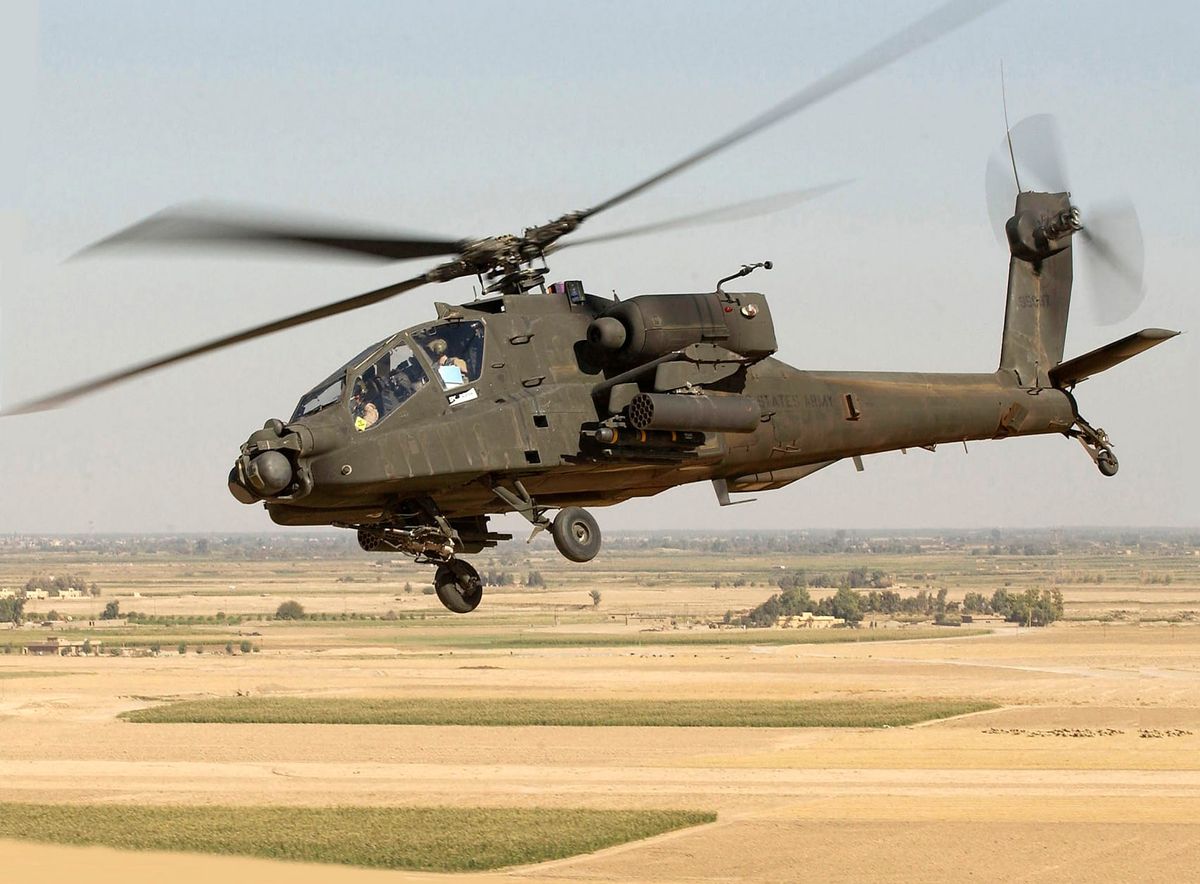
Poland has signed new offset implementation agreements with Boeing to establish Europe’s largest support infrastructure for the AH-64E Apache attack helicopter. The agreements, signed in Łódź on August 11, will give Polish industry maintenance, repair, overhaul and ground-support capabilities for the 96 AH-64Es ordered by Warsaw.
The agreements involve Wojskowe Zakłady Lotnicze Nr 1, known as WZL-1, and the Military Central Bureau of Design and Technology, known by its Polish abbreviation WCBKT. Both companies belong to Polska Grupa Zbrojeniowa, Poland’s state-owned defense group.
Poland’s 96-aircraft order will make it the world’s second-largest Apache operator after the United States. Boeing says approximately 1,300 Apache helicopters are currently in operation worldwide.
WZL-1 will take on Apache maintenance and component repairs
Under the new agreements, Boeing will support WZL-1 as the Polish company develops the infrastructure and technical expertise required to sustain the AH-64E fleet.
WZL-1 will perform maintenance, repair and overhaul work, including organizational and intermediate-level inspections and repairs. The facility will also gain capabilities for selected component repairs at depot level.
WCBKT and Boeing will separately evaluate Polish-made ground support equipment for potential use with the AH-64E. The process will determine whether Polish engineering solutions can become part of the Apache sustainment system, potentially expanding the domestic industrial share beyond aircraft maintenance.
The latest agreements implement commitments negotiated alongside Poland’s Apache acquisition rather than creating an entirely new industrial program. Warsaw signed an offset agreement with Boeing in August 2024 covering seven commitments valued at more than $100 million, including maintenance capabilities, technical training and evaluation of Polish ground support equipment.
Poland is assembling a broader Apache sustainment network
The Boeing agreements form one part of a wider effort to establish domestic support for Poland’s future Apache fleet.
In March 2026, WZL-1 signed an agreement with Lockheed Martin covering support for key AH-64E systems, including sensors and fire-control radar equipment. The Polish government said the arrangement would allow a significant portion of this work to take place domestically.
Poland is also developing domestic engine support. A separate industrial arrangement covers maintenance, repair and overhaul capabilities for the T700/CT7 engine family at WZL-1 facilities in Dęblin. Poland ordered 210 T700 engines for its 96 AH-64E helicopters.
Taken together, the programs cover aircraft maintenance, selected components, engines, sensors, fire-control systems, ground equipment and technical training. This creates a substantially broader sustainment footprint than a maintenance facility focused only on airframes.
96 AH-64Es give Poland scale for a regional support role
Poland signed its contract for 96 AH-64E Apache Guardian helicopters in August 2024. The Polish government valued the overall acquisition at approximately $10 billion, while subsequent government material has cited the wider program at approximately $10.8 billion.
The first AH-64Es are scheduled to arrive in 2028. Polish government information published in March 2026 said the final aircraft would follow two years later, while other program reporting has placed the overall delivery period through 2032.
Polish forces are already building experience on AH-64D helicopters supplied by the United States as a bridge to the new fleet. The arrangement allows pilots, technicians and support personnel to train before the AH-64E enters Polish service.
The size of Poland’s fleet gives the Łódź and Dęblin facilities a domestic workload large enough to support long-term investment in specialized Apache infrastructure. It could also create a basis for supporting other European Apache operators if the required commercial, technical and government arrangements are established.
European Apache users include the United Kingdom, the Netherlands and Greece. A Polish sustainment center would therefore add another potential maintenance node on NATO’s eastern side rather than requiring all higher-level support activity to remain farther west or in the United States.
For Warsaw, the agreements also address a recurring issue in Poland’s rapid military modernization: sustaining large fleets of imported equipment over decades. Building repair capacity inside Poland can shorten selected maintenance chains and retain technical expertise domestically, although the Apache program will continue to depend on its U.S. industrial and supply network.
When will Poland receive its AH-64E Apache helicopters?
Poland is scheduled to begin receiving its 96 AH-64E Apache helicopters in 2028. The fleet will make Poland the second-largest Apache operator worldwide after the United States.
What will Poland’s Apache support hub do?
WZL-1 will develop capabilities for organizational and intermediate-level inspections and repairs, maintenance and overhaul work, and selected depot-level component repairs. Other Polish industrial agreements cover engines, sensors, fire-control equipment and technical training.
Will the Polish hub support Apaches from other countries?
Polish officials and industry are positioning the infrastructure for a wider European role. The initial agreements focus on supporting Poland’s 96-aircraft fleet, and support for foreign operators would depend on future technical, commercial and government arrangements.
Why is the Boeing agreement important for Poland?
The agreement moves part of the Apache sustainment workload into Poland as Warsaw prepares to field one of the world’s largest attack helicopter fleets. It also gives Polish companies an opportunity to develop specialized maintenance and ground-support capabilities that could remain relevant throughout the fleet’s service life.