Poland Leads €1.9 Billion Piorun Air Defense Procurement
Poland, Lithuania, Latvia and Norway plan to procure thousands of Piorun missiles under a SAFE-backed framework exceeding PLN 8 billion.

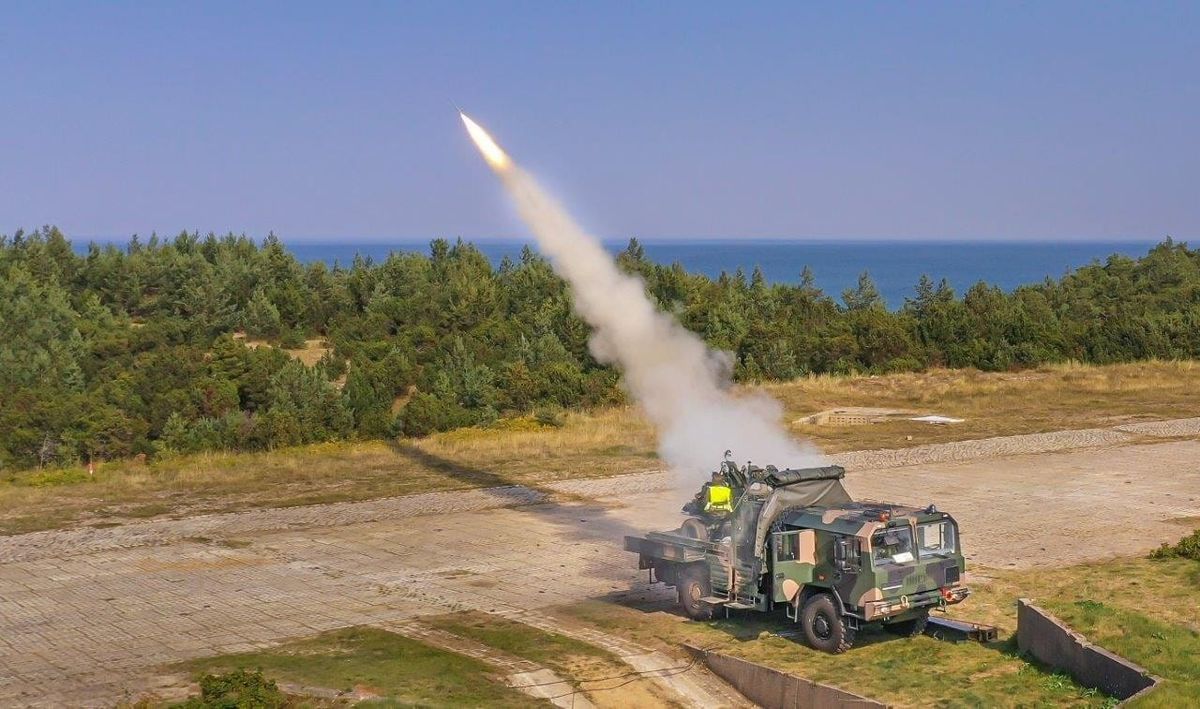
Poland, Lithuania, Latvia and Norway are preparing a joint procurement of several thousand Piorun air defense missiles under a framework agreement whose planned implementing contracts will exceed PLN 8 billion net, equivalent to roughly €1.9 billion. Polish manufacturer MESKO and the Polish Armament Agency signed the agreement on August 24, with deliveries planned through 2030.
More than 80 percent of the missiles and launch systems covered by the planned orders are intended for the Polish Armed Forces. The procurement will use financing from the European Union Security Action for Europe, or SAFE, instrument, while Lithuania, Latvia and Norway will participate alongside Poland through the EDIRPA VSHORAD consortium.
Piorun agreement covers thousands of missiles and hundreds of launchers
The framework agreement covers several thousand Piorun missiles and several hundred launch systems, according to MESKO. It also includes simulators as well as training and logistics packages.
Poland leads the EDIRPA VSHORAD consortium through its Armament Agency, with Lithuania, Latvia and Norway participating in the multinational procurement. The combined value of the planned implementing contracts will exceed PLN 8 billion net.
The distinction between the framework agreement and implementing contracts is important. The August 24 agreement establishes the basis for future orders rather than constituting a single final order for PLN 8 billion, and the first implementing agreement for the Polish Armed Forces is expected separately. Polish specialist outlet Dziennik Zbrojny reported that the Polish agreement was expected within days.
Deliveries under the multinational procurement are scheduled to run through 2030. More than four-fifths of the missiles and launch systems are allocated to Poland, leaving the remaining share for Lithuania, Latvia and Norway. MESKO has not publicly provided a country-by-country breakdown for those three participants.
SAFE financing turns Piorun into a multinational EU procurement
The procurement is significant beyond the number of missiles involved because it links a Polish-designed air defense weapon to the European Union's emerging joint procurement model.
SAFE provides up to €150 billion in long-term loans to support defense investment, with common procurement at the center of the mechanism. The regulation entered into force on May 29, 2025 and covers priority areas including ammunition, missiles, air and missile defense, drones and ground combat capabilities.
The Piorun arrangement fits that model by combining requirements from three European Union members with Norway. SAFE rules allow European Economic Area and European Free Trade Association countries to participate in common procurement alongside EU members, while the loans themselves go to EU member states.
Lithuania has already received €956.3 million in SAFE pre-financing, representing 15 percent of its total €6.4 billion allocation, according to the European Commission. The EU designed the instrument partly to aggregate demand, improve interoperability and provide European manufacturers with larger and more predictable order volumes.
MESKO faces a larger Piorun production requirement through 2030
The scale of the prospective order places production capacity at the center of the program.
MESKO has been expanding Piorun output in response to domestic and export demand. Company information previously outlined a production ramp toward approximately 1,500 missiles annually, while Polish reporting around the new agreement indicates that capacity has continued to expand.
The August agreement gives MESKO a potential multi-year production pipeline extending through 2030. The company also said the planned contracts represent the largest order in the history of the Piorun program.
For Poland, the procurement adds another layer to its broader air defense modernization while replacing and expanding stocks of short-range shoulder-fired systems. For Lithuania and Latvia, additional Piorun systems would reinforce mobile very-short-range air defense on NATO's northeastern flank.
Norway's participation is also notable because it places a non-EU NATO member inside the same multinational procurement structure. SAFE rules explicitly permit Norway and other EEA-EFTA states to participate in joint purchases with EU member states.
Piorun moves from national weapon to shared European requirement
The agreement shows how Poland's defense industry can move beyond bilateral exports toward multinational procurement led from Warsaw.
Instead of Lithuania, Latvia and Norway negotiating entirely separate purchases, the EDIRPA VSHORAD structure aggregates requirements around one system and a common industrial supplier. That approach corresponds directly with SAFE's objective of reducing fragmented procurement and increasing production through larger joint orders.
For MESKO, the next milestones will be the individual implementing contracts and the production schedule required to deliver several thousand missiles by 2030. Those contracts will provide the clearer measure of how the PLN 8 billion-plus framework is divided between Poland and the three partner countries.
Piorun procurement: key questions
How many Piorun missiles will Poland and its partners buy?
The framework covers several thousand Piorun missiles and several hundred launch systems. MESKO has not disclosed the exact final quantity because the detailed purchases will be established through implementing contracts.
Which countries are buying Piorun under the agreement?
Poland, Lithuania, Latvia and Norway participate in the EDIRPA VSHORAD consortium. Poland leads the procurement through the Polish Armament Agency.
How much is the Piorun procurement worth?
The combined value of the planned implementing contracts will exceed PLN 8 billion net. The figure refers to contracts planned under the framework agreement rather than a single finalized PLN 8 billion purchase signed on August 24.
When will the new Piorun systems be delivered?
MESKO says deliveries under the planned contracts will continue through 2030. More than 80 percent of the ordered missiles and launch systems are expected to go to the Polish Armed Forces.