Polish SIM Cards Found in Russian Drones as Probe Closes
Polish prosecutors have closed their investigation into the 2025 Russian drone incursion. Investigators found Polish SIM cards but could not identify those responsible.

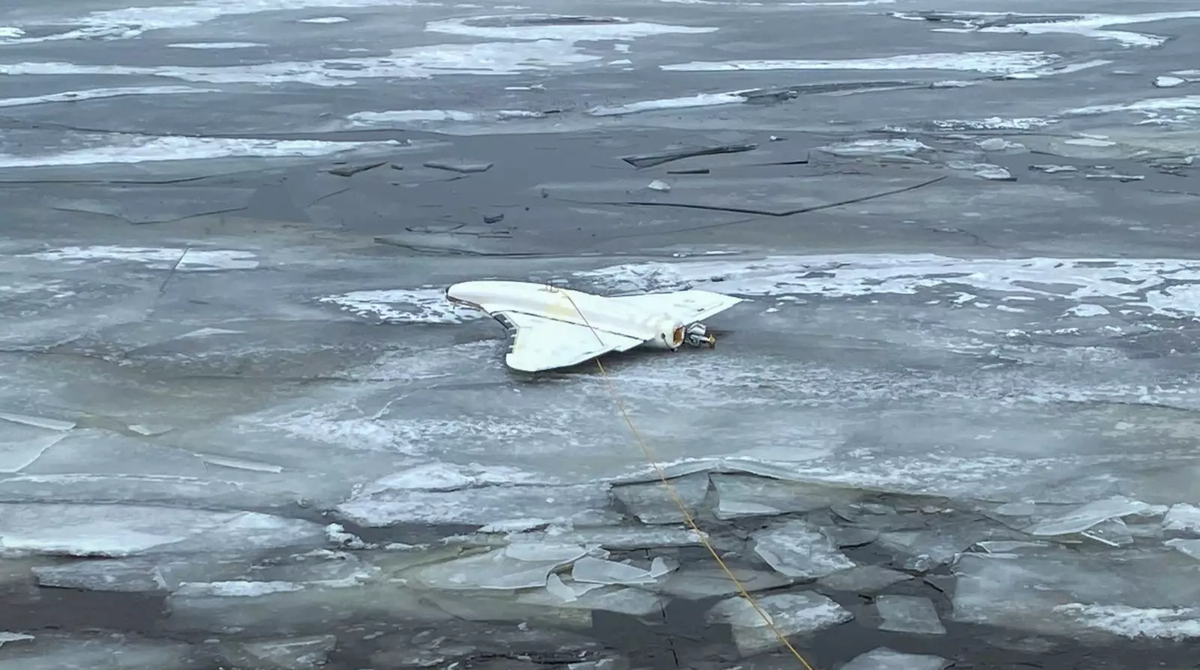
Polish military prosecutors have closed their investigation into the September 2025 Russian drone incursion after failing to identify the individuals responsible for directing the operation. Investigators also discovered SIM cards belonging to Polish mobile operators inside some of the recovered drones, raising questions about their communications equipment and how the cards were obtained.
The findings were first reported by Polish newspaper Rzeczpospolita on October 6, citing information from the District Prosecutor's Office in Lublin.
The investigation examined the mass incursion of Russian Gerbera unmanned aerial vehicles into Polish airspace during the night of September 9–10, 2025, one of the most serious drone incidents involving NATO territory since Russia's full-scale invasion of Ukraine.
More Than 30 Russian Drones Recovered Across Poland
According to Rzeczpospolita, investigators established that more than 30 unmanned aircraft came down in Poland during the incident. Their wreckage was identified across 27 locations in five Polish provinces.
The final tally was higher than the initial reports of 19 or 21 airspace violations.
Some drones reached locations hundreds of kilometers from Poland's eastern border. One was recovered near Mniszków in the Łódź region, approximately 300 kilometers from the Belarusian border.
Flight-path analysis cited by the Polish newspaper indicated that the drones had been launched from mobile platforms in Russia's Bryansk, Kursk and Belgorod regions, as well as Russian-occupied Ukrainian territory.
Marcin Kozak, spokesperson for the District Prosecutor's Office in Lublin, confirmed that the investigation had been discontinued because prosecutors could not identify the individual perpetrators.
Most of the investigation files, including the detailed reasoning behind the decision, remain classified.
The closure does not overturn the established Russian origin of the drones. Rather, prosecutors were unable to establish the personal criminal responsibility of those who ordered or directed the operation.
Polish SIM Cards Raise Questions About Drone Communications
One of the investigation's findings was the presence of Polish mobile network SIM cards in some of the recovered Gerbera drones.
The authorities have not publicly established how the cards were acquired, whether they were stolen or illegally purchased, or whether they were used to communicate during the incursion.
The discovery is particularly relevant because Russian forces have previously integrated cellular communications equipment into unmanned aircraft.
In September 2025, Ukrainian defense publication Defense Express reported that Russian drones recovered in Ukraine had already been found carrying 4G modems fitted with Polish and Lithuanian SIM cards.
Such equipment can potentially provide data connectivity over commercial mobile networks, supporting telemetry, communications or the transmission of sensor information.
However, the presence of a SIM card alone does not establish that a drone maintained an active connection, transmitted intelligence or received commands through a Polish network. The investigation has not publicly disclosed technical evidence demonstrating those activities.
Rzeczpospolita also reported that Poland's Internal Security Agency (ABW) and Military Counterintelligence Service (SKW) had examined the recovered aircraft. Neither agency publicly provided the newspaper with details identifying the purchasers of the SIM cards.
Prosecutors Find Polish Military Response Lawful
The investigation separately examined whether the Polish military had acted lawfully when it authorized the use of weapons against the incoming drones.
Prosecutors concluded that the armed forces followed the applicable procedures and had legal grounds to engage the aircraft. The findings do not disclose which specific drones were destroyed by military action.
The September 2025 incident triggered consultations among NATO allies under Article 4 of the North Atlantic Treaty.
On September 12, NATO announced Eastern Sentry, an initiative to reinforce surveillance, air defense and counter-drone capabilities along the alliance's eastern flank.
The incident also highlighted the difficulties of detecting and intercepting relatively inexpensive unmanned aircraft across large areas of NATO airspace.
AdriaDefense previously examined those operational challenges in its analysis of NATO drone interceptions and eastern flank air defense.
What Remains Unanswered?
Who directed the Russian drone incursion into Poland?
Polish prosecutors did not identify the individuals who ordered or commanded the September 2025 operation. The investigation was closed on those grounds.
Why were Polish SIM cards installed in the drones?
Their exact purpose has not been publicly established. Investigators have not released evidence showing whether the cards were active or used to transmit information during the operation.
The investigation's closure leaves both questions unresolved in the public record, while much of the collected evidence remains classified.