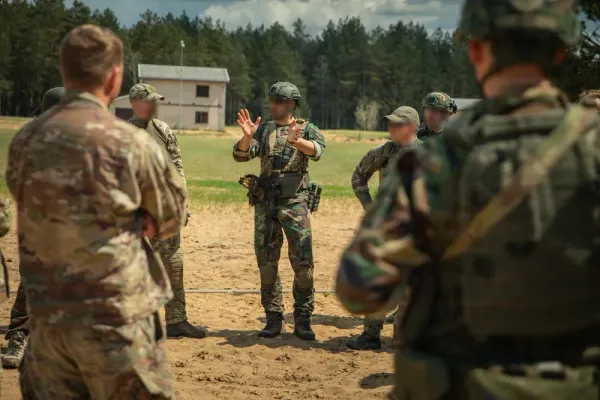
Polish Special Forces Test Drone Strike Tactics in Germany
Polish special forces are training with US Green Berets in Germany to infiltrate contested territory and conduct drone strikes against simulated targets.

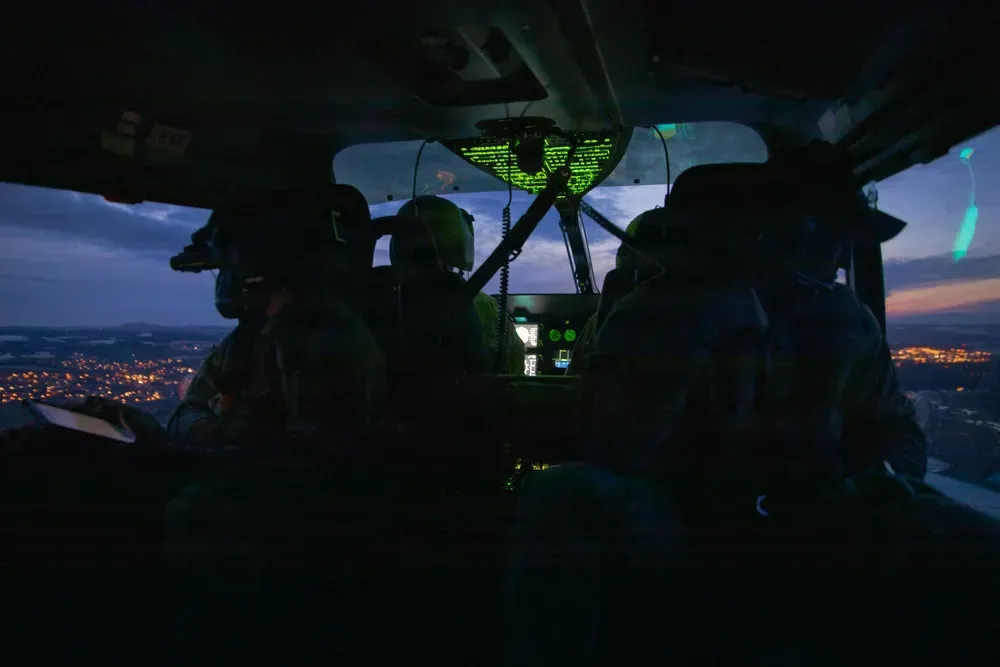
Polish special forces are training with US Army Green Berets in Germany to infiltrate contested territory, evade aerial surveillance and conduct a drone strike against a simulated high-value target. The exercise began on August 28 at the Joint Multinational Readiness Center in Hohenfels and marks the first time a NATO ally has participated in the US-developed deep strike training scenario.
The training puts small unmanned aircraft directly into a special operations mission rather than treating drones solely as reconnaissance assets. Polish operators must penetrate a simulated front line, move approximately 100 km through German territory without detection and reach a position from which they can conduct the final drone attack.
Polish operators must cross 100 km without detection
The scenario begins at the US Army's Hohenfels Training Area in Bavaria, where Polish special forces face an American airborne infantry unit acting as the opposing force.
The US unit establishes a simulated front line that the Polish operators must penetrate without detection.
After crossing it, the Polish team must move north through approximately 100 km of German countryside toward the Grafenwoehr Training Area, where a simulated target awaits.
The route adds a challenge that conventional military training areas cannot fully reproduce. Operators must move through farms, villages and populated areas while accounting for civilian and government surveillance cameras and avoiding attention from the local population.
The training area and surrounding terrain cover approximately 3,000 square kilometers.
Operators can remove military clothing and use civilian appearance to reduce their visibility during parts of the infiltration. The objective is not simply to evade the military opposing force, but to avoid creating a detectable pattern while moving through a modern surveillance environment.
US Green Berets developed the Deep Strike training concept
The current training builds on Exercise Deep Strike, a concept developed by the US Army's 2nd Battalion, 10th Special Forces Group (Airborne) under United States Special Operations Command Europe.
US Green Berets conducted the first iteration around Hohenfels in February 2026.
That exercise required small special forces teams to infiltrate hostile territory while avoiding detection by drones and conventional forces. Operators also used unmanned aircraft to strike targets and deliver supplies to teams operating in the field.
A second iteration followed between April 25 and May 2.
During that training, a Green Beret team infiltrated approximately 150 km through contested terrain before launching a drone strike against a simulated high-value target.
The US Army has described Deep Strike as a permanent training lane intended eventually to incorporate NATO special operations forces.
The participation of Polish operators in the current iteration represents the first step in that expansion.
Small drones are becoming an organic SOF strike capability
The scenario highlights a broader change in how special operations forces can employ small unmanned aircraft.
Traditional special operations missions behind enemy lines can depend on external fires from aircraft, artillery or missiles once a target has been identified. Small strike drones provide another option by allowing an infiltrated team to carry or control its own precision effector.
That does not replace longer-range fires or conventional air support. It can, however, shorten the chain between reconnaissance, target identification and engagement for certain targets.
The concept also creates new tactical problems.
A team operating behind enemy lines must carry drones, batteries and associated equipment while maintaining a low signature. Operators must also account for electronic warfare, communications constraints and hostile unmanned reconnaissance.
Deep Strike therefore trains both sides of the drone problem.
Special forces must avoid hostile unmanned surveillance during infiltration while retaining the ability to employ their own drones for reconnaissance, resupply or attack.
Hohenfels is adding drones across conventional training
The Polish special forces exercise comes as the US Army expands drone and electronic warfare activity across training in Germany.
The Joint Multinational Readiness Center is preparing to expose troops participating in Saber Junction to nearly 2,000 unmanned systems.
The center's opposing force, the 1st Battalion, 4th Infantry Regiment, has also established a reconnaissance element that uses unmanned aircraft to feed battlefield information to commanders.
That creates a training environment in which avoiding detection from above becomes a continuous requirement rather than an isolated drone scenario.
For special operations forces, this is particularly relevant. Small teams traditionally rely on concealment, mobility and limited signatures to operate in areas controlled by an adversary.
Persistent low-cost aerial surveillance makes those methods more difficult.
Poland becomes first NATO ally in the new training lane
Poland's participation gives the exercise significance beyond another bilateral US-Polish training event.
The United States designed Deep Strike around a battlefield where drones, electronic warfare, civilian surveillance infrastructure and conventional forces create overlapping detection networks.
Polish operators now have to navigate that environment while completing a mission that ends with their own unmanned strike.
The training also complements Poland's broader investment in unmanned warfare. Warsaw is expanding its inventory of reconnaissance and strike drones while domestic manufacturers develop systems including FlyEye, Warmate and Gladius.
The current exercise addresses a different part of that transformation. Rather than focusing on procurement or platform specifications, it tests how small special operations teams can employ unmanned systems inside a contested environment.
US military planners expect future iterations of the Deep Strike concept to involve additional NATO special operations forces.
For Poland, the current exercise provides an early opportunity to test that concept in a training environment built specifically around persistent drone surveillance and drone-enabled strike operations.
Q&A: Polish special forces drone training in Germany
What are Polish special forces training for in Germany?
Polish special forces are practicing infiltration through simulated enemy-controlled territory, avoiding detection and conducting a drone strike against a high-value simulated target. US Army Green Berets developed the training concept.
How far must the Polish operators travel?
The Polish team must move approximately 100 km from the Hohenfels area toward Grafenwoehr after penetrating the simulated enemy front line.
What is Exercise Deep Strike?
Deep Strike is a US special operations training concept developed in 2026. It trains small teams to operate in contested territory, evade drone and conventional surveillance and use unmanned aircraft for missions including reconnaissance, resupply and strikes.
Why are drones important for special operations forces?
Small unmanned aircraft can provide reconnaissance and, in some scenarios, an organic strike capability to teams operating behind enemy lines. They also create a threat because adversary drones can make covert movement and concealment more difficult.