Prague Defense Summit opens with European rearmament and procurement in focus
More than 250 political, military and industry leaders are meeting at the IISS Prague Defense Summit as Europe confronts industrial capacity gaps, logistics bottlenecks and growing requirements for long-range strike and military mobility.

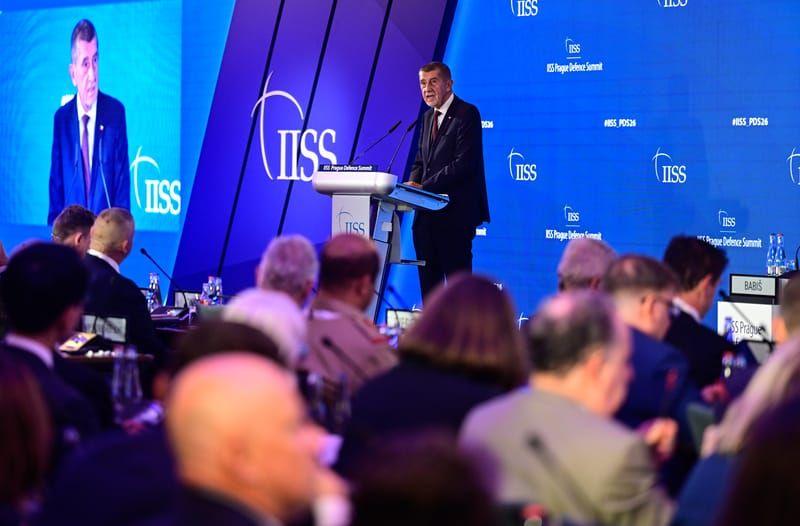
The third IISS Prague Defense Summit is underway in the Czech capital, bringing together more than 250 senior government officials, military leaders, defense industry executives and security experts for three days of discussions on the future of European security and defense.
Running from September 16 to 18, the summit comes as European governments continue to increase military spending while confronting shortages in areas ranging from ammunition and long-range strike capabilities to logistics and military mobility.
Czech Prime Minister Andrej Babiš is opening Thursday’s main program, which focuses on Europe’s changing defense requirements and the future of transatlantic military cooperation.
Central and Eastern Europe gains a larger role
One of the themes emerging from the summit is the growing importance of Central and Eastern Europe to the continent’s defense industrial base.
The International Institute for Strategic Studies presented its new strategic assessment, The Defense of Europe in a New Era, during the conference.
The assessment points to a stronger defense-industrial ecosystem developing across Central and Eastern Europe as governments rebuild military inventories after years of underinvestment and continued support for Ukraine.
At the same time, European land forces remain dependent on several critical U.S. capabilities, while NATO continues to face logistical bottlenecks despite improvements made in recent years.
Those weaknesses have become increasingly important as NATO examines whether European infrastructure, transport networks and supply chains could support the rapid movement and sustainment of much larger forces during a crisis.
Long-range strike and military mobility in focus
Sessions in Prague are addressing several capability areas now receiving greater attention across NATO.
Military officials from Poland, Italy and the Czech Republic have joined European Commission and NATO representatives for discussions on deep precision strike capabilities.
Other sessions are examining military logistics, European space capabilities and the ability of NATO members to move troops and equipment quickly across the continent.
Thursday’s program also turns to broader questions around European defense capacity, transatlantic procurement and military mobilization.
Senior participants include government and military representatives from across NATO and the European Union, including officials from Germany, Sweden, Hungary, Romania and the Czech Republic.
Can Europe sustain higher defense spending?
The sustainability of Europe’s rapidly rising defense budgets is another central topic at the summit.
Participants are examining whether governments can maintain higher military expenditure over the long term while simultaneously increasing production capacity and financing major procurement programs.
The conference is also addressing Europe’s defense technology and innovation ecosystem, including how governments can move emerging technologies from development into operational military use more quickly.
German Chief of Defense General Carsten Breuer, speaking during the summit, argued that technological advances should serve military requirements rather than dictate strategy, emphasizing the need for armed forces to adapt quickly as new technologies emerge.
The discussions in Prague reflect a broader shift taking place across Europe. The debate is increasingly moving beyond how much governments spend on defense and toward whether that spending can produce larger inventories, deployable forces and an industrial base capable of sustaining them.