Russia Sabotage Theory Raised After Bulgaria EMCO Explosions
A former EMCO technical director has raised possible Russian sabotage after explosions at a Bulgarian ammunition plant, while investigators say all causes remain open.

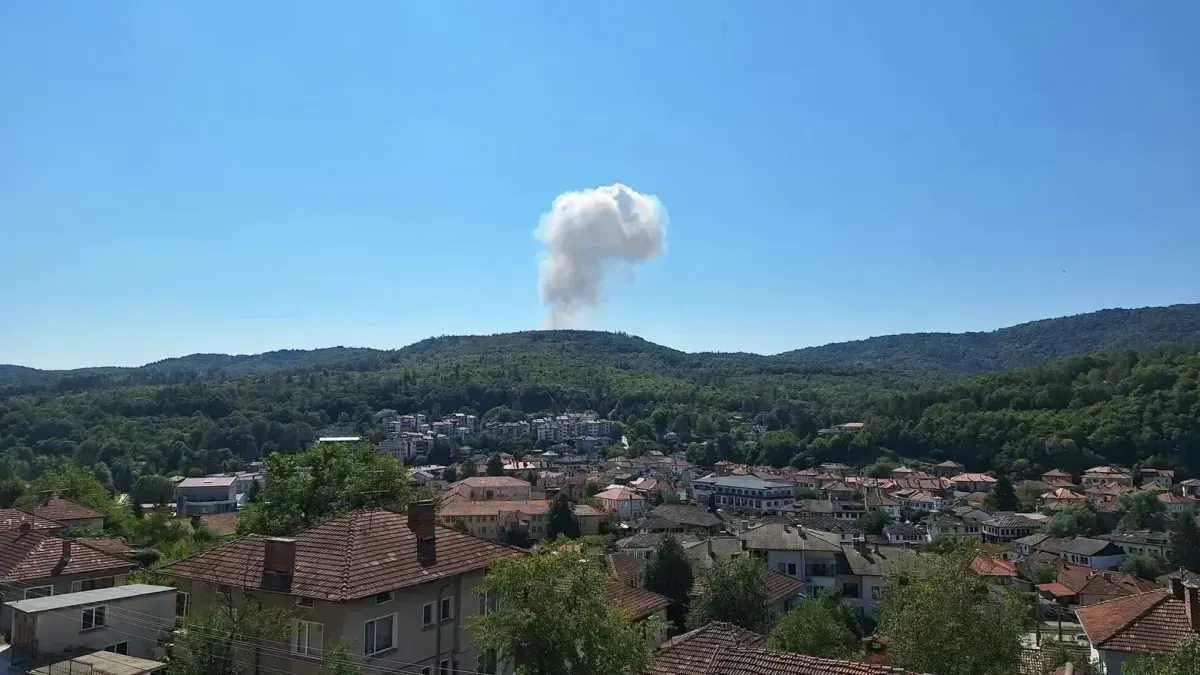
A former senior technical official at Bulgarian ammunition manufacturer EMCO has raised Russian sabotage as a possible explanation for the August 10 fire and explosions at the company’s facility near Belitsa in central Bulgaria. Bulgarian investigators have not established the cause and are examining deliberate interference alongside accidental ignition, technical causes and possible safety violations.
Naiden Iliev, an ammunition expert and former deputy technical director at EMCO, told Bulgarian broadcaster NOVA that deliberate arson represented a realistic scenario and argued that Russia could benefit from destabilization in Bulgaria if sabotage were ultimately established. His assessment remains an expert hypothesis rather than a finding by investigators.
The incident began on August 10 when a fire broke out at an EMCO ammunition storage facility near Belitsa in Tryavna Municipality. The warehouse was destroyed, but workers evacuated and authorities reported no fatalities or injuries.
Investigators examine sabotage and accidental ignition
Iliev outlined two principal scenarios: spontaneous ignition of ammunition or deliberate action. He assessed human error as unlikely and pointed to reports that employees detected smoke inside the warehouse before the explosions as an issue investigators would need to examine.
EMCO has separately ruled out human error, according to the Bulgarian News Agency. Company officials initially said there was no information indicating external interference and identified spontaneous ignition of a propellant charge as one possible explanation.
The Gabrovo District Prosecutor’s Office has kept the investigation broader. Authorities are examining the deliberate or accidental introduction of an ignition source, a device capable of starting a fire, destructive changes in ammunition components and possible breaches of safety requirements during production, transport or storage.
Investigators seized video recordings and production documentation from the company. Bulgaria’s State Agency for National Security has also received tasks connected to scenarios discussed publicly following the explosions.
The distinction is significant because the available evidence does not currently support attributing the incident to Russia or another external actor. Iliev’s comments establish a possible motive and mechanism for consideration, not responsibility for the August 10 incident.
EMCO supplies Soviet-caliber ammunition
EMCO operates within Bulgaria’s established ammunition industry and produces munitions compatible with Soviet-standard weapons. Iliev said he could not confirm direct Bulgarian ammunition deliveries to Ukraine, but noted that countries which transferred ammunition to Kyiv subsequently need to replenish their own inventories from manufacturers including those in Bulgaria.
That role gives the investigation a wider European defense-industrial context. Bulgaria has become an important source of Soviet-standard ammunition because Ukraine continues to operate artillery and other weapon systems built around calibers inherited from the Soviet period.
The Belitsa incident also follows earlier unexplained fires and explosions involving Bulgaria’s arms industry. That history makes the sabotage question particularly sensitive, but it does not establish a connection between previous incidents and the August 10 explosions.
Military teams clear ammunition around Belitsa plant
The immediate challenge has shifted from firefighting to securing the affected area. Bulgaria declared a seven-day partial state of disaster within a 500-meter radius of the EMCO facility on August 13, allowing military personnel to inspect the area for unexploded ammunition and fragments scattered by the explosions.
Only authorized teams from the Ministry of Interior, Ministry of Defense and fire and civil protection services were permitted inside the restricted zone. Authorities also used drones to survey difficult-to-access terrain around the facility.
The BG-ALERT public warning system was activated during controlled ammunition disposal operations. Authorities reported no abnormal air-quality readings following the incident.
The investigation will now depend heavily on examination of the site, surviving surveillance material, production records and technical analysis. Until those procedures are completed, accidental ignition, technical failure, safety violations and deliberate interference remain competing explanations.
Questions about the EMCO ammunition plant explosions
What happened at the EMCO plant in Bulgaria?
A fire and subsequent explosions occurred at an EMCO ammunition storage facility near Belitsa in Tryavna Municipality on August 10, 2026. The warehouse was destroyed, but workers evacuated and no fatalities or injuries were reported.
Has Russia been blamed for the EMCO explosions?
No. Former EMCO deputy technical director Naiden Iliev raised Russia as a potential beneficiary if investigators establish sabotage, but Bulgarian authorities have not attributed the incident to Russia or concluded that sabotage occurred.
What causes are Bulgarian investigators examining?
Investigators are considering deliberate or accidental introduction of an ignition source, possible changes in ammunition components and potential safety violations during production, transportation or storage. The State Agency for National Security is also participating in checks related to the case.
Why is EMCO important to Bulgaria’s defense industry?
EMCO manufactures ammunition, including Soviet-standard types relevant to European inventories and weapons still operated by Ukraine. The incident therefore affects a facility operating within a Bulgarian ammunition sector that has gained additional strategic relevance since Russia’s full-scale invasion of Ukraine.