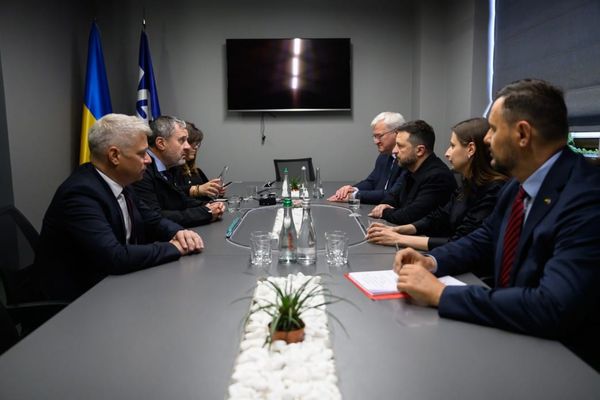
Serbia and Israel Build a Strategic Partnership Beyond the Headlines
Israel and Serbia have quietly built one of Europe's fastest-growing strategic partnerships through defense cooperation, industrial projects, and shared geopolitical interests. The relationship reflects broader changes in European security and the emerging balance of power across the Balkans.

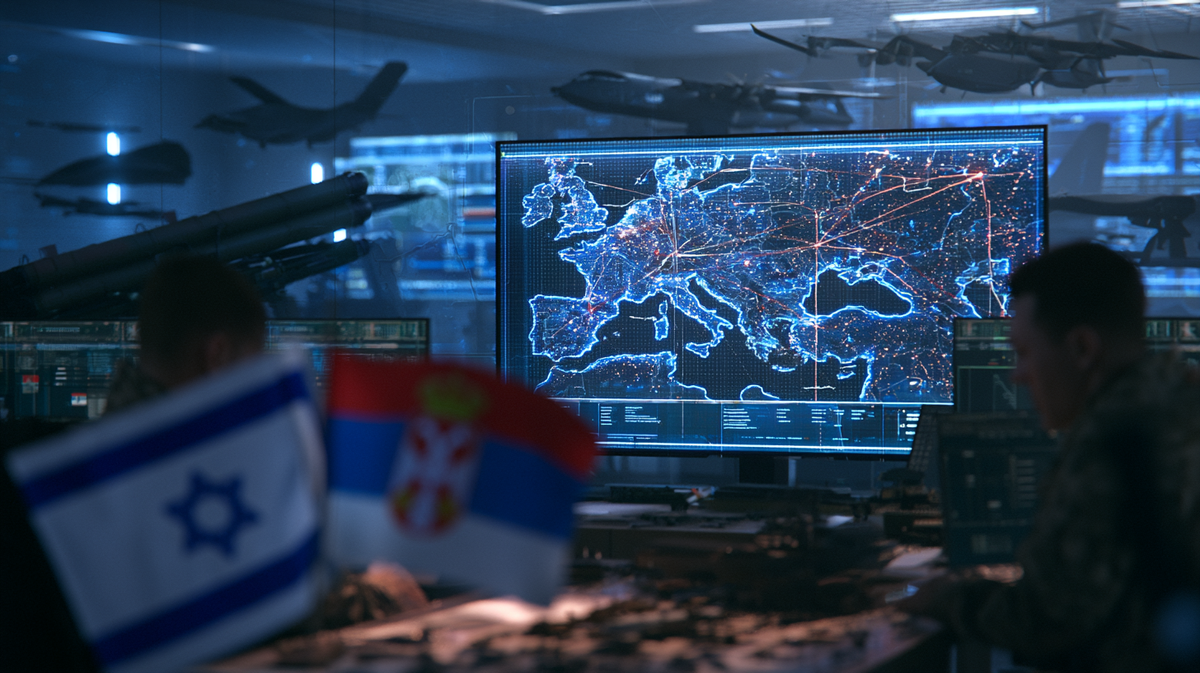
For much of the international debate surrounding Israel's relationship with Europe since October 2023, attention has focused on diplomatic disputes, public protests, and disagreements over the war against Hamas. Less visible has been another development unfolding largely outside the spotlight. Serbia has steadily emerged as one of Israel's closest political and defense partners in Europe, expanding cooperation at a pace unmatched by most countries on the continent.
The relationship is not driven by ideology alone. It reflects converging security interests, complementary defense industries, pragmatic foreign policy, and a broader geopolitical environment in which middle powers increasingly diversify their partnerships rather than relying exclusively on traditional alliances.
While many European capitals adopted increasingly cautious positions toward Israel, Belgrade maintained political dialogue, expanded defense cooperation, and accelerated industrial collaboration. Those developments have received comparatively limited international attention, yet they may prove among the more consequential strategic shifts in Europe's security landscape.
Defense Cooperation Has Become the Foundation
Military cooperation now represents the core of bilateral relations.
Following the Hamas attacks of October 7, 2023, Israel urgently sought additional sources of ammunition and military equipment as it prepared for a prolonged conflict. Public reporting indicates that Serbia rapidly approved export requests and established an important logistics channel during the early stages of the war.
Although the United States remains Israel's indispensable defense partner, Serbia demonstrated the value of diversified procurement during wartime. The experience reinforced an Israeli strategic lesson that had been developing for years: resilience depends not only on domestic production but also on maintaining multiple reliable international suppliers.
The cooperation quickly expanded beyond emergency deliveries.
Defense-industrial agreements between Israeli companies and Serbia created a long-term framework that includes precision rocket systems, unmanned aerial systems, electronic warfare capabilities, and local industrial production. The partnership reflects mutual interests rather than a one-sided supplier relationship.
For Serbia, cooperation with Israeli defense companies provides access to technologies that support military modernization while strengthening domestic industrial capacity. For Israel, Serbia offers manufacturing capabilities, geographic proximity to European markets, and a politically dependable partner willing to pursue long-term defense cooperation.
Belgrade's Strategy Is One of Balance
Understanding Serbia's approach requires looking beyond the defense sector.
President Aleksandar Vučić has consistently pursued a policy of strategic balancing. Serbia seeks European Union membership while maintaining relations with Russia, expanding economic cooperation with China, strengthening dialogue with the United States, and deepening partnerships with countries including Israel, France, and the United Arab Emirates.
This multidirectional diplomacy has often been interpreted abroad as contradiction. From Belgrade's perspective, however, it represents an effort to maximize strategic autonomy in an increasingly uncertain international system.
The relationship with Israel fits naturally into this framework.
Israeli defense technology complements Serbia's broader modernization efforts while reducing dependence on any single supplier. It also provides stronger links with Western defense industries without requiring Belgrade to abandon its policy of military neutrality.
Israel's Regional Strategy Extends Beyond the Middle East
Jerusalem's growing interest in Serbia should also be viewed within Israel's wider regional strategy.
Since the Abraham Accords, Israel has increasingly focused on building practical partnerships that integrate defense, technology, logistics, intelligence, and economic cooperation. Rather than relying exclusively on traditional diplomatic frameworks, Israeli policymakers have prioritized networks capable of delivering tangible strategic value.
The proposed India-Middle East-Europe Economic Corridor illustrates this thinking. Although its long-term implementation remains uncertain, the initiative seeks to establish new commercial routes linking India, Gulf states, Israel, and Europe.
Serbia's geographic position gives it potential importance within that broader vision. Located at the crossroads of Central and Southeastern Europe, it could serve as a significant inland logistics hub connecting Mediterranean ports with European markets.
Whether those ambitions ultimately materialize remains uncertain, but geography alone ensures Serbia will remain strategically relevant.
Competition Across the Balkans Is Intensifying
Israel is not the only regional actor increasing its presence in Southeastern Europe.
Turkey continues expanding political, economic, and defense relationships throughout the Western Balkans, particularly with Albania, Kosovo, and Croatia. Ankara's growing engagement reflects both commercial interests and broader ambitions to strengthen its influence across former Ottoman territories.
Rather than creating rigid geopolitical blocs, these developments illustrate the emergence of a more flexible international order. Countries increasingly pursue overlapping partnerships based on practical national interests rather than exclusive ideological alignment.
For Serbia, cooperation with Israel complements, rather than replaces, relationships with other international partners. Likewise, Israel's Balkan engagement forms part of a broader strategy aimed at building resilient regional networks.
History Still Matters
Strategic interests explain much of today's partnership, but history also plays a meaningful role.
The collective memory of the Second World War continues to influence official dialogue between Israel and Serbia. Both nations commemorate immense human losses, while Serbian and Jewish historical experiences frequently intersect in discussions about resistance, remembrance, and national survival.
An earlier historical connection reaches back to the nineteenth century.
Rabbi Yehuda Alkalai, who served in Zemun near Belgrade, became one of the earliest advocates of Jewish national revival. His thinking developed partly under the influence of Serbian uprisings against Ottoman rule. Those ideas later influenced circles connected to Theodor Herzl and the emergence of political Zionism.
Although separated by more than a century, these historical links remain part of the narrative that underpins modern diplomatic relations.
A Partnership Defined by Interests
International partnerships endure when both sides perceive long-term value.
Israel gains a dependable European defense partner, greater industrial diversification, and stronger regional connectivity.
Serbia gains advanced military technology, expanded industrial cooperation, and another avenue through which to pursue a balanced foreign policy while strengthening ties with Western defense industries.
Neither country is likely to redefine its broader foreign policy around the other. Yet both increasingly recognize that practical cooperation produces measurable strategic benefits.
As Europe continues adjusting to a changing security environment and the Middle East undergoes further geopolitical transformation, the relationship between Jerusalem and Belgrade appears positioned for continued growth.
Its significance lies not in symbolism but in the steady accumulation of defense, industrial, technological, and political cooperation that increasingly binds the two countries together.
Copyright © 2026 AdriaDefense. All rights reserved.
This analysis is the exclusive intellectual property of AdriaDefense. Republishing, reproduction, distribution, or use in whole or in part without prior written permission from AdriaDefense is prohibited.