STARK Unveils VANTA 24 Armed Autonomous Vessel for Baltic Sea Operations
STARK has unveiled VANTA 24, a 24-meter autonomous combat vessel designed for Baltic operations, with anti-ship missiles, loitering munitions and Minerva software.


German defense technology company STARK has introduced VANTA 24, a new approximately 24-meter unmanned surface vessel designed to support naval operations in the Baltic Sea and other northern European waters.
Announced on November 3, the proposed platform is intended to operate independently or alongside conventional warships, providing surveillance, maritime security and offensive capabilities without requiring a crew on board.
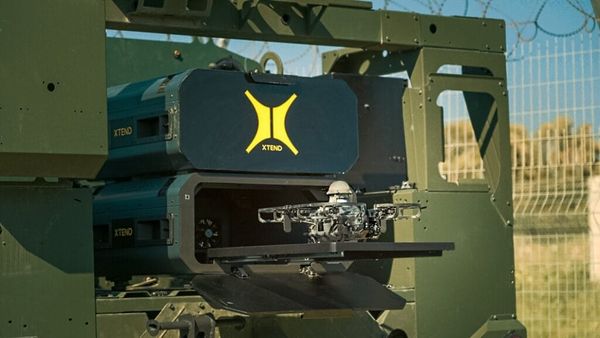
STARK plans to equip the vessel with a modular combination of sensors and weapons, including anti-ship missiles and its Cascade loitering munition system. The company has also described a configuration incorporating a 30 mm naval gun and long-range radar.
A Larger Platform for Northern European Waters
VANTA 24 will be the third and largest vessel in STARK's VANTA family, following the smaller VANTA 6 and VANTA 12 platforms.
Unlike compact coastal surveillance drones, the new system is intended to provide extended maritime presence and support more demanding missions in the Baltic, North Sea, North Atlantic and High North.
STARK says the design accounts for challenging conditions including low temperatures, ice and short, steep waves.
The company has indicated a potential payload capacity of up to 50 metric tons and a top speed exceeding 35 knots. These figures are manufacturer-stated design targets rather than independently verified operational performance.
STARK also identified Germany's FSG Shipyard as its planned manufacturing partner for the new vessel.
Minerva Software to Support Autonomous Operations
The platform will use STARK's Minerva software architecture for navigation, situational awareness, collision avoidance and mission management.
According to the company, Minerva is designed to support autonomous navigation even when satellite positioning is disrupted. Its software-defined architecture is also intended to simplify the integration of additional sensors and weapons.
STARK envisions a model in which one operator can supervise multiple unmanned vessels operating collaboratively. Decisions involving the employment of weapons are intended to remain under human control.
Expanding Europe's Unmanned Naval Capabilities
The project reflects growing interest among European navies in using unmanned vessels to supplement crewed warships, monitor maritime infrastructure and increase persistent surveillance capacity.
The Baltic Sea has become a particular focus because of threats to undersea cables, pipelines and maritime traffic.
STARK is already pursuing defense industry partnerships involving the VANTA family. In September, AdriaDefense reported that Romania's OVES Enterprise would integrate its Nemesis AI technology into STARK's unmanned maritime systems.
The newly announced VANTA 24 expands the company's ambitions into a larger class of armed autonomous vessel.
STARK has not disclosed a confirmed customer order, contract value, production start date or delivery schedule for VANTA 24. The announcement therefore represents a new platform development rather than an operational deployment.