Ukraine’s Low-Cost Interceptor Drones Gain Global Attention as Counter-UAS Demand Accelerates
Ukrainian manufacturers are scaling production of low-cost interceptor drones designed to counter loitering munitions. Systems such as the P1-SUN and STING are attracting international interest due to their cost-efficiency and operational performance.

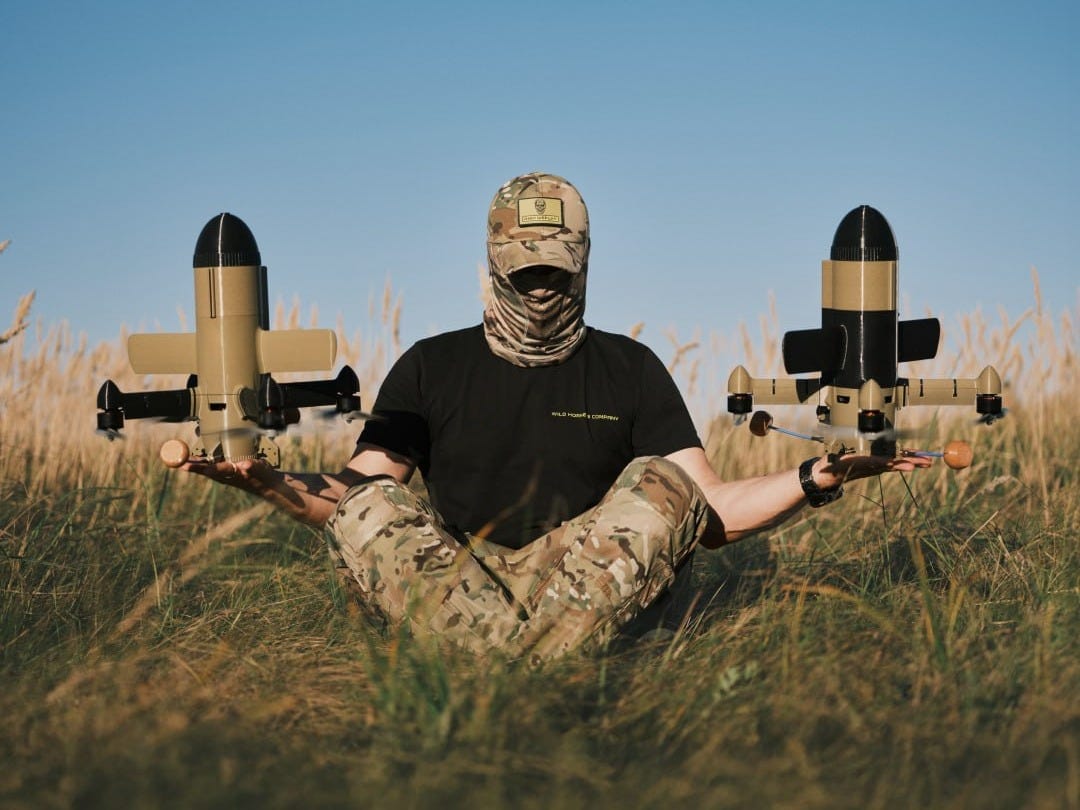
Ukraine’s rapidly evolving drone industry is drawing international attention with a new class of low-cost interceptor unmanned aerial systems designed to counter one-way attack drones.
Several domestically developed platforms are now being produced at scale, targeting threats such as Iranian-designed Shahed loitering munitions. These interceptor drones prioritize affordability, speed, and adaptability, offering an alternative to more expensive traditional air defense systems.
Among the emerging systems is the P1-SUN, developed by Ukrainian manufacturer SkyFall. The platform is positioned as a cost-efficient interceptor with a reported unit price around $1,000. According to the manufacturer, it can reach speeds between 300 and 400 kilometers per hour, operate at altitudes up to 5,000 meters, and engage targets within a range of approximately 23 kilometers. Payload capacity is listed at 0.8 kilograms.
Another system, the STING interceptor drone produced by Wild Hornets, reflects a similar design philosophy. The platform is reportedly capable of speeds up to 280 kilometers per hour, with a maximum altitude of 7,000 meters and an operational range of up to 37 kilometers. Pricing is estimated between $1,000 and $2,500 depending on configuration. The manufacturer indicates that the system integrates AI-assisted targeting and thermal imaging, enabling engagement of aerial targets under low-visibility conditions.
Additional interceptor designs, including systems identified as Strila, Octopus, and Zerov-8, further illustrate the breadth of Ukraine’s domestic development efforts. These platforms appear to cover a range of price points and configurations, suggesting a diversified approach to counter-UAS operations.
The proliferation of such systems reflects operational lessons learned during sustained drone warfare, where cost asymmetry has become a defining factor. Interceptor drones offer a comparatively low-cost method of neutralizing incoming threats, reducing reliance on high-value missile systems.
Ukrainian officials have indicated that these technologies could be scaled and adapted for use beyond the domestic battlefield. The concept centers on integrating interceptor drones into layered air defense architectures, particularly in environments facing persistent low-cost aerial threats.
The growing demand for counter-UAS capabilities across NATO and partner nations is likely to increase interest in these systems. For defense-industrial stakeholders in Central and Eastern Europe, Ukraine’s model highlights the potential of rapid innovation cycles, decentralized production, and cost-focused design in addressing evolving air defense requirements.